
A Walk to Remember: Why Bridal Footwear Matters
When anybody thinks of an Indian wedding, few things may come to mind like Bridal's beautiful Lehenga, luxury jewellery and decorated mandap in wedding. A bride's shoes have an indirect impact on her entire wedding experience, despite all the pomp and circumstance. In every ceremonial step, each dancing step, and each flash of the camera, it makes her a silent companion, keeps her on ground (literally), and softens her for hours of ceremonies. Bridal shoes are part of the memory-collecting gear because they transfer the poise, energy, and emotion of the day along with the bride.
In Indian culture, shoes aren't just useful–they're symbolic. From the josh-filled fun of the Joota Chupai tradition to the reverence of feet in sacred rituals, shoes have been given meaning. Certain rituals in India, such as touching the bride's feet, are considered sanctified. On the other hand, the ritual of stealing shoes of the groom is like winning a prized trophy. Wedding shoes go beyond fashion—they symbolize traditions, passions, and new beginnings of wedding-life. When a bride wears those, she steps into ritual and lasting memories, even in fleeting moments when her lehenga shifts from every angle (yes, even the ones where her lehenga lifts just a little).
How We Got Here: The Evolution of Indian Bridal Footwear
Indian bridal shoes didn't begin with Pinterest pages or wedding expos. They go back to ancient royal courts, where queens and royalty decorated their feet in hand-sewn juttis of velvet with real gold thread embroidery. These weren't merely shoes — they were status symbols, family heirlooms passed down from generation to generation.
With time, the art form evolved. One thing remained constant: a passion for craftsmanship that lasted a lifetime. Even as trends changed, artisan families preserved ancient techniques like Mojaris, Kolhapuris, and juttis by refining their skills and transferring them on to the next generation.
Western styles, like heels and stilettos, started to impact bridal fashion in the following decades.
Exploring From Tradition to Trend: Bridal Footwear Styles
We begin with the timeless.
Juttis have passed the test of time. They are simple, slip-on, and intricately embroidered, with a conventional look but surprising adaptability. They suit lehengas, sarees, and even Indo-western gowns.
Mojaris are mistaken for juttis, but they are more formal in silhouette with curled toes, and thus have a regal appeal. These are perfect for brides seeking tradition with some drama.
Kolhapuris provide a bohemian touch. Handmade leather, usually simple in design, they're an excellent choice for daytime functions such as haldi or mehndi, especially when you need something airy and easy-going.
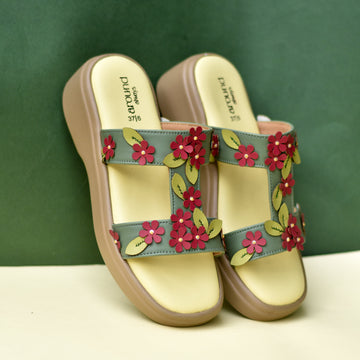
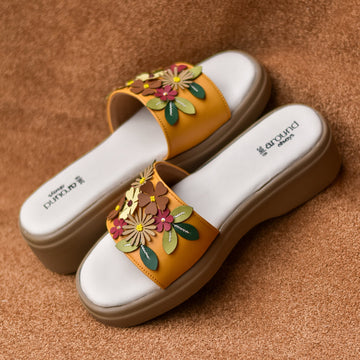
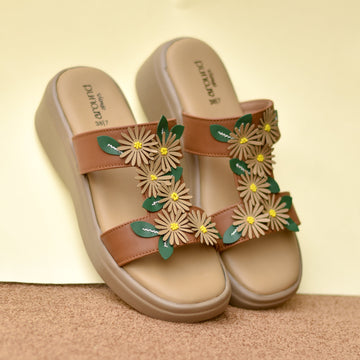
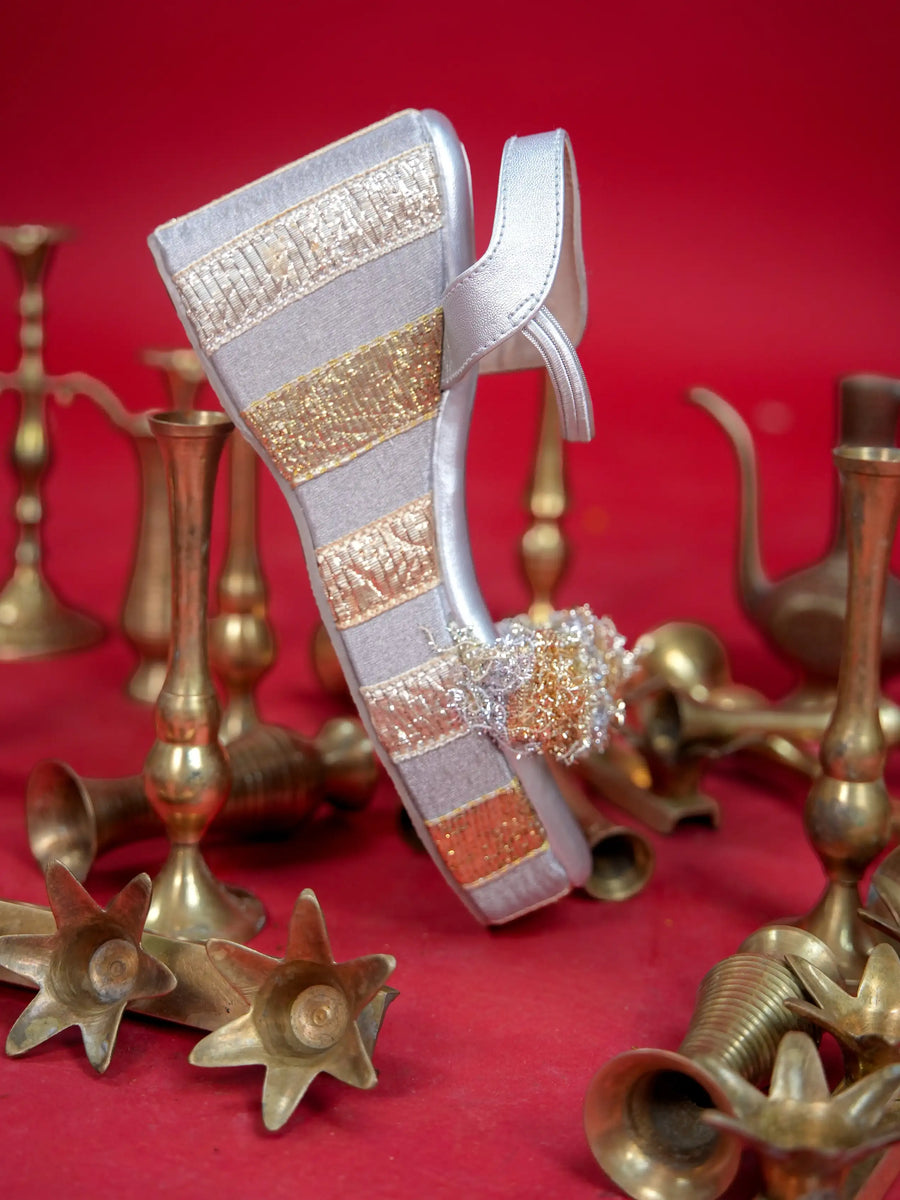
And then there is the popular Wedge heel. These are great for brides looking to boost height without compromising comfort. Wedges can be customized with mirror work, work of embroidery, or even metallic finishes to match the bridal motif.
East Meets West: Global Trends and Indian Sensibilities
Bridal footwear around the world is minimalist — white satin pumps, nude heels, strappy almost-there sandals. Indian weddings could not be anything but anything but minimalist. They're colorful, layered, and textured. Not surprisingly, therefore, Indian bridal footwear is maximalist in spirit.
It's interesting to see how Indian designers are combining the two. Fusion footwear is on the up: a traditional pump shape with Gota work, or block heels in brocade. It's not only about looks either. Indian brides have special needs, we require shoes that don't move during a chaotic ceremony, provide comfort for long periods, and still look good under heavily ornamented clothing.
Choosing Your Solemate: How to Pick the Right Pair
The process of selecting bridal shoes isn't selecting the most beautiful pair that you come across over the internet. There is a strategy behind it. Begin by thinking about your outfit. A highly embellished lehenga may require a less decorated shoe to prevent clashing, whereas a pale saree can welcome a pinch of sparkle.
Venue is also a major player. Outdoor wedding? Perhaps leave the stilettos behind. A nice pair of stylish wedges or flats will keep you from sinking into the earth. Indoor ballroom? Break out those decorated heels.
Comfort is not a thing of sacrifice. On your wedding day, you could be on the dance floor, clicking pictures with guests and walking around, so make sure your heel height is suitable for you. If you're buying online, try them with your dress ahead of time. This isn't the time for fashion experimentation.
And here’s a tip: always walk around in them a few times before the wedding day. Break them in, spot any potential pain points, and you’ll thank yourself later.
What’s Inside Counts: Materials & Embellishments
Your shoes' substance is quite significant. Bridal shoes are often crafted from rich fabrics like satin, velvet, and silk, which pair beautifully with gowns, feel elegant, and support detailed embroidery. Leather remains a favorite for its strength, while modern designers increasingly turn to eco-friendly materials for sustainability. The add-ons are where it becomes really interesting.
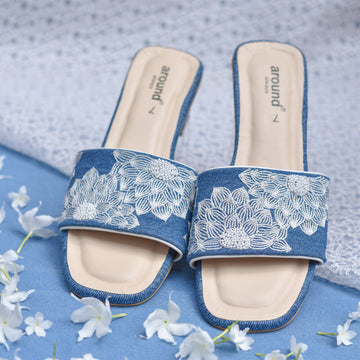
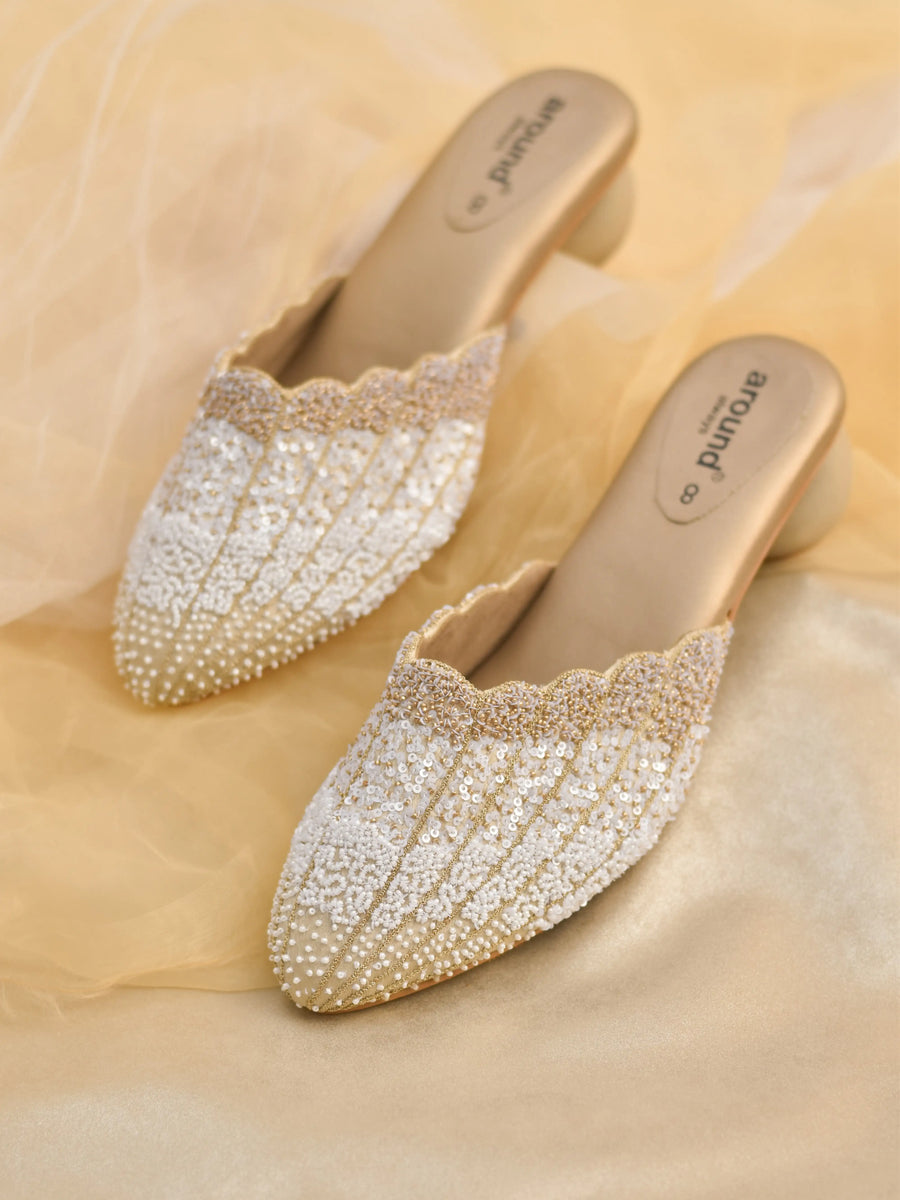
Zari work introduces traditional gold thread embroidery. Kundan stones give that regal glint. Mirror work provides that mischievous sparkle as you move. Beads and sequins, properly applied, provide just the perfect amount of bridal shine without being too much.
Made for You: Customisation is the New Luxury
Wearing shoes is an appealing quality. Customizing wedding footwear, like imprinted wedding dates and initials on soles considered as a romantic touch by some brides , is popular these days.
Others like embroidered motifs that are coordinated with their bridal lehenga. And then there are brides who create their shoes from the ground up — deciding heel height, color, embroidery design, and even seeking out local artisans to make them.
With so many online platforms offering customization tools, the previously uncustomised option has become more accessible. If you are a bride who loves to tell a story through style, then customized footwear for ladies might be your cup of tea.
The New Cool: Footwear Trends for Modern Brides
Who says bridal footwear has to be conventional? Brides today are more into their individuality than ever before.
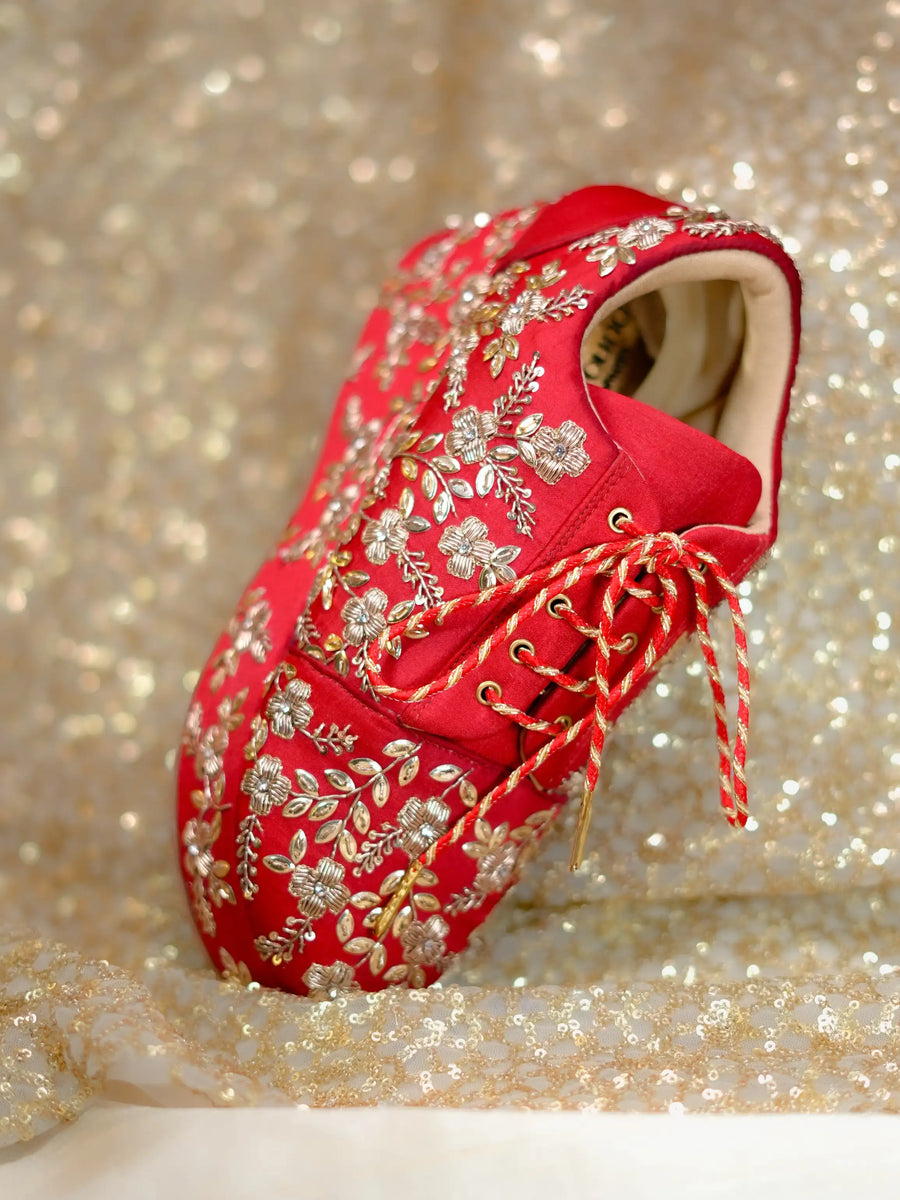
For sangeet nights or reception parties, bridal flats online and wedding sneakers have become surprisingly trendy. Envision all-white sneakers with zari embroidery, or juttis that are slippers-like but look more runway-like.
Heels are still adored, but they've changed. Brides now go for block heels, kitten heels, or platform sandals featuring crystals, beads, or pastel colors. Metallics such as rose gold, champagne, and silver have also usurped the erstwhile standard red and gold color palette.
And last but not least, the emergence of sustainable styles — shoes crafted with organic dyes, recycled materials, or fair-trade manufacturing. Even holographic details and glitter have made their way into wedding styles, demonstrating that there's more than one way to enter the fray of forever.
Getting the Right Fit: Decoding Shoe Sizing
One of the most under-looked (but utterly crucial) parts of bridal shoe shopping: sizing. Various brands have various systems — European, UK, US — and it's easy to get them mixed up.
Always check a size chart first when ordering, particularly if the company is from abroad. Take both feet (yes, one of them may be a tad bigger) and choose the size that is comfortable but not constrictive.
Don't forget width. If your feet are wider, seek out brands that make adjustable styles or wider fitting. If you can, shop for them in the evening when feet are a bit swollen — that's how they will probably feel on the wedding day.
Bridal Footwear Myths: Time to Step Over Them
There's plenty of advice on bridal shopping out there — but not all of it is sound. Let us address some widespread falsehoods about wedding footwear:
- Myth 1: Heels are common these days. In fact, you don't even have to. Some brides opt for flats, juttis, sneakers or even made-to-order sandals. It's your wedding day, your way.
- Myth 2: Beauty is pain, who said. No longer. Without limping down the aisle, Modern brides always prefer those shoes, which are the perfect blend of style and comfort.
- Myth 3: If your shoes are hidden then it's pointless in a wedding. They will show. In the twirls, the seated photos, and the cute close-up shots. And they affect your posture and presence.
- Myth 4: One pair will do. You may need a second (third) pair — in case your reception and ceremony are at two different locations or your attire is a change of clothes. Standby shoes are always a good plan.
- Myth 5: Classic is boring. Not at all. Classic Indian shoes are trendy — and with all the beading, embroidery, and special orders you can get these days, they're not boring at all.
Caring for the Dream Pair
Your bridal shoes go through a lot. Give them the affection they are due.
To prevent blisters, break them in before the wedding. Always use anti-slip pads for smooth soles. If your shoes have delicate materials such as satin or velvet, then prevent them from water and clean your footwear after every usage.
When festivities are over, clean your shoes with genuine products and keep them safe. After that, place them in fabric pouches to prevent damage and dust. Especially if they are decorated, keep them somewhere cold and dry.
You can even preserve them as a memento if they have sentimental value. Or get them repaired so they can be used again for special occasions like anniversary dinners.
The Bridal Footwear Checklist
Here’s a practical rundown for staying stress-free:
Before the Wedding:
- Choose your style and decide between traditional, modern, or fusion.
- Match shoes with each outfit and do a trial run.
- Test for comfort and fit.
- Consider the venue when picking heel type.
- Coordinate with jewellery and accessories.
- Talk to designers or stylists for expert guidance.
- Break them in. Seriously.
On the Wedding Day:
- Always keep backup shoes like comfy flats.
- Choose blister pads and band-aids during weddings.
- Have shoe spray/wipes for emergency cleaning.
- Double check heel grips.
- Assign someone to manage your footwear.
After the Wedding:
- Clean them soon after the event.
- Store in protective fabric pouches.
- Prevent it from heat and moisture.
- You want to keep it, reuse it or donate to someone.
In Conclusion: Your Wedding, Your Way
Indian bridal shoes are no longer solely associated with beauty or tradition. It has to do with legacy, comfort, identity, and expression. There is the ideal pair waiting for you, regardless of whether you are a bride who wants to dance barefoot before midnight or who wants to wear heels all the time.
So go ahead and pick wedding footwear that gives you a sense of strength, style, and most importantly, self-worth. Since your wedding is your tale, your shoes. Just the first step in the journey.