
Shoes to Match House of Angadi Kanjivaram and Bridal Sarees
Match House of Angadi Kanjivaram sarees by reading the zari before the base colour. Repeat one clear cue in the shoe, such as antique gold, bright gold, red or ivory. Choose a secure flat or low heel for long rituals, and higher wedges for shorter events. Set the final saree fall only after confirming the shoe height.
The Quick Match: Read the Saree, Then Pick the Shoe
|
Saree cue |
Best shoe direction |
Colour cue |
Useful height |
|
Rust red with gold zari |
Secure block-heel sandal |
Maroon, red, antique gold |
1 to 2 inches |
|
All-gold reception weave |
Golden wedge or mule |
Gold with a quiet ivory note |
2 to 3 inches |
|
Red-green contrast border |
Gold mule with controlled colour |
Gold, red and green |
2 to 3 inches |
|
Emerald, purple or navy silk |
Strapped gold sandal |
Warm gold |
2 to 3 inches |
|
Pastel or lighter Kanjeevaram |
Ivory-gold block heel |
Ivory, champagne, soft gold |
2 to 3 inches |
|
Long traditional ceremony |
Low embellished flat |
Gold or muted metallic |
0.5 inch |
Why Does the Zari Matter More Than an Exact Colour Match?
A Kanjivaram already carries a strong colour and texture. The shoe looks connected when it repeats the zari temperature, border colour or one woven motif, rather than copying the entire saree.
House of Angadi’s Advaya label includes bridal Kanjeevarams and distinctive designs. In a Vogue India interview, designer K Radharaman identified real zari and characteristic design language as key Kanjeevaram cues. That makes the zari finish a useful starting point for footwear.
Image Credit: https://www.facebook.com/thehouseofangadi / https://www.instagram.com/angadioninsta
Six House of Angadi Saree Directions and Their Shoe Matches
At Around Always, we shortlist from visible details and function, then test the shoe with the drape.
Rust-Red and Gold for the Wedding Ceremony
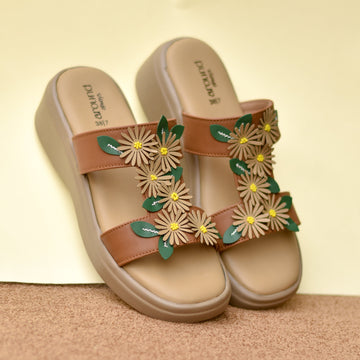
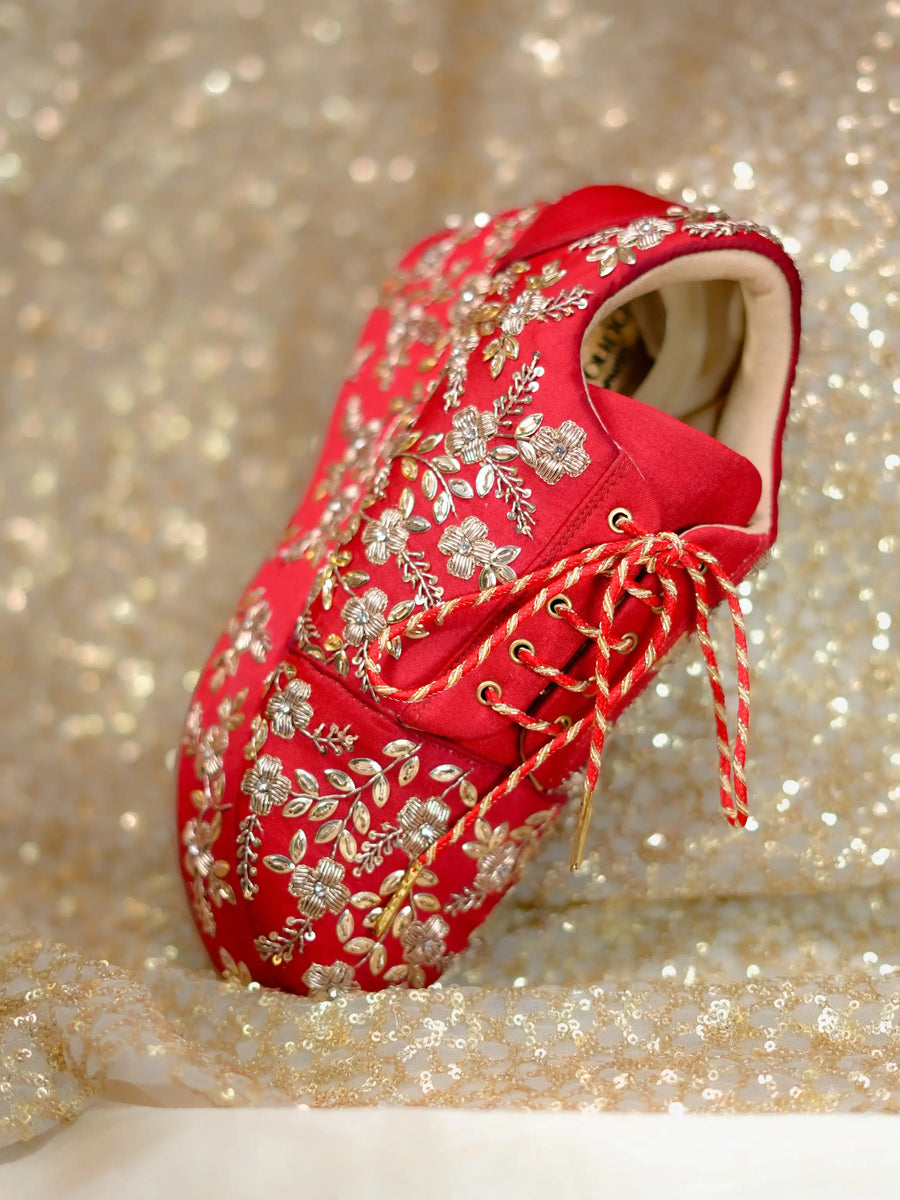
Choose a low, secure heel that supports the red-gold story without adding a second visual theme. Patti maroon block-heel sandals use maroon satin, golden leaves and zari. Their photographed 2-inch heel is a practical ceremony reference, subject to your usual heel tolerance.

An All-Gold Kanjivaram for the Reception
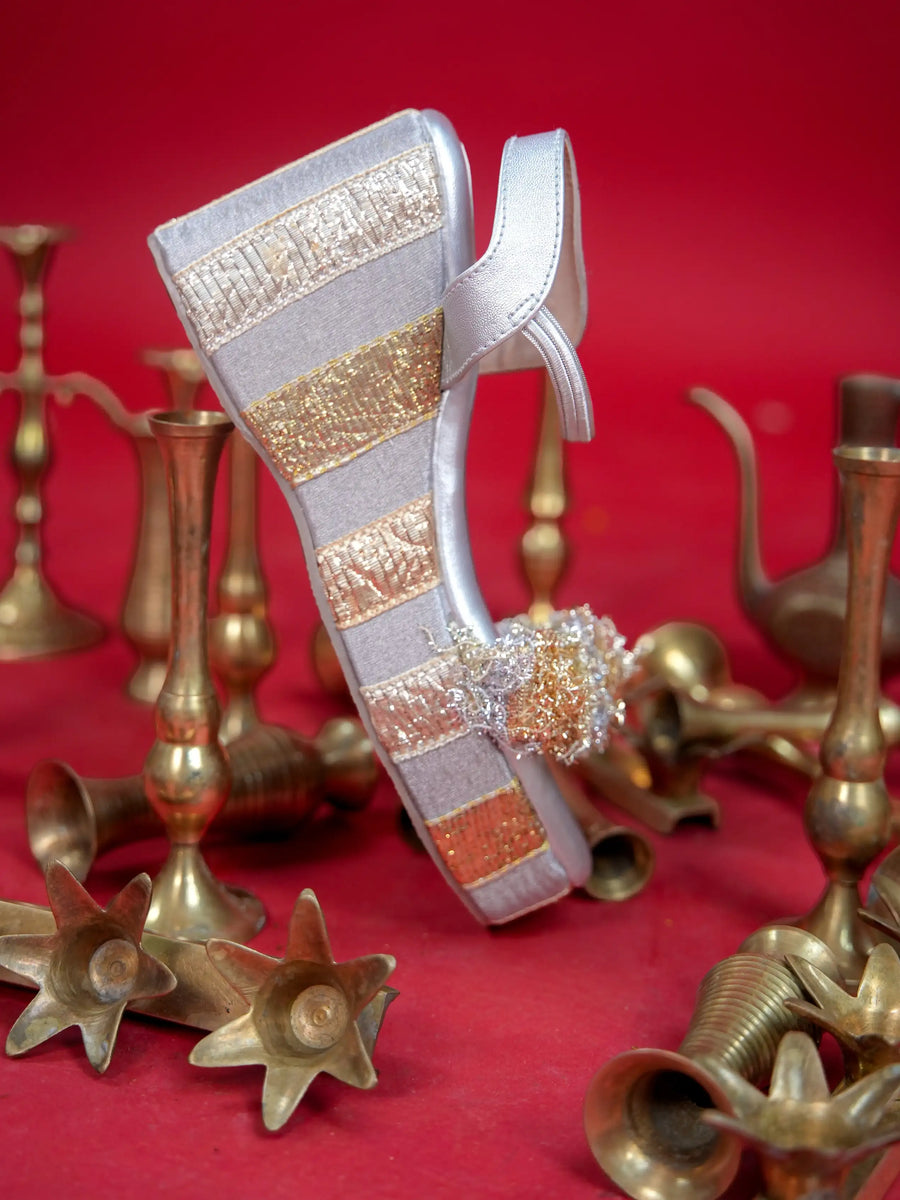
An all-gold saree needs texture contrast more than extra colour. Aambi gold and white wedges add an ivory break to the metallic surface and are photographed with a 3-inch wedge. This direction suits a monochrome saree with detailed jewellery.

A Red-Green Contrast Border
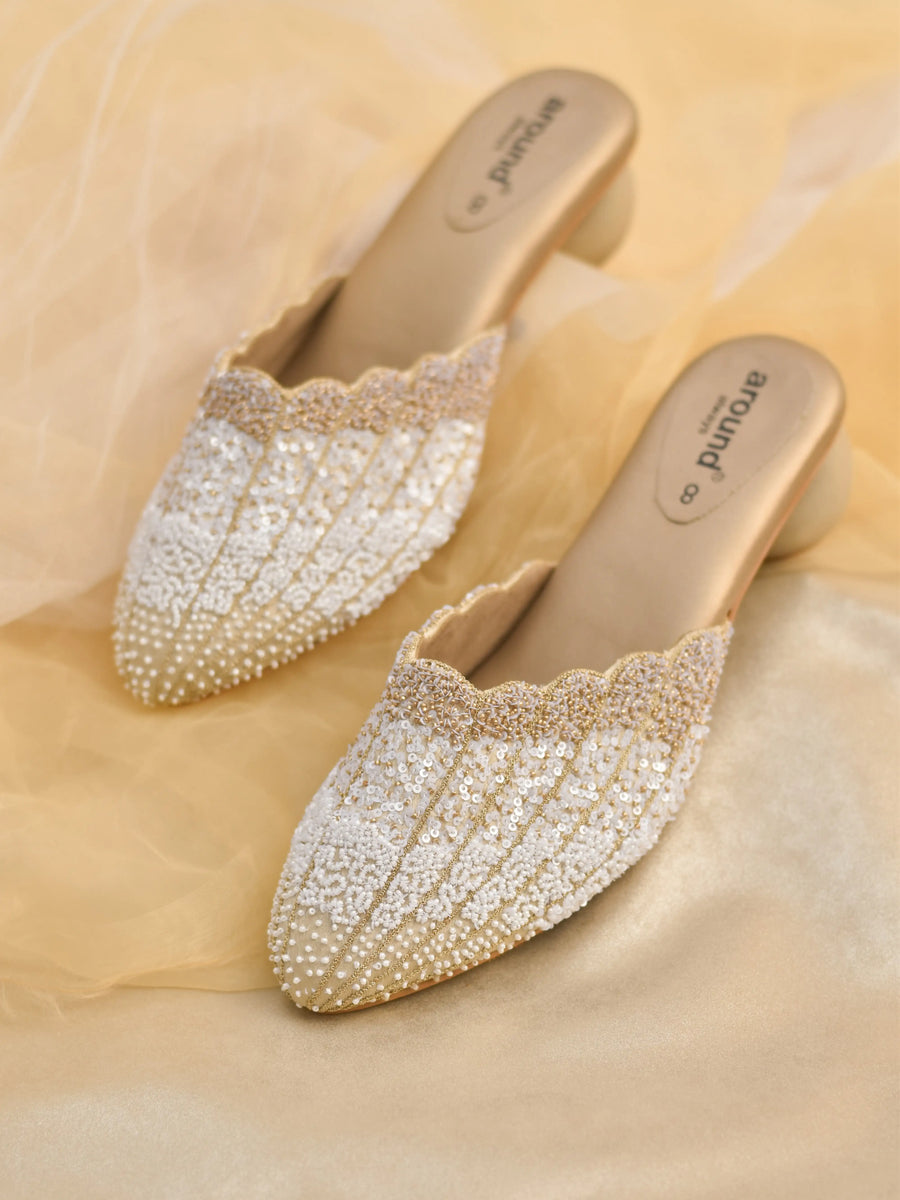
When both colours appear in the border, a neutral gold base can carry small echoes of each. Tira golden mules use red and green sequins around a soft golden base and are photographed in a 3-inch heel. Keep the blouse and jewellery calmer.

Emerald, Purple or Navy Bridal Silk
Deep jewel tones usually need a warm metallic bridge, not another saturated shoe colour. Ira golden sangeet sandals use golden embroidery on a gold base and include back support. Choose the lowest offered height that preserves the saree fall and feels familiar.

Pastel, Ivory or Lighter Kanjeevaram Weaves
A softer saree needs less visual weight at the foot. Jalsa ivory block-heel sandals combine ivory and gold with a wavy front strap and a 3-inch flared heel. They suit pale borders or a contemporary blouse.

This is not a made-up category. Vogue India’s report on Advaya documents organza, linen-blended and khadi Kanjeevaram experiments alongside traditional silk.
A Motif-Rich Saree for a Long Ceremony
If the saree carries elaborate birds, florals or brocade, let the shoe become quieter. Ridhi golden bridal flats have a single strap and a photographed 0.5-inch heel. Test the slip-on hold during turns and stairs before a crowded event.
What Should Match: Border, Blouse or Jewellery?
Use this order: zari first, border colour second, blouse third. Jewellery can confirm the metal tone, but it does not need to dictate the entire shoe.
-
If the border and blouse match, repeat that colour once in the shoe.
-
If they contrast, choose the zari tone as the neutral link.
-
If the saree has large woven motifs, avoid a different large motif on the footwear.
For a red bridal silk, compare different constructions in our red wedding heel collection instead of assuming every red pair will behave the same.
Choose the Heel Before the Final Saree Drape
A heavy silk saree does not require a higher heel. Heel height changes hem clearance, posture and stride, while fit and hold determine how confidently you move.
Wear the selected pair during the final drape trial. Walk, sit, use stairs and check whether the front hem brushes the toe. Our Kanjivaram saree heel guide explains the main height choices, while the bridal flats collection gives a practical low-height route for longer rituals.
Explore a Pair for Your Saree
Start with the saree, not a trend. At Around Always, you can compare bridal sandals for Indian wedding outfits alongside flats, mules and wedges. Shortlist by zari tone and ceremony length, then test the shoe with the final drape before committing.
Expert tip: Photograph the saree and shoes together in daylight and venue-style lighting. A metallic finish can look warmer or cooler once the light changes.
Frequently Asked Questions
What shoes go best with a Kanjivaram saree?
Gold or antique-gold sandals, secure low block heels and embellished flats are reliable choices. Match the zari tone and choose height by function length.
Should footwear match the saree colour or the zari?
Start with the zari because it links the border, body and jewellery. Repeat the saree colour only when it appears clearly on the shoe.
Are flats suitable for a bridal silk saree?
Yes. A polished 0.5-inch flat can suit a long ceremony, especially when the hem is adjusted to that exact pair.
What heel height works with a pattu saree?
There is no universal height. A familiar 1 to 2-inch heel suits many ceremonies, while 3 inches or more needs a full movement test.
Are Kanjivaram and Kanjeevaram different?
No. Both spellings refer to the same saree tradition associated with Kanchipuram. Searchers and retailers commonly use both forms.