
What Shoes Should You Wear for a Winter Wedding
For a winter wedding, choose bridal shoes according to the venue surface, time of day and how long you will stay outdoors. Closed bridal sneakers or juttis add coverage, while block heels and wedges suit formal looks when the ground feels firm. Outdoor lawns need a broad base, not a narrow heel that sinks into the soil. Keep a second low pair ready if the celebration moves from the mandap to the dance floor.
Quick Winter Wedding Footwear Guide
Choose your shoes according to the venue, ground surface and time spent outdoors. Use this table to compare suitable options for an indoor hall, outdoor lawn, hill venue or mixed setting.
|
Wedding Setting |
Strong Starting Point |
Why It Works |
Watch For |
|
Indoor hall |
Block heel or secure sandal |
Formal look on a firm floor |
Cold arrival area |
|
Outdoor lawn |
Wedge, flat or broad block heel |
Wider base on soft ground |
Damp grass |
|
Hill or colder venue |
Closed sneaker or jutti |
More coverage for the foot |
Slopes and steps |
|
Indoor and outdoor mix |
Main pair plus low backup |
Lets you change with the setting |
Different hem heights |
Build One Shoe Plan for Each Winter Wedding Moment
For a Day Ceremony
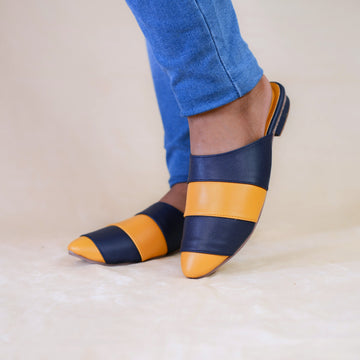
Day ceremonies move between seating, rituals and photographs. A low block heel, wedge or embellished flat creates a clean bridal line without demanding a high heel for hours. Browse bridal flats and juttis if you prefer a closed front or little elevation.

Buy - Nooree Designer Shoes
For an Outdoor Evening Wedding
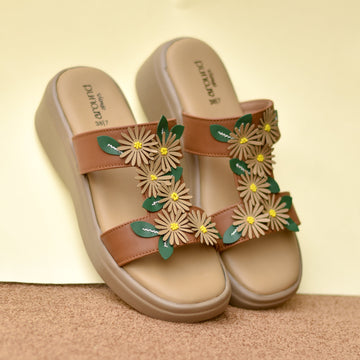
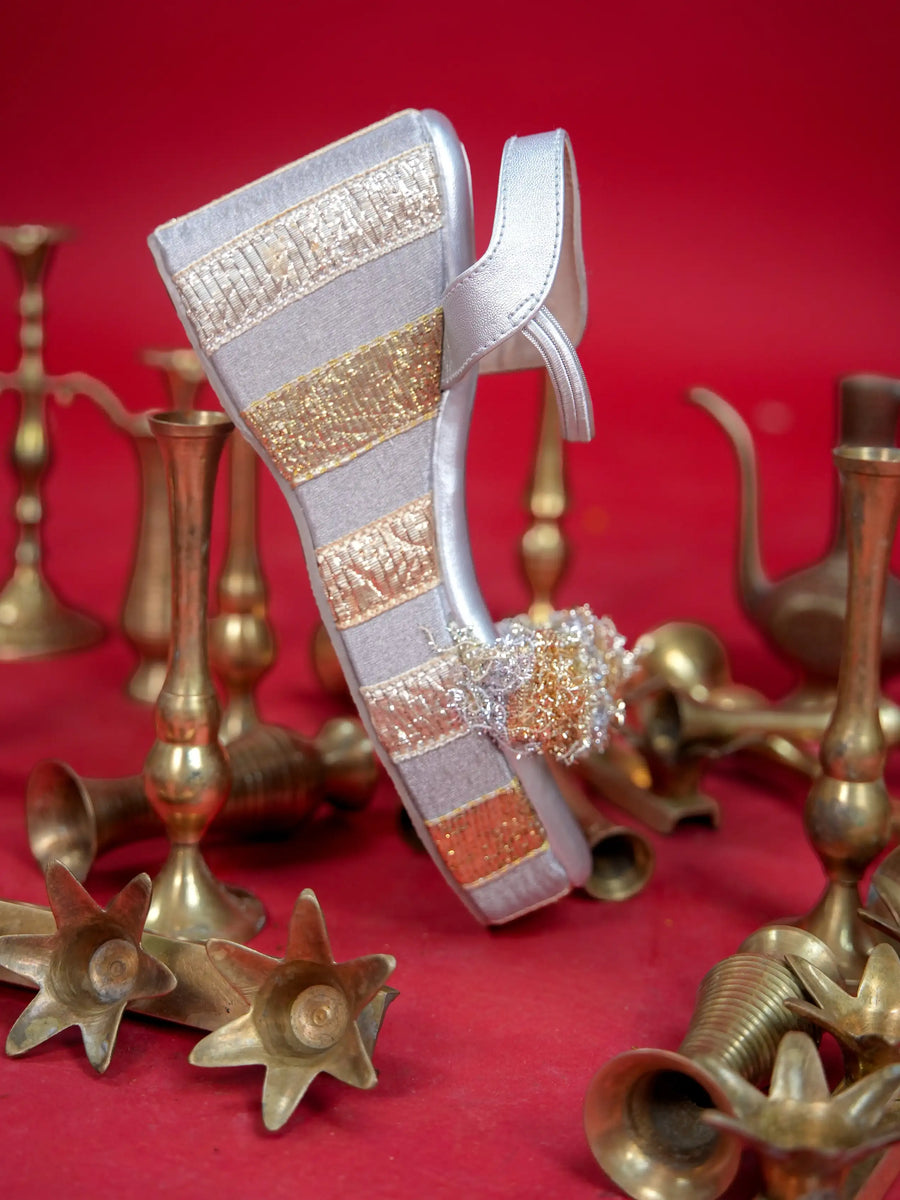
After sunset, consider a closed upper, substantial straps or a broad-base ethnic wedge heel for lawns or open courtyards. Avoid a smooth sole on damp or uneven ground.

Buy - Savera Wedding Wedges
For the Sangeet or Reception
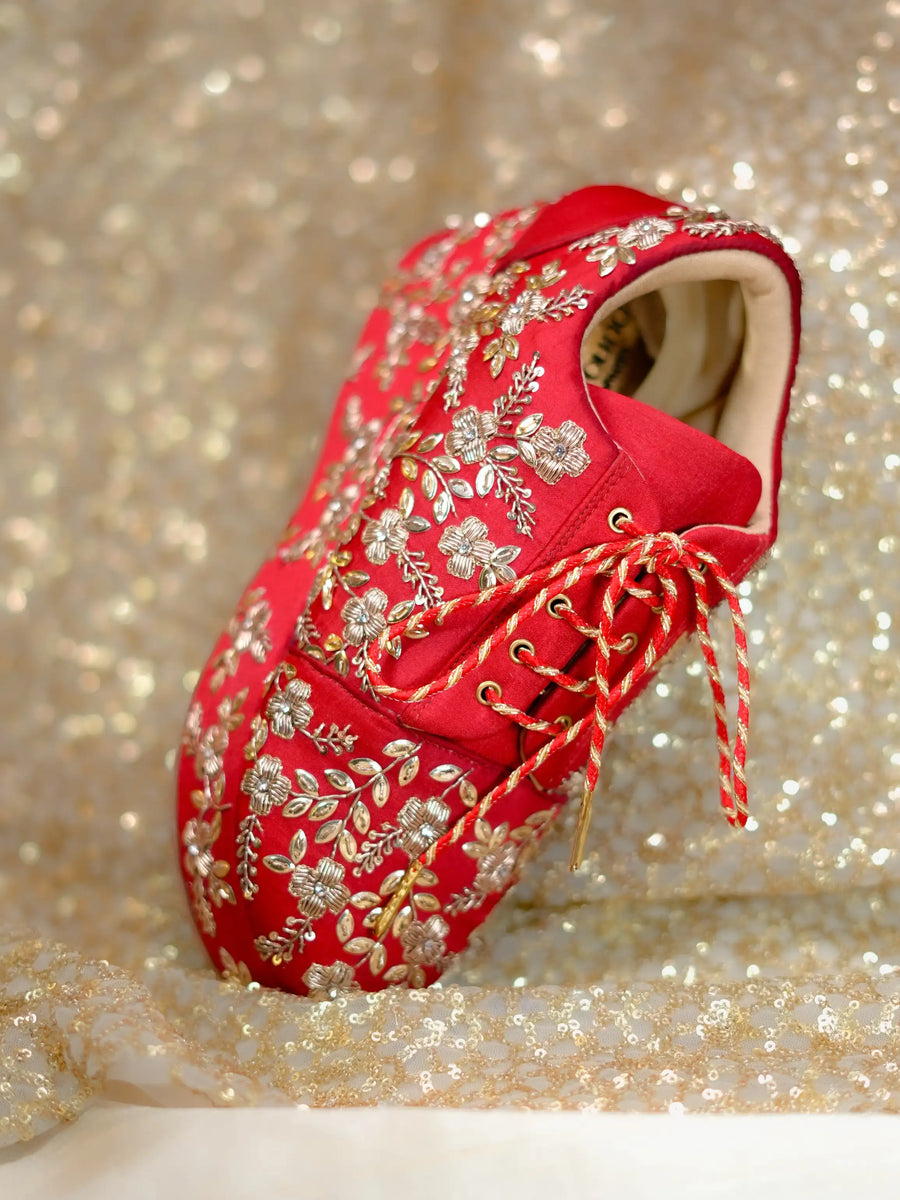
Choose for movement. Secure straps and familiar block heels suit shorter dance periods, while laced bridal wedding sneakers suit a longer evening. Test any sneaker wedge because height still changes balance.

Buy - Faith Bridal Sneakers
Keep Your Feet Warm Without Changing the Bridal Look
A closed shoe offers more coverage, but warmth also depends on dry feet and proper fit. Thin dress socks, tights or a liner can help when the shoe has room. Extra layers should never crowd the toes.
The American Podiatric Medical Association notes that damp feet chill more easily and recommends footwear that keeps feet warm, dry and supported. Carry dry socks if rain or heavy dew is likely.
Let Winter Fabrics Guide the Finish
Velvet, brocade and woven silks can carry deeper colours and richer texture. Repeat one outfit cue, such as antique gold zari, a wine border, ivory embroidery or one jewel tone.
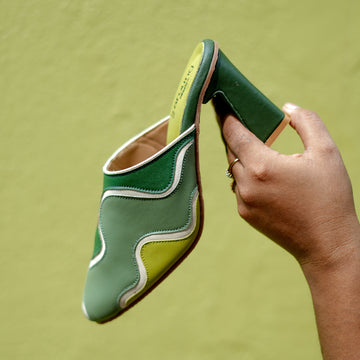
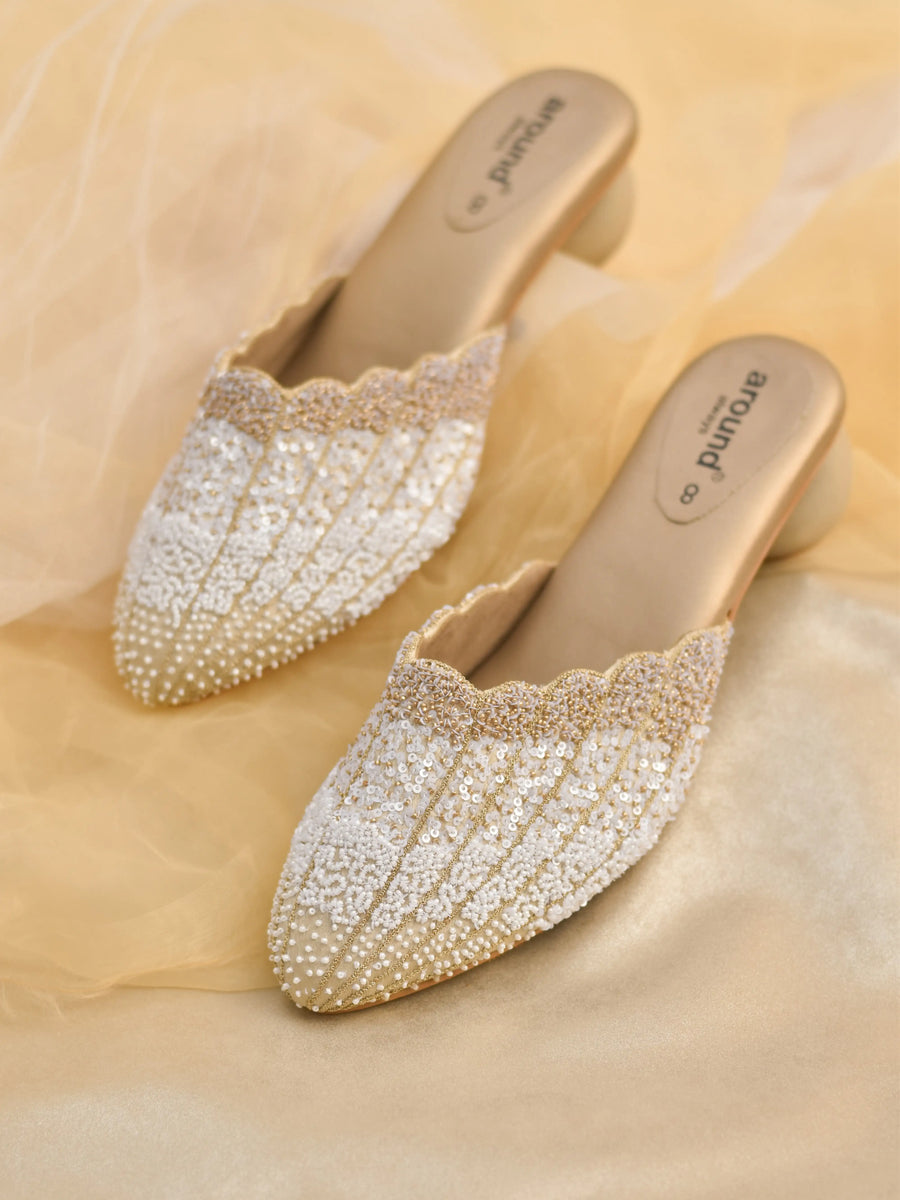
Gold and champagne footwear works with many warm metallic borders, while red, emerald and navy can echo a winter palette. Compare golden bridal heels and wedges when the outfit uses warm zari. For dress traditions from different parts of India, use our region-by-region wedding footwear guide as a cultural styling reference.
Should a Winter Bride Carry Two Pairs
Often, yes. Use the formal pair for the ceremony and portraits, then change into a low shoe for dancing or late-night movement. Keep the second pair close to the original height so the lehenga hem does not drag after the switch.
A second pair also protects your main shoes if the path becomes damp. Pack it separately with dry socks or liners, and tell one trusted person where it is stored.
Run This Sixty Second Winter Shoe Rehearsal
Wear the complete outfit with the planned socks, tights or liner. Test indoor flooring and a safe sample of the outdoor surface if possible.
-
Check whether the lehenga catches under the heel.
-
Make sure the toes stay relaxed with any winter layer.
-
Test stairs, turns, sitting and the ceremony stance.
-
Confirm that straps stay secure when your feet feel cold.
-
Inspect the sole and keep the backup pair easy to reach.
Confirm your measurements with the Around Always footwear sizing guide. If you need a different colour, heel height, strap or fit adjustment, send the request through the custom wedding footwear form before production begins.
Expert Tip
Choose your winter wedding shoe in this order: ground, outdoor time, movement, fit, heel height and finally colour. The outfit should guide the finish, not override the setting.
Choose Your Winter Wedding Pair
Explore the Around Always bridal footwear collection to compare closed sneakers, embellished flats, sandals, block heels and wedges. Use your venue plan to shortlist the shape, then match the colour and embroidery to your bridal outfit.
Frequently Asked Questions
What shoes do I wear to a winter wedding?
Choose closed sneakers or juttis for more coverage, or stable block heels and wedges for a formal look. Let the venue surface and outdoor time decide the final pair.
Which footwear is best for winter?
The best winter footwear keeps your feet dry, fits securely and suits the ground. For an Indian wedding, that may mean a closed bridal sneaker, jutti, flat, wedge or broad block heel.
What do brides wear in a winter wedding?
Brides commonly wear lehengas, sarees, gowns or regional wedding outfits with warm layers planned around the venue. Footwear should coordinate with the outfit while handling cold entrances, lawns and long functions.
What should I wear to an Indian winter wedding?
Choose your outfit for the dress code and region, then add footwear suited to the venue. Brocade flats, embellished sneakers, metallic wedges and secure block heels can all work.
Can a bride wear sneakers at a winter wedding?
Yes. Embellished bridal sneakers offer a closed silhouette and secure lacing for a sangeet or reception. Check the sole, wedge height and lehenga hem before the event.