
Best Sandals, Heels & Shoes to Wear with a Baluchari Saree
The best sandals and heels to wear with a Baluchari saree are strappy heeled sandals, block heels, embellished juttis, and embroidered mules, and which one is right depends on the saree's fabric weight and the event. A heavyweight silk saree, a Baluchari or Banarasi, needs structured, embellished footwear with some height, usually a 5 to 7 centimetre heel, so the shoe doesn't look flimsy next to the weave. Lighter sarees pair better with flats or a low kitten heel. Comfort matters as much as looks: most Indian wedding functions run several hours, so a cushioned sole and an ankle strap matter more than the heel height itself.
Quick Reference: Footwear by Saree Weight
|
Saree Weight |
Best Footwear |
Heel Height |
Notes |
|
Heavyweight silk (Baluchari, Banarasi, Kanjeevaram) |
Block heels, strappy sandals, embroidered mojaris |
5–7 cm |
Needs structure to match the saree's weight |
|
Medium-weight silk or cotton blends |
Embellished flats, kitten heels, juttis |
0–4 cm |
Balances comfort with formality |
|
Lightweight (Chanderi, chiffon, georgette) |
Wedges, peep-toe flats |
0–3 cm |
Lets the lighter fabric drape and move |
|
Any weight, all-day wedding functions |
Wedges or flats with cushioned insoles |
0–4 cm |
Prioritise comfort over height past 3-4 hours |
A Baluchari Saree as the Working Example
We're using the Baluchari saree, a heavyweight silk woven in Bishnupur, West Bengal, and known for its mythological motifs, as the reference point for this guide, because it represents the upper end of what your footwear needs to support: a stiff, richly patterned drape that will visibly clash with anything too plain or too flimsy. Everything below applies just as well to other heavyweight silks like Kanjeevaram or Banarasi; swap in your own saree's colourway where relevant.
1. Embellished Heels
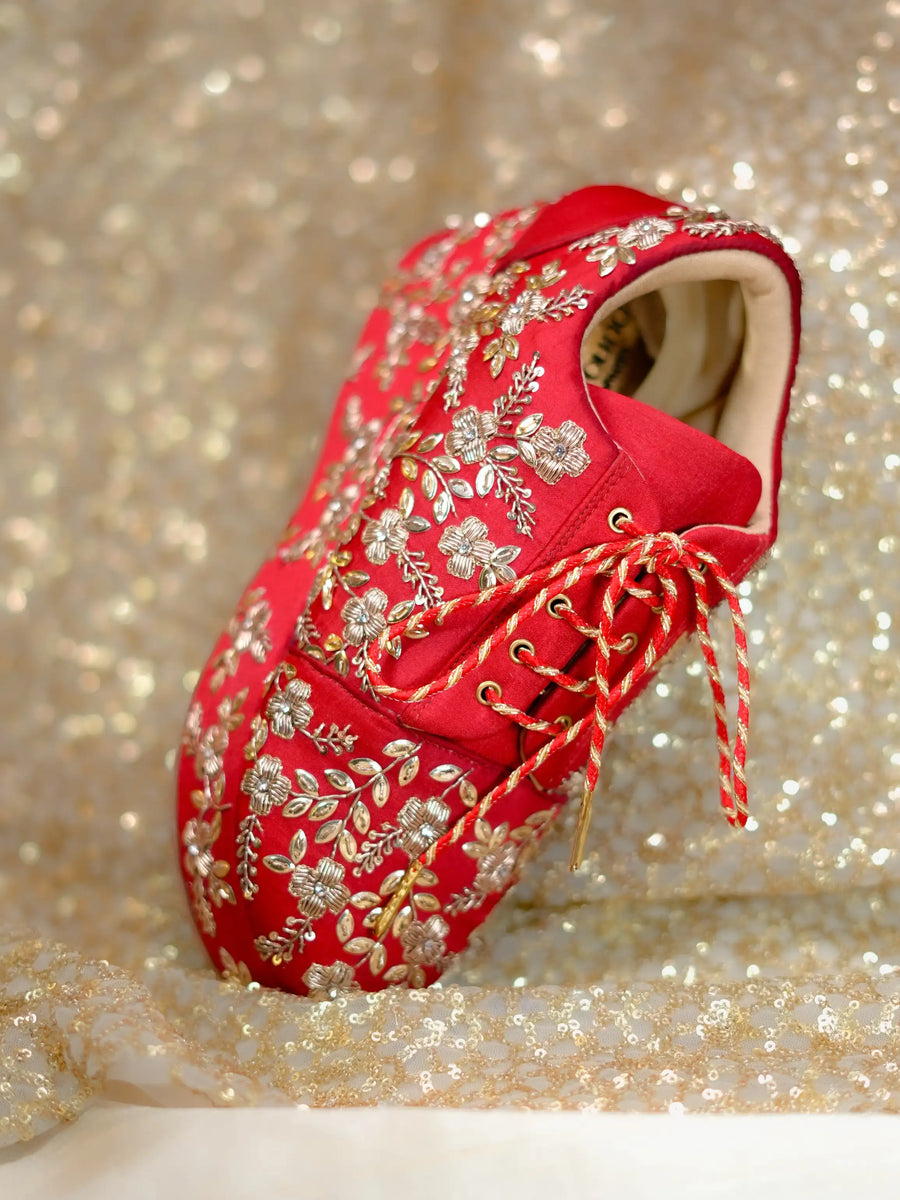
Embellished heels are solid heels for women for saree or a heavyweight silk saree. Beadwork, stone setting, and zardozi on the heel echo the saree's own patterning instead of looking plain next to it. Block-heel versions with kundan or polki work are a popular choice at Indian weddings because they add visual richness while staying stable through a long ceremony. Match the heel colour to your saree's border or pallu, gold, red, ivory, and deep jewel tones all work well against a Baluchari palette. Browse our bridal heels for women for embellished styles built for heavier silk sarees.

2. Strappy Heeled Sandals
Strappy heeled sandals work well for a heavyweight saree because the open-front, open-toe design lets the pleats move freely instead of catching underfoot. The ankle strap keeps the sandal secure through hours of walking and dancing, and the heel lifts the drape to the right length. Gold and silver strappy saree sandals for women with bead or mirror detailing sit well against a Baluchari's ornate weave without competing with it. A heel height between 5 and 7 centimetres suits the weight of this kind of saree. Shop our sandals for women for saree for styles built for silk sarees.

3. Traditional Juttis
Traditional juttis pair naturally with a Baluchari saree; both come out of Indian hand-craft traditions, so wearing them together reads as intentional rather than mismatched. The hand embroidery, threadwork, and mirror detailing on a jutti echo the same care that goes into the saree's weave. Juttis in gold zari, silk embroidery, or mirror work suit sarees with golden or jewelled borders particularly well, and being flat, they're an easy choice for brides who want to stay comfortable through a long day.
One practical note: juttis are flat, so check that your saree is draped or stitched to the right length for flat footwear before the wedding day. Explore our handcrafted juttis and bridal flats for styles suited to heavier silk sarees.
4. Embroidered Mules
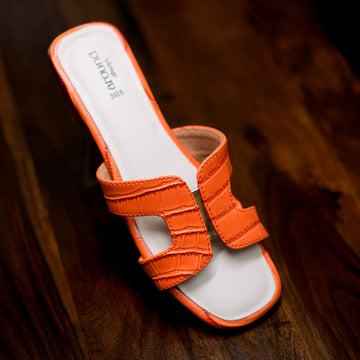
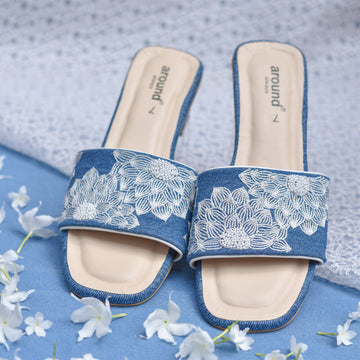
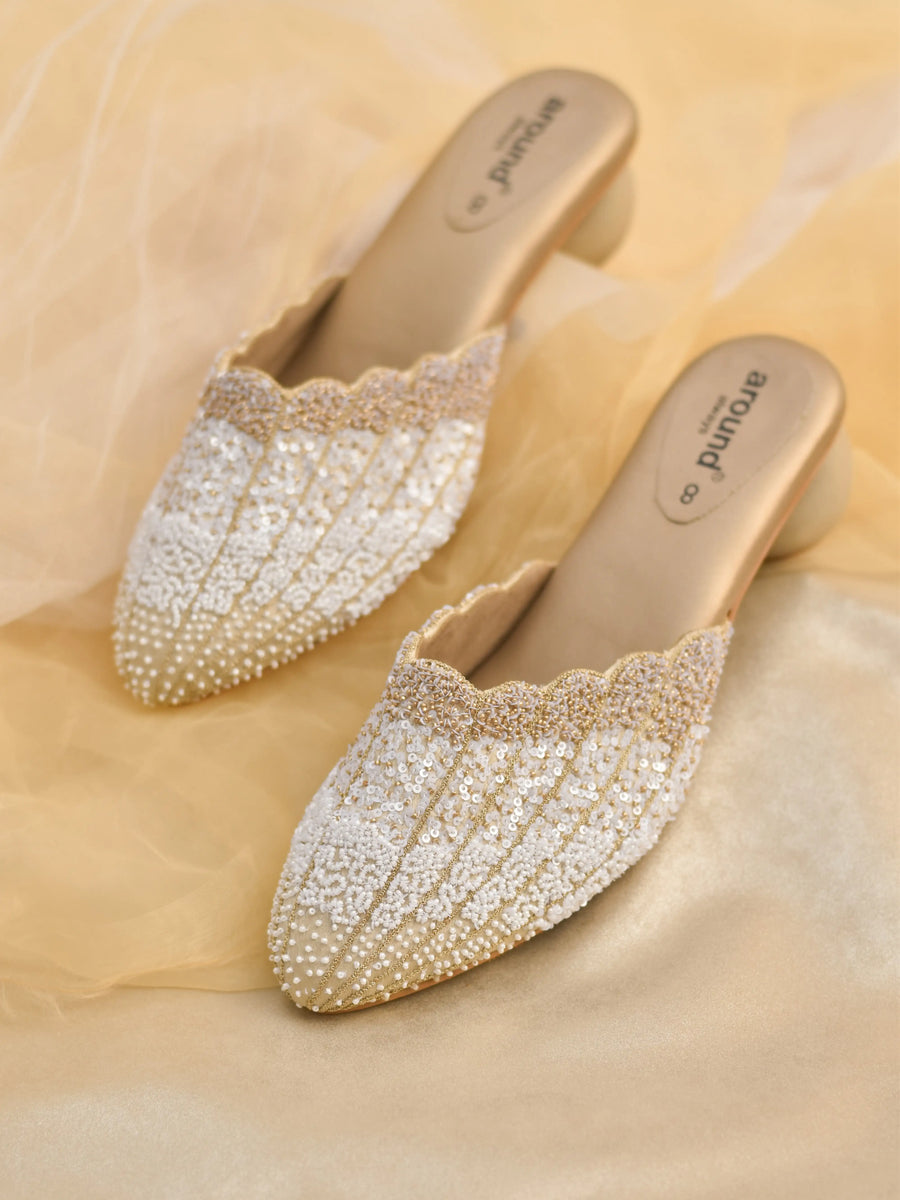
Embroidered mules suit a heavyweight saree look while being easy to slip on and off through a wedding day's many changes. The backless design pairs particularly well when the saree's pallu is draped over the shoulder, since it leaves the shoe fully visible. Velvet or silk mules with floral or geometric threadwork are a widely worn option in Indian bridal footwear right now; pick a design whose embroidery feels related to your saree's own motifs for the most coordinated result. Find your pair in our bridal sandals and mules collection.

5. Pearl-Embellished Sandals
Pearl-embellished sandals bring a softer, more understated look than metallic or stone-set shoes, which suits Baluchari sarees in lighter colourways such as ivory, pale gold, or blush pink. The graded pearl work catches light gently rather than competing with the saree's weaving, which suits brides who want their footwear to feel refined rather than bold. They also work well for indo-western outfits at other party functions.

6. Block Heel Sandals
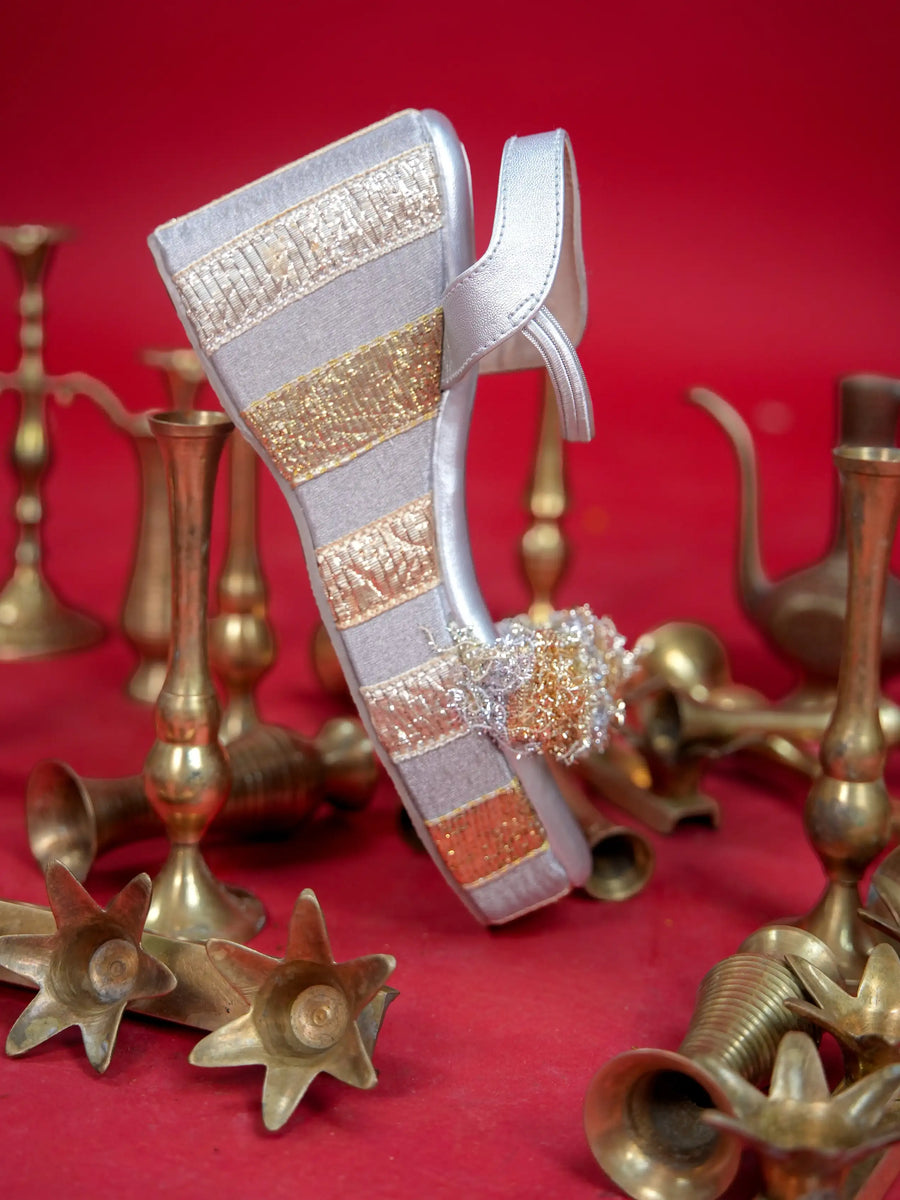
Block heel sandals are a consistently practical pick for Indian wedding sarees: the wide, square heel base holds up across marble flooring, courtyard steps, garden lawns, and the dance floor in a way a stiletto doesn't. For a heavyweight silk saree, an embellished gold or silver block heel gives you the height to lift the drape to the right length while staying steady through every function. Shop our golden wedding heels or browse the full bridal footwear for women collection.

Tips for Choosing Footwear for a Heavyweight Saree
Colour is the most visible factor. Metallic gold and silver are the most versatile options and work with almost any saree colourway. For deep reds, maroon, or navy, gold is the traditional and reliably elegant choice. For lighter or pastel sarees in ivory or soft green, silver, blush, or pearl tones give a softer, more refined look.
Comfort matters just as much. Indian wedding functions typically run several hours of standing, walking, and dancing, so prioritise a cushioned insole and, for heels, an ankle strap that distributes weight evenly. Block heels and strappy sandals with ankle straps tend to hold up best over a long function.
Try your chosen shoes with the actual saree, or one of similar weight, before the wedding day. This confirms the heel height gets the drape length right, and wearing the shoes around the house beforehand helps them soften up rather than breaking them in for the first time on the day itself.
More Saree Styling Guides
If your saree isn't a heavyweight silk, our guide to 10 unique sarees and what shoes to wear with each covers lighter fabrics like Chanderi and Bandhani in more detail. For a specific look at handcrafted flat footwear, see our Kolhapuri chappals styling guide.
Frequently Asked Questions
What sandals are best to wear with a saree?
Strappy heeled sandals and embellished flat sandals are the most practical choices for a saree. The open-front design lets the pleats move without catching underfoot. For a heavyweight silk saree like a Baluchari, a strappy sandal with a 5 to 7 centimetre heel works well; for lighter fabrics or daytime events, a flat strappy sandal or embellished jutti is the more comfortable option.
What heels should I wear with a saree?
Block heels and strappy heeled sandals are the most reliable heel styles for a saree, since the wider base holds up across uneven flooring and long functions better than a stiletto does. A heel between 5 and 7 centimetres suits most heavyweight silk sarees; kitten heels work better with lighter fabrics like Chanderi or georgette.
What shoes should I wear with a saree for a wedding?
Embellished block heels, strappy heeled sandals, embroidered mules, and traditional juttis are the most complementary options for a wedding saree. Match your footwear to the saree's fabric weight: heavier silks call for structured, embellished shoes, while lighter fabrics pair better with flats or low heels.
Are chappals or fancy slippers okay to wear with a saree?
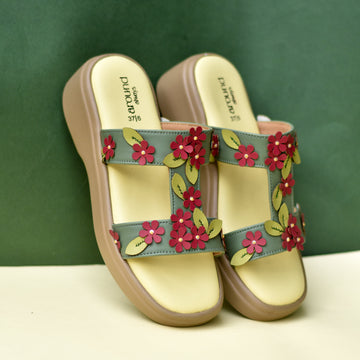
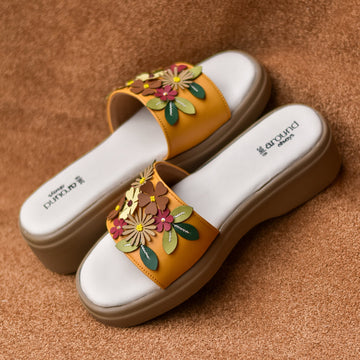
Yes. Embellished chappals, Kolhapuri-style sandals, and embroidered flat slippers are all appropriate with a saree, particularly for daytime or lower-key functions such as haldi or a family gathering. For the main wedding ceremony, most brides pair a more structured heel or wedge with a heavyweight silk saree, keeping flats and chappals for the more casual functions.
What is the best saree matching footwear by colour?
Gold is the most universally complementary shoe colour, pairing with almost any saree background colour. Silver works well with lighter or cooler-toned sarees. For ivory or pale gold sarees, pearl or nude-toned shoes create a softer, more refined look.