10 Unique Sarees of India and How to Team Footwear with Each (2026 Guide)

10 Unique Sarees of India and How to Team Footwear with Each (2026 Guide)

The best footwear for a saree depends on the saree’s fabric, weight, drape, and occasion. Heavy silk sarees like Kanjeevaram, Banarasi, Paithani, and Muga silk pair best with embellished heels, mojaris, Kolhapuri heels, and gold sandals. Lightweight sarees like Chanderi, Kasavu, Sambalpuri, and Pochampally work better with wedges, kitten heels, strappy sandals, and stable block heels. This guide covers 10 famous sarees of India and the best shoes to wear with each for weddings, festive events, and special occasions in 2026. Use it to choose saree shoes that looks balanced, feels comfortable, and completes your ethnic look.

Saree-to-Footwear Pairing Guide

Saree Type

Region

Best Footwear

Why It Works

Kanjeevaram Silk

Tamil Nadu

Golden Kolhapuri heels, metallic block heels

Metallic tone echoes the zari border without overpowering the weave

Banarasi

Uttar Pradesh

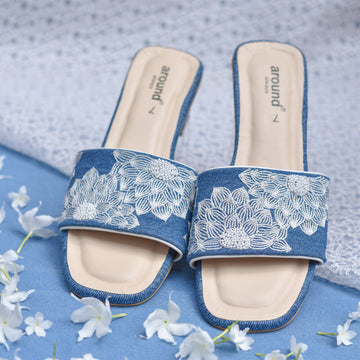
Embroidered mojaris, embellished block heels

Threadwork mirrors the saree's brocade for a cohesive look

Patola

Gujarat

Neutral or tonal block-heel sandals

Grounds the bold ikat pattern instead of competing with it

Chanderi

Madhya Pradesh

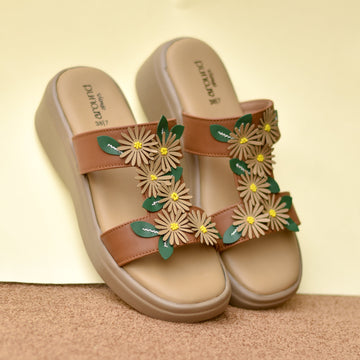
Peep-toe ethnic wedges

Lightweight fabric pairs best with equally light, comfortable footwear

Paithani

Maharashtra

Kolhapuri heels (metallic or bright tones)

Shared Western-Indian artisan heritage creates regional cohesion

Bandhani

Rajasthan

Embroidered juttis (wedding); embellished sneakers (sangeet)

Festive energy suits both traditional and dance-friendly options

Kerala Kasavu

Kerala

Gold-toned strappy sandals

Accents the gold zari border without disrupting the saree's simplicity

Sambalpuri

Odisha

Leather wedges in tan, brown, or dark gold

Earthy tones match the ikkat weave; stable sole suits long events

Muga Silk

Assam

Kitten heels in golden or beige

Moderate heel height complements the saree's natural golden sheen

Pochampally

Telangana

Contemporary block heels

Modern silhouette complements the bold, angular double-ikat pattern


1. Kanjeevaram Silk Saree (Tamil Nadu)


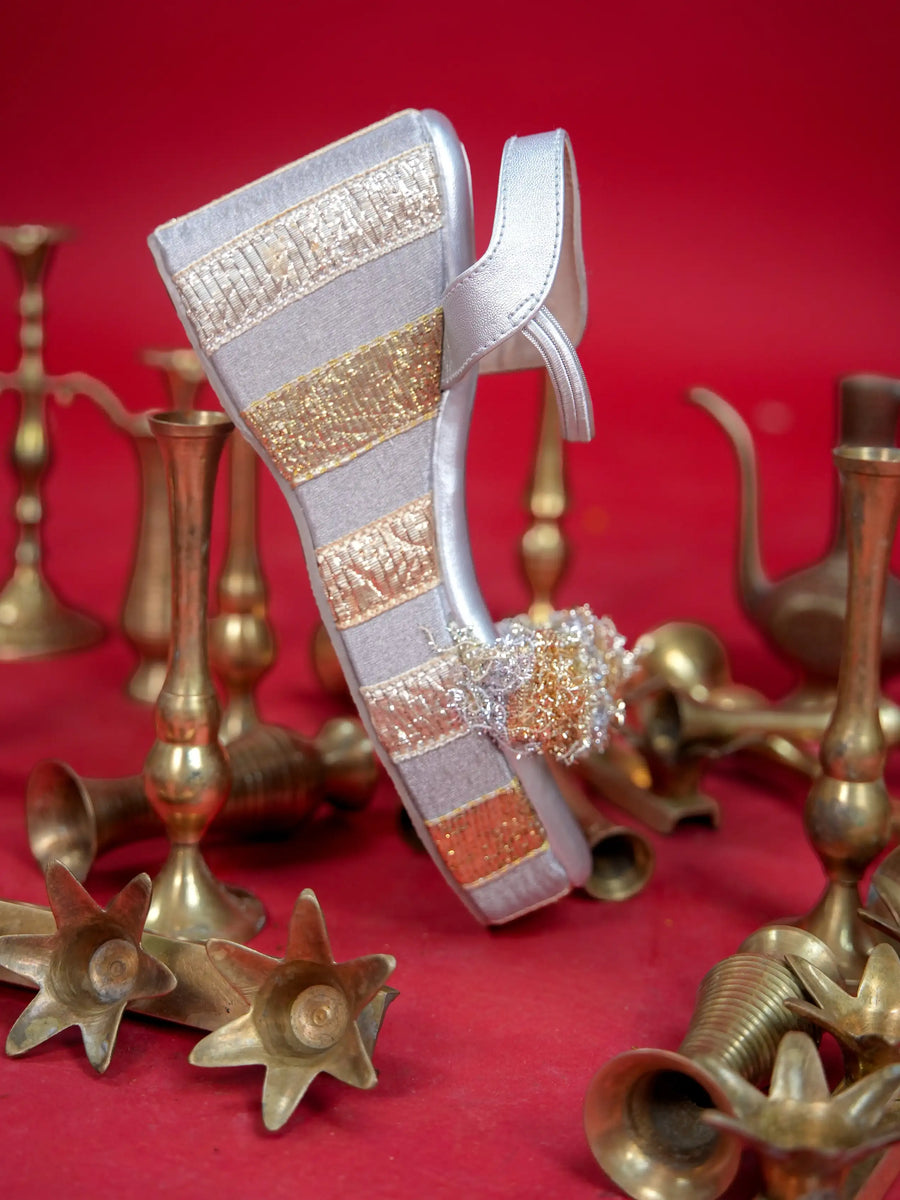
Kanjeevaram sarees are the epitome of luxury in Indian silk. The rich fabric weight, elaborate zari borders, and jewel-toned colours of a Kanjeevaram call for footwear that matches their grandeur without overpowering the weave. Golden Kolhapuri heels and metallic block-heel sandals are the most complementary choices. The warm metallic tone of the shoe echoes the zari work in the saree, creating a unified look from head to toe. Whether worn by the bride or a wedding guest, gold-toned embellished ethnic heels are the natural partner for a Kanjeevaram saree.


2. Banarasi Saree (Uttar Pradesh)

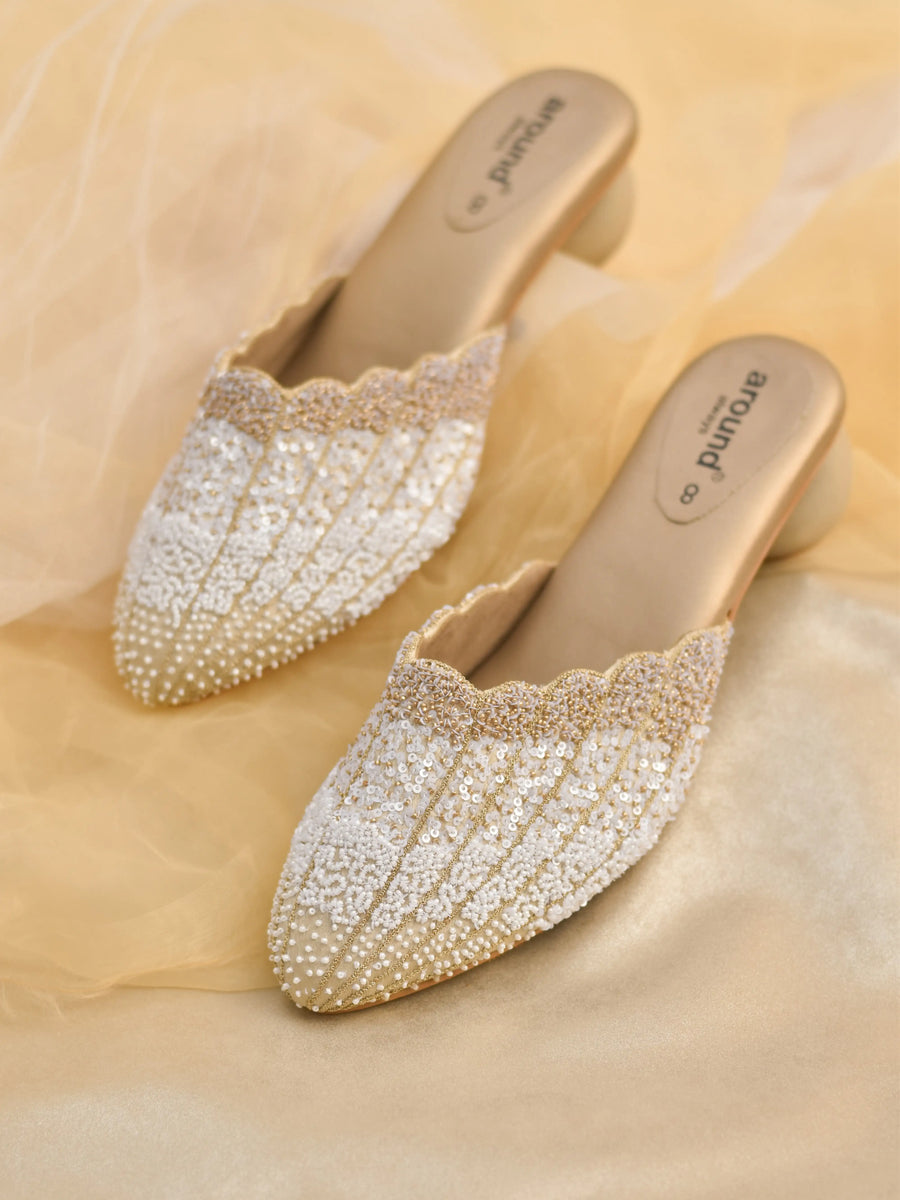
Banarasi sarees are celebrated for their stunning brocade work, intricate motifs, and rich jewel-toned colours, making them a favoured choice for weddings and formal occasions across India. Embroidered mojaris are the most traditional and culturally resonant footwear pairing for a Banarasi saree. The zari embroidery and threadwork on the mojari reflect the richness of the saree, tying the entire look together. For more contemporary styling, embellished block heels in matching or complementary colours work equally well. Find the right Indian wedding sandals and heels to complete your Banarasi look.

Also read: 10 Best Heels for Wedding to Wear with a Saree

3. Patola Saree (Gujarat)


Known for its intricate double ikat weaving technique and bold geometric patterns, the Patola saree commands attention in any room. The vivid patterns and vibrant palette of the Patola call for footwear that provides a grounded, understated balance rather than competing with the visual energy of the saree. A block-heel sandal in a neutral or tonal shade is the ideal choice: it adds height and polish while letting the saree remain the focal point of the look. Browse our block heel sandals for sarees for comfortable styles suited to all-day wear.


4. Chanderi Saree (Madhya Pradesh)

Chanderi sarees are prized for their lightweight fabric, subtle gold motifs, and the distinctive sheer quality of their weave, making them a natural choice for summer weddings and daytime ceremonies. The delicate, minimalist nature of a Chanderi calls for footwear that complements rather than overwhelms. Peep-toe ethnic wedges are a particularly well-suited pairing: they add height and visual interest while maintaining the easy elegance the saree projects. The wedge sole also provides comfort for extended wear without sacrificing style. Explore our ethnic wedges for women in styles that suit lightweight sarees.


5. Paithani Saree (Maharashtra)

The Paithani saree is a statement of Maharashtrian heritage, woven in rich silk with intricate peacock and flower motifs and characterised by its vibrant colour combinations. Pairing a Paithani with Kolhapuri heels creates a harmony of tradition and regional identity, with both the saree and the footwear rooted in Western Indian artisan craft. Kolhapuris in metallic shades or bright complementary tones balance the visual richness of the Paithani while keeping the look grounded and culturally cohesive. Shop our range of Indian bridal footwear for traditional and contemporary Kolhapuri styles.


6. Bandhani Saree (Rajasthan)

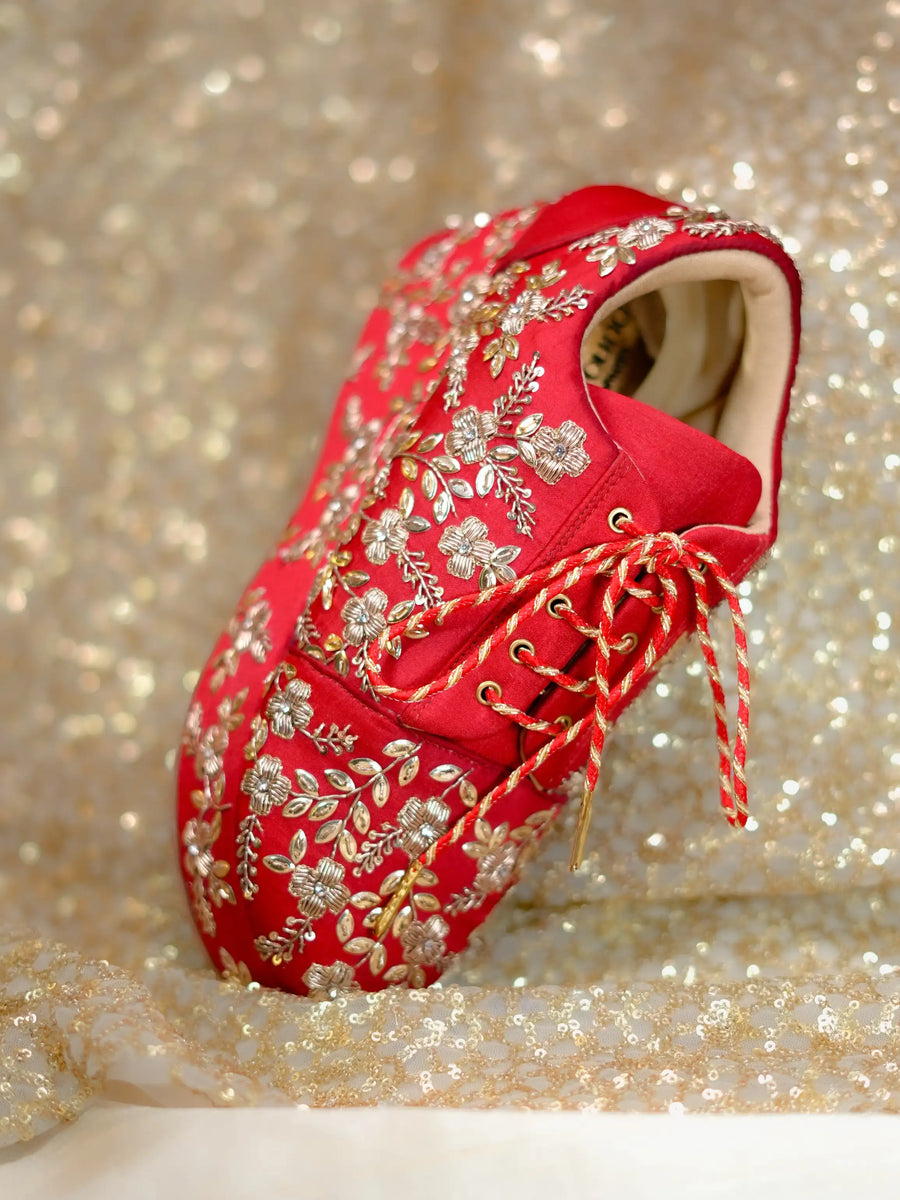
The Bandhani saree is celebrated for its vibrant colours and lively patterns created through a traditional tie-and-dye technique. The festive energy of a Bandhani saree gives it a unique versatility: it works equally well with traditional footwear and contemporary styles. For wedding ceremonies, embroidered juttis in gold or jewel tones are the most culturally fitting choice. For sangeet nights and pre-wedding functions where dancing is the priority, embroidered wedding sneakers with sequin or threadwork detailing suit the playful energy of the saree and allow full freedom of movement throughout the evening.


7. Kerala Kasavu Saree (Kerala)

The Kerala Kasavu saree, with its signature ivory fabric and gold zari border, represents grace and understated elegance at their finest. The beauty of this saree lies in its simplicity, and the right footwear should honour that restraint. Gold-toned strappy sandals are the most complementary pairing: they accent the gold border of the saree without introducing additional complexity or distraction. Minimalist in design but refined in impact, these gold strappy sandals for sarees maintain the quiet elegance of the Kasavu while adding the right amount of glam for wedding and festive occasions.

8. Sambalpuri Saree (Odisha)


Sambalpuri sarees are handwoven masterpieces distinguished by their elaborate ikkat patterns and the exceptional skill of the weavers who create them. The earthy, grounded character of the Sambalpuri saree pairs naturally with leather wedges in natural or earth tones. Wedges in tan, brown, or dark gold complement the traditional craftsmanship of the saree without overwhelming its detailed weave. The added stability of a wedge sole also makes them a practical choice for events that involve extended standing or outdoor settings. Find the right pair in our handcrafted ethnic wedge collection.


9. Saree Made of Muga Silk (Assam)

The Muga silk saree is unique among Indian silks for its natural golden sheen, a characteristic that comes from the wild silkworm of Assam and cannot be replicated artificially. This innate luminosity makes it a distinguished choice for grand ceremonial occasions and formal weddings. Kitten heels in golden or beige tones are the most harmonious pairing for a Muga silk saree. The moderate heel height of a kitten heel complements the natural grace of the saree without overpowering it, and the warm metallic tone echoes the saree's own golden quality. Our comfortable kitten heel sandals are a refined choice for this exceptional silk saree.


10. Pochampally Saree (Telangana)


The Pochampally saree is known for its intricate double ikat weaving technique, where the yarn is tie-dyed before weaving to create precise geometric patterns across the fabric. The bold, angular patterns of the Pochampally saree pair well with contemporary block heels that bring a modern sensibility to the traditional weave. Block heels in complementary or contrasting colours add height and presence to the look while maintaining stability throughout the day. Shop our contemporary block heel sandals for styles that work beautifully with ikat weave sarees.

Also Read: Top Bridal Shoe Options for Every Christian Wedding Style

Conclusion

But perfect pair of shoes could just help you carry the saree to a wedding, festive, or even a traditional day out with more elan. Whether they are bridal sneakers that give a modern twist to weddings or wedding footwear for saree that enhances traditional attire, the perfect pair is out there waiting for you somewhere to complete your outfit. It's all about that perfect blend between comfort and style, where you make sure you look fabulous but at the same time, feel so on your way out in that saree.

Frequently Asked Questions

What shoes to wear with saree?

The best shoes to wear with a saree depend on the fabric and the occasion. For heavyweight silk sarees like Kanjeevaram, Banarasi, and Muga silk, embellished block heels, strappy heeled sandals, and embroidered mojaris are the most complementary choices. For lighter fabrics like Chanderi and net sarees, wedges, kitten heels, and flat strappy sandals work beautifully. For casual or handloom sarees at daytime events, Kolhapuri heels and ethnic juttis are natural pairings.

Which footwear is best for a saree at a wedding?

Embellished block heels, strappy heeled sandals, and embroidered wedges are the most recommended footwear with saree to a wedding. Block heels offer the best stability for long ceremonies, while strappy sandals with ankle straps provide comfort and security through extended wear. For traditional functions, embroidered mojaris or juttis are a culturally resonant choice that pairs well with most Indian silk sarees.

Can you wear sandals with a saree?

Yes. Sandals are one of the most practical footwear choices for sarees because the open-front and open-toe design allows the saree pleats to move freely without catching on the shoe. Strappy heeled sandals, flat ethnic sandals, and embellished block heel sandals all pair well with sarees. Gold and silver metallic sandals are the most versatile colour choices and work with nearly every saree colour.


Related Posts
The right wedding shoes for men depend on the outfit for that specific function. A sherwani calls for an embroidered mojari, nagra or jutti....
Post by Shreya Dabriwal
Jul 09 2026
Kolhapuri chappals for women are one of the smarter footwear choices at an Indian wedding. Handcrafted, GI-tagged since 2019, comfortable for long hours on...
Post by Shreya Dabriwal
Jul 06 2026
Most Indian brides need three pairs of shoes to get through wedding week comfortably: a flat or low heel for haldi, a stable block...
Post by Shreya Dabriwal
Jul 06 2026
Every bride has a dream wedding look in mind: the lehenga, the jewellery, the make-up. Yet one detail is easily overlooked, and that is...
Post by stsdigital solutions
Jun 24 2026
The right footwear for modest, Christian-appropriate dressing sits in a fairly narrow range: closed-toe or moderately open flats and block heels under 2.5 inches,...
Post by Shreya Dabriwal
Jun 24 2026
No matter how much Indian fashion evolves, the Bengali traditional saree endures as something irreplaceable. Indian attire has long been associated with elegance, modesty,...
Post by Milan Karmakar
Jun 24 2026
Indian weddings are extraordinary celebrations not just for their visual splendour but for the rituals that bring families together in laughter, playfulness, and warmth....
Post by stsdigital solutions
Jun 23 2026
Footwear has played a significant role in Indian history, evolving from ancient times to modern fashion runways. Rooted in tradition yet adapting to contemporary...
Post by Farhan Siddiqui
Jun 23 2026