
10 Best Heels to Wear with a Saree for Your Wedding (2026 Guide)
The best heels for a saree are wedge heels, block heels, and kitten heels, chosen for comfort, height, and how well they balance against the drape. Wedge and block heels suit long wedding functions because they distribute weight evenly and hold up on uneven ground; kitten heels and nude heels suit lighter sarees and first-time heel wearers; stilettos and platforms work best for shorter, more formal functions on flat floors. Pick your heel based on your saree's fabric weight, the venue, and how many hours you'll actually be standing.
Quick Reference: Heels by Saree Type
|
Heel Type |
Height |
Best Saree Fabric |
Best For |
|
Wedge Heels |
4–7 cm |
Silk, Banarasi, heavy georgette |
Outdoor weddings, all-day wear |
|
Kitten Heels |
4–5 cm |
Chiffon, net, lightweight silk |
First-time heel wearers, daytime events |
|
Block Heels |
5–7 cm |
Banarasi, Kanjeevaram silk |
Long ceremonies, uneven venue floors |
|
Stiletto Heels |
8–10 cm |
Chiffon, organza, net |
Short receptions on flat, stable floors |
|
Platform Heels |
9 cm heel / 4 cm platform |
Indo-western, contemporary drapes |
Extra height without extra strain |
|
Peep-Toe Heels |
5–8 cm |
Georgette, embellished net |
Sangeet, cocktail functions |
|
Embellished Heels |
Any |
Banarasi, brocade, rich silk |
Coordinating footwear with an ornate outfit |
|
Metallic Heels |
5–8 cm |
Any colour saree |
A neutral that works across multiple events |
|
Nude Heels |
5–7 cm |
Any colour saree, especially bold borders |
Elongating the leg line without competing with the drape |
|
Cone Heels |
6–8 cm |
Silk, brocade, contemporary georgette |
A polished middle ground between block and stiletto |
1. Wedge Heels

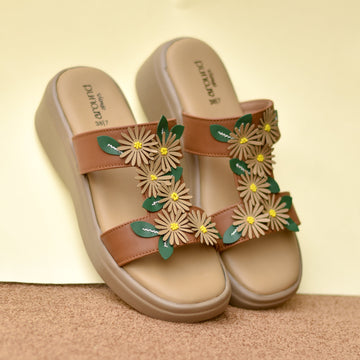
Buy - Malhaar Wedges
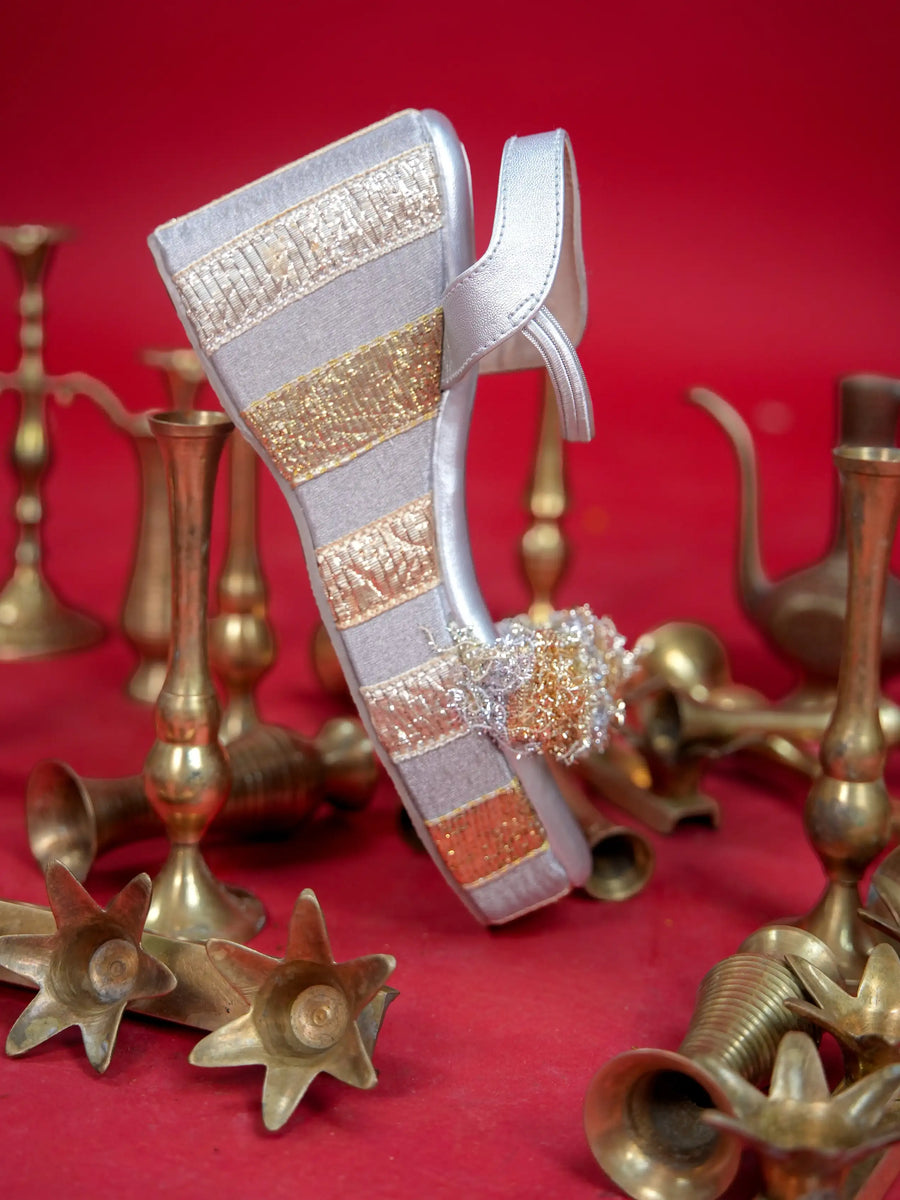
Wedge heels are the most practical choice for long Indian wedding functions and a consistently popular pick for both daytime and evening events. The continuous sole from heel to toe distributes body weight evenly across the foot, which makes a real difference when you're standing, dancing, or walking for six to eight hours. There's no single pressure point, unlike stilettos or block heels, so fatigue sets in far later.
Wedges pair beautifully with silk sarees, Banarasi weaves, and heavy georgette drapes. Their flat base also means they won't sink into grass or soft flooring at outdoor ceremonies. A styling tip that actually works: match the embroidery or metallic tone of the wedge to your saree's border or blouse for a coordinated look. Browse our wedges for women collection for saree-ready styles.
2. Kitten Heels

Buy - Tinsel Sandals | Transparent Kitten Heels
Kitten heels, typically 4 to 5 centimetres in height, are the quiet achievers of bridal footwear. They add a slim, elegant lift without the difficulty of a higher heel and work well with sarees of all fabric weights. Silk, chiffon, and net sarees all look graceful paired with kitten heels because the delicate heel height matches the lightness of the fabric.
For brides or guests who aren't used to wearing heels regularly, kitten heels are the easiest starting point: they give the visual lift of a heel without demanding balance or foot strength, and suit both formal functions and casual pre-wedding events. Browse our pastel heels for soft, kitten-heel-friendly designs.
3. Block Heels

Buy - Vista Block Heel
Block heels are a popular and reliable choice in Indian bridal footwear: the wide, square heel base provides genuine stability on marble floors, temple steps, and uneven venue surfaces. For brides who need to move through a full day of ceremonies without thinking about their feet, block heels are one of the safer options on this list.
Saree pairing with block heels is straightforward: a gold embellished block heel with a Banarasi or Kanjeevaram silk saree is a classic combination in Indian bridal styling. For lighter sarees in chiffon or georgette, a nude or metallic block heel keeps the focus on the drape. Explore our full bridal footwear collection for block-heel styles built for long ceremonies.
4. Stiletto Heels
Stilettos are the most dramatic heel on this list, and the most demanding to wear; both are worth knowing before choosing them. Their narrow, tapered heel creates an elongated silhouette that suits heavily embellished or structured sarees particularly well. For a reception look or a cocktail function on even marble or hardwood flooring, stilettos can be a genuinely striking choice.
The practical caveat is real: stilettos concentrate body weight on a single small point, which causes noticeable foot fatigue after two to three hours, and they're less stable on uneven surfaces, grass, or loose flooring. If you choose them, reserve them for shorter functions on flat, stable floors, and keep a pair of flats nearby for dancing. For saree pairing, stilettos work best with lighter fabrics like chiffon, organza, and net. Browse our sangeet and cocktail footwear for reception-ready stiletto styles.
5. Platform Heels

Buy - Savera Platform Heels
Platform heels add height through a thick sole under the toe as well as the heel, which makes the overall elevation more comfortable than a plain heel of the same height. A 4-centimetre platform under a 9-centimetre heel, for example, produces roughly the same forefoot angle as a 5-centimetre heel on its own, a well-documented comfort effect among podiatrists who study heel design. For taller overall height without the extreme discomfort, platforms are a genuinely smart compromise.
For sarees, lower to mid-height platforms (4–6 cm total) look the most proportionate; extremely high platforms can create a bottom-heavy silhouette that clashes with the drape. Platforms suit contemporary or indo-western saree styling better than a traditional nine-yard drape. Browse our occasion and party wear footwear for platform styles.
6. Peep-Toe Heels
Peep-toe heels add one thing closed-toe heels can't: a glimpse of painted nails, which becomes a deliberate styling detail rather than an afterthought. In Indian wedding fashion, where nail art and mehendi are central to the bridal look, peep-toe heels create a natural connection between the feet's decoration and the footwear.
They work best with sarees that lean modern or fusion: contemporary georgette, embellished net, and pre-stitched sarees with interesting pleats all suit the open-toe design. For traditional silk sarees in heavier fabrics, a more enclosed heel style tends to suit the visual weight better. Browse our festive heels for sangeet-ready peep-toe styles.
7. Embellished Heels

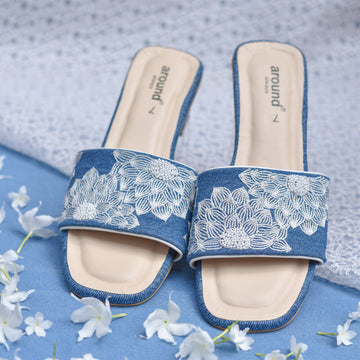
Buy - Angan Wedges | Embellished Indian Heels
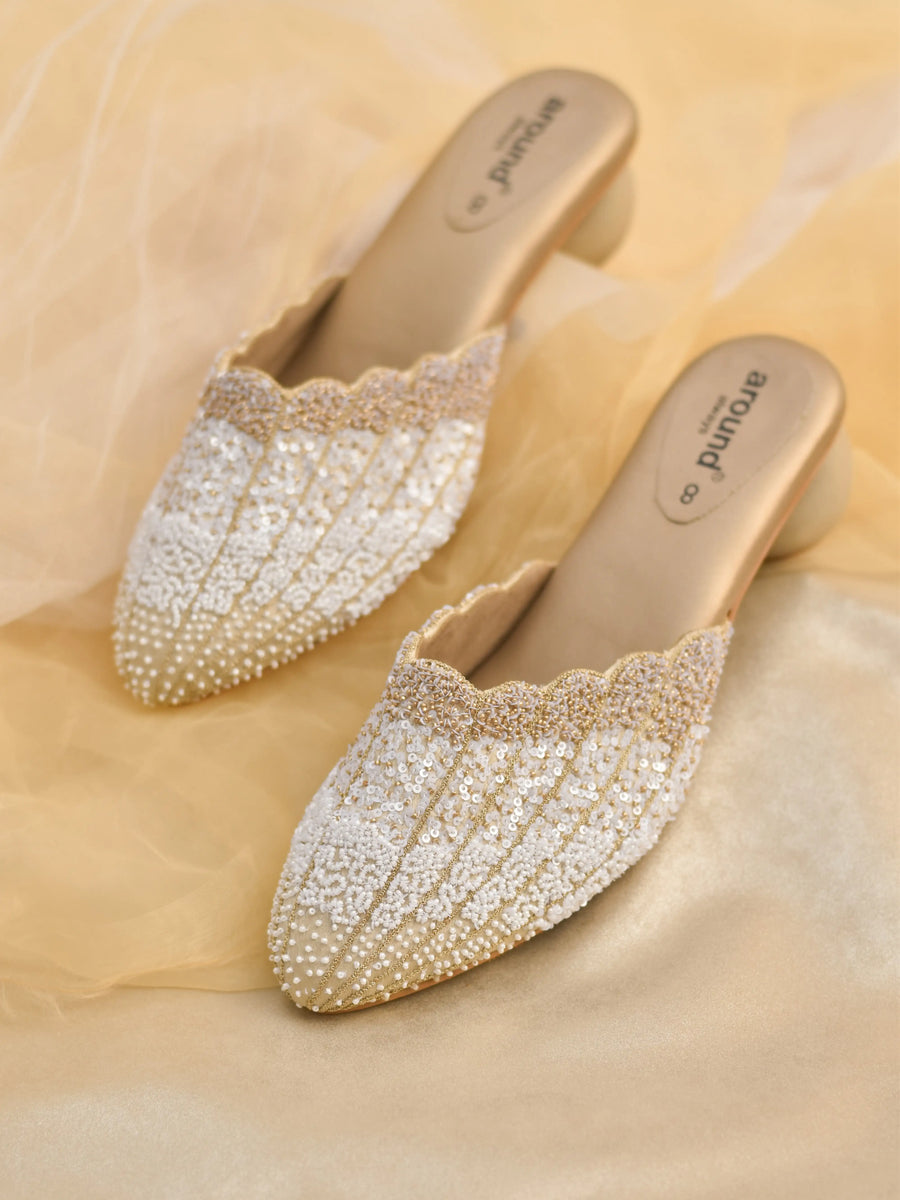
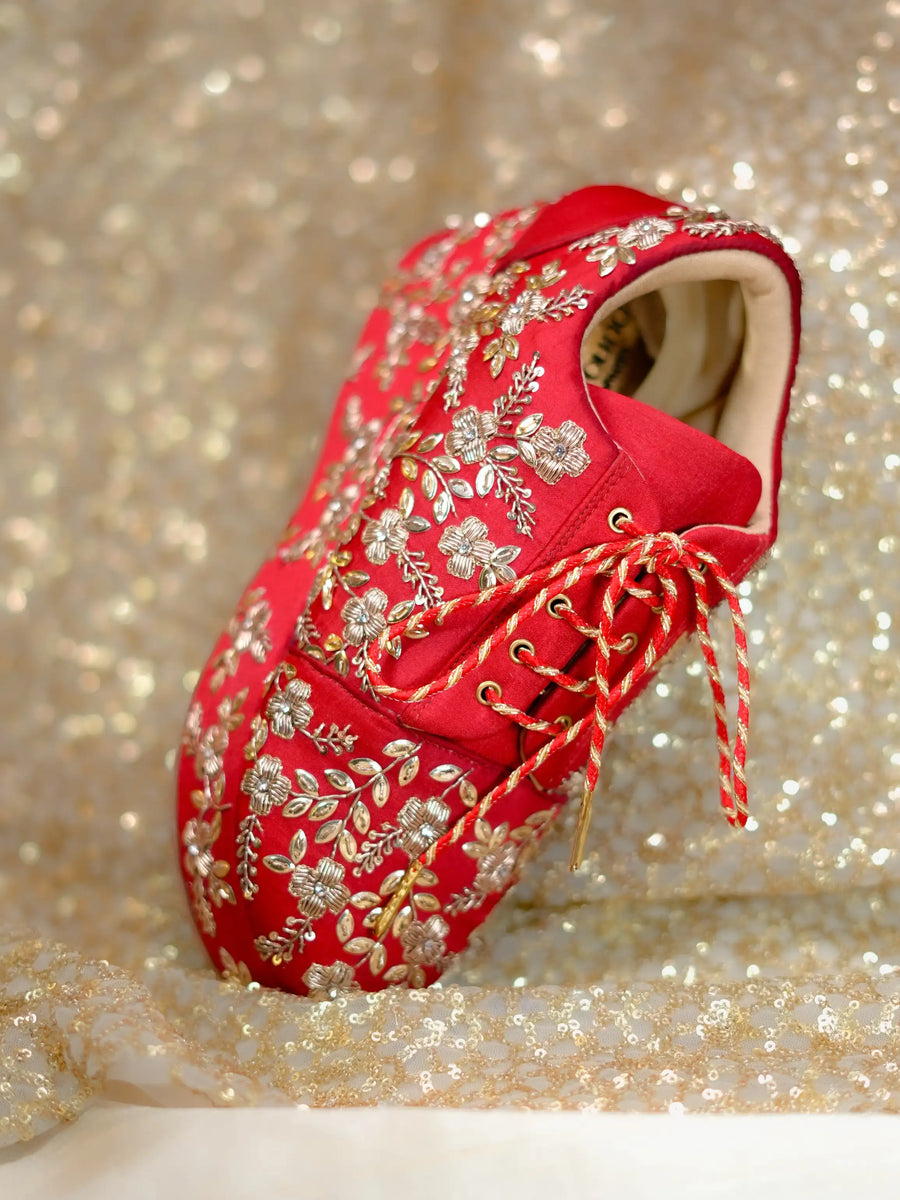
Embellished heels aren't a heel shape, they're a category defined by decoration: zardozi embroidery, kundan and polki work, hand-painted motifs, crystal detailing, and beadwork that turns the heel into a piece of jewellery in its own right. This category has become increasingly available in Indian bridal fashion because it solves a specific problem: the shoe needs to complement the outfit without competing with it.
Embellished heels work across all heel shapes, block, kitten, wedge, or stiletto, and their embroidery can be matched to the saree blouse or border for a coordinated look. They pair best with rich silk sarees, Banarasi weaves, and brocade sarees where the overall look is already layered and ornate. Browse our regal bridal footwear for hand-embroidered styles.
8. Metallic Heels
Metallic heels, gold, silver, bronze, and rose gold, are one of the most versatile categories in wedding footwear because they function like a neutral. A gold metallic heel pairs with most saree colours without clashing, and a silver metallic heel suits cool-toned sarees in blues, greens, and greys. That versatility makes metallic heels a practical choice across multiple wedding events without repeating a look.
Gold heels are a popular choice with silk sarees in warmer tones, deep reds, rich ivories, and jewel blues. Silver heels suit lighter, pastel sarees and chiffon drapes. Explore our golden bridal heels and silver wedding heels, and pick a heel shape that matches the formality of the function, block or wedge for daytime, stiletto or kitten for a formal evening.
9. Nude Heels
Nude heels are one of the more underrated choices for wedding sarees. By matching the wearer's skin tone rather than the outfit colour, they create a continuous line from the ankle downward that visually elongates the leg, a flattering effect with a saree that has visible pleats or a floor-grazing drape. They also never clash with any saree colour, which makes them a safe choice for guests unsure about coordinating footwear.
The key to choosing nude heels well is tone-matching: cool-toned skin suits pinkish or beige-grey nudes, while warm-toned skin works better with caramel or honey nudes. For sarees with bold, statement borders or heavy embroidery, a clean nude heel lets the saree take the spotlight. Explore our white wedding heels collection for near-nude options in ivory and cream.
10. Cone Heels
Cone heels, with a rounded shape that's wider at the top and tapers slightly toward the base, offer a visual midpoint between the wide stability of a block heel and the elegance of a stiletto: more refined than a block heel, more wearable than a stiletto. Their silhouette looks particularly striking when embellished with embroidery or metallic work.
For sarees, cone heels work best with silk, brocade, and contemporary georgette drapes, anywhere you want a heel that reads as polished without looking heavy. The slight taper gives the foot a more defined line than a block heel. Find them in our latest launches collection.
Frequently Asked Questions
What shoes or heel to wear with saree for wedding?
Block heels and wedge heels are the most practical choices for wearing with a saree at a wedding: they provide stability, suit all saree fabrics, and hold up well over long functions. For formal evening events on flat floors, kitten heels and embellished stilettos are elegant options. For outdoor weddings, wedges are the safest choice since they don't sink into grass or soft ground.
What is the best heel height for a saree?
A heel height of 5 to 7 centimetres (about 2 to 3 inches) is the most practical range for a wedding saree. This gives a visible lift and improves the silhouette without significant discomfort during long events. Stilettos above 9 cm are best reserved for short ceremonies on stable floors; kitten heels at 4 cm work well for anyone who prefers minimal height.
Are heels comfortable to wear with a saree all day?
Heel type matters more than height for all-day comfort. Wedge and block heels are the most comfortable for extended wear because they distribute body weight across a wider surface. Stilettos and narrow heels concentrate pressure at a single point and cause noticeable fatigue after 2 to 3 hours. If you're wearing heels for a full day of wedding functions, choose cushioned insoles and a heel with an ankle strap for extra support.
Which heel colour goes best with a red or gold saree?
Gold heels are the most versatile match for red and gold sarees; they complement the warm tones without competing with the colour. For a red Banarasi saree, gold embellished block heels are a classic choice. Nude heels in a warm caramel or honey tone also work well with deep reds, letting the saree colour take centre stage. Silver or cool-toned metallics tend to look mismatched against red in photographs.
Conclusion
There's no single "best" heel for a saree, only the right heel for your saree's fabric, your venue, and how many hours you'll be on your feet. Wedges and block heels are the safest all-day choices; kitten and nude heels suit lighter fabrics and first-time heel wearers; stilettos, platforms, and cone heels are better suited to shorter, more formal functions. Match the heel colour to your saree's border or blouse, and prioritise a cushioned insole and ankle strap if you'll be wearing them for more than a few hours. Browse our best-selling bridal heels to find a pair built for your saree and your day.