
How to Stop a Lehenga Hem from Catching on Your Shoes
A lehenga hem usually catches when it sits too low, meets raised embellishment or pools around the foot during a turn. Stop it by setting the final length in your exact shoes, checking buckles and motifs for rough edges, and testing real wedding movements. Flats still need inspection because beads, toe loops and backless edges can trap delicate fabric. Our guide helps you find and fix the snag before the wedding.
Compare our bridal footwears before the final fitting. Changing shoe height after alteration can bring the fabric closer to the floor.
Why Does Your Lehenga Keep Catching on Your Shoes

Find the contact point first. Its location shows whether you need a hem correction, shoe repair or movement adjustment.
|
What you notice |
Likely cause |
Best correction |
Avoid |
|
Front hem slips under the toe |
Front length is too low for the chosen shoe |
Recheck and pin the hem in the exact pair |
Shortening without the full outfit |
|
Net catches on the shoe upper |
Loose beads, zari work or rough trim |
Repair the snag point or choose a smoother upper (like thread work / resham) |
Testing on the finished lehenga |
|
Back hem catches when stepping back |
Fabric pools behind the foot |
Practise movement and review back clearance |
Pulling the border by its embroidery |
|
Problem starts after changing shoes |
Backup pair has a lower sole height |
Use a similar overall height or plan a hem lift |
A sudden switch from heels to flats |
|
Only one side catches |
Uneven drape, hem or stride |
Test in a mirror and ask the tailor to correct it |
Trimming the border at home |
Fix the Hem Before You Change the Shoe
Choose the wedding shoe before alteration. Wear the same underskirt, can-can and shapewear because they affect how the lehenga falls. The width of the checks in a can-can also determine how often it gets stuck - the larger the checks the more they get stuck.
Ask the tailor to mark the front, sides and back on a level floor. Walk and turn before approving the length. A still hem can catch during a longer step.
Brides' alteration guidance advises bringing the exact wedding shoes to fittings and walking after pinning the hem. The same fitting principle applies to a floor-length lehenga because shoe height changes floor clearance.
Check Every Surface the Fabric Can Touch
Inspect the toe, upper, straps, buckles, crystals and platform rim. Run a soft cotton cloth over them. If it catches, delicate fabric may catch too.
Use only a spare swatch for testing. Never drag the finished border across a shoe. Ask the maker to secure any raised prong, loose bead or exposed thread instead of using glue or tape at home.
Which Shoe Styles Are Less Likely to Catch a Lehenga
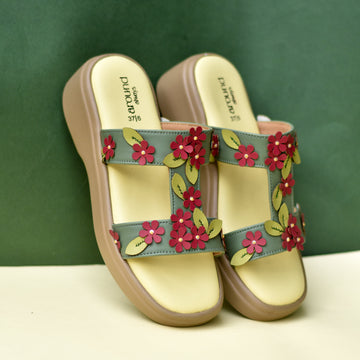
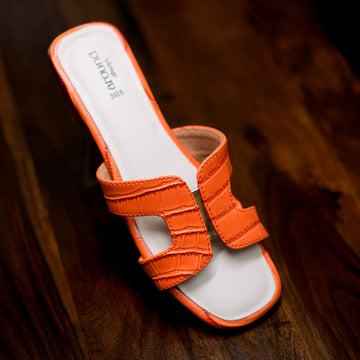
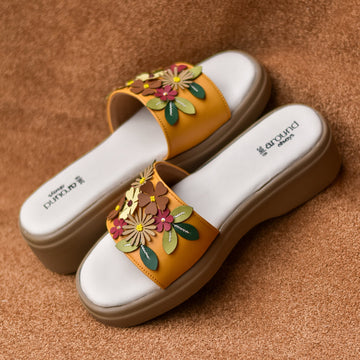
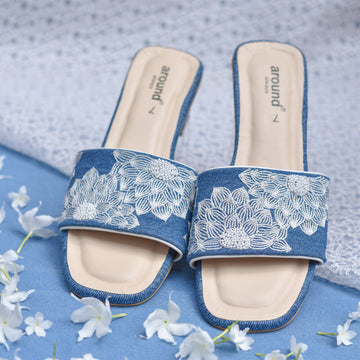
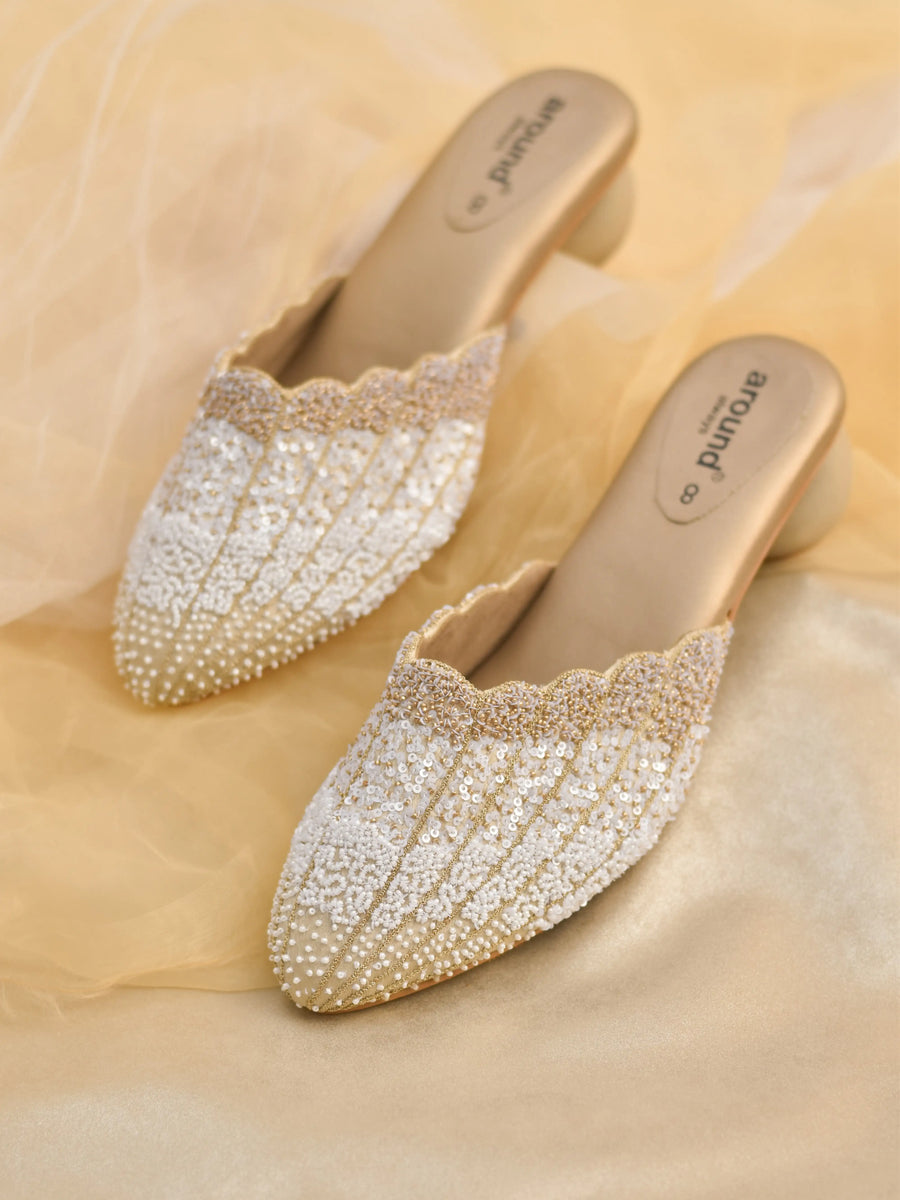
No footwear type is snag-proof. Smooth uppers, secure foot hold and low-profile decoration create fewer contact points. If choosing embellishments, a resham or thread-based upper design fares better than a zari-based, dabka or sequins design. Small pearls are the second best option after threadwork.
-
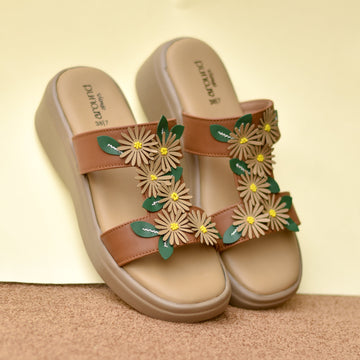
Bridal sandals for lehenga outfits: Check buckles, stone settings and strap ends. Secure straps also limit shoe movement.
-
Embroidered bridal flats: Inspect toe loops, beadwork and backless edges. A flat sole cannot prevent decorative snags.
-
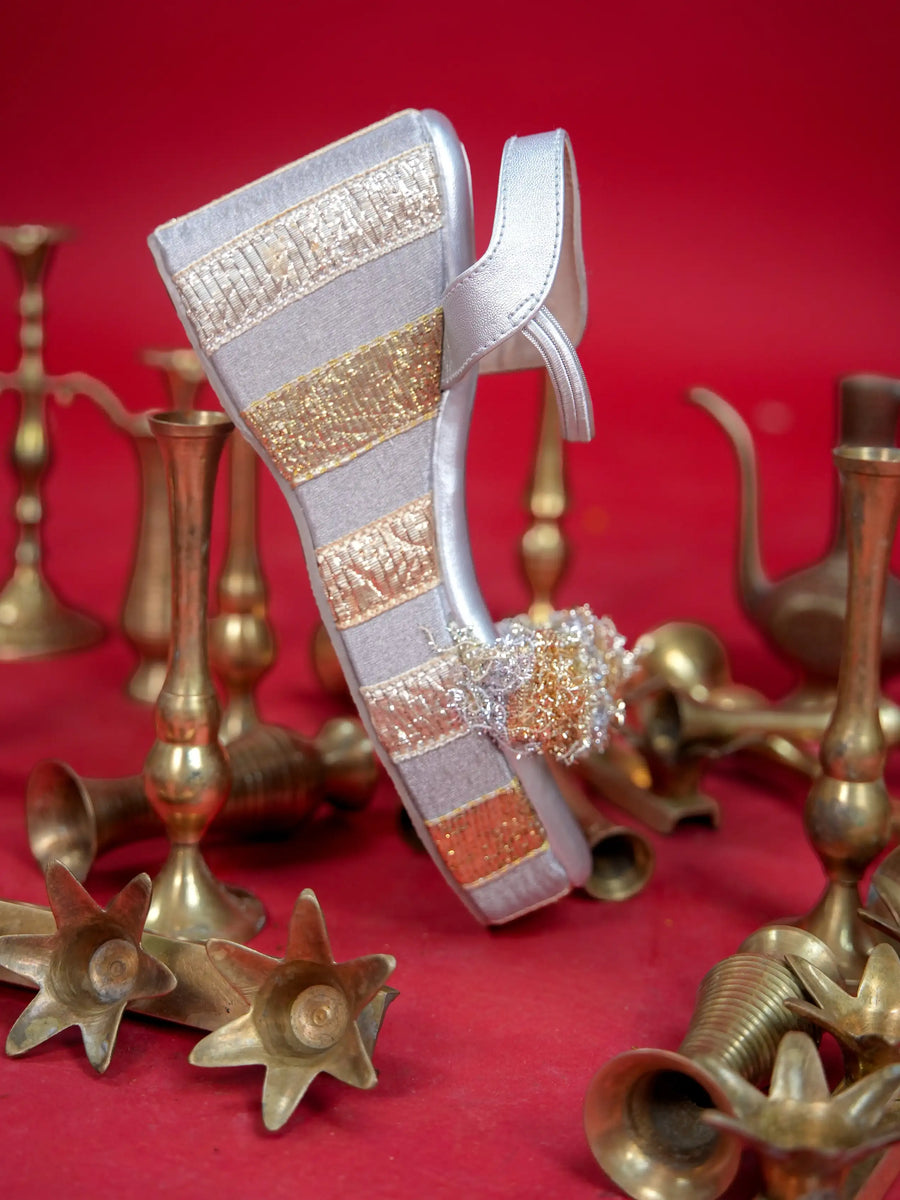
Ethnic wedges: Check the platform rim and side embroidery. The upper still needs a snag test.
-
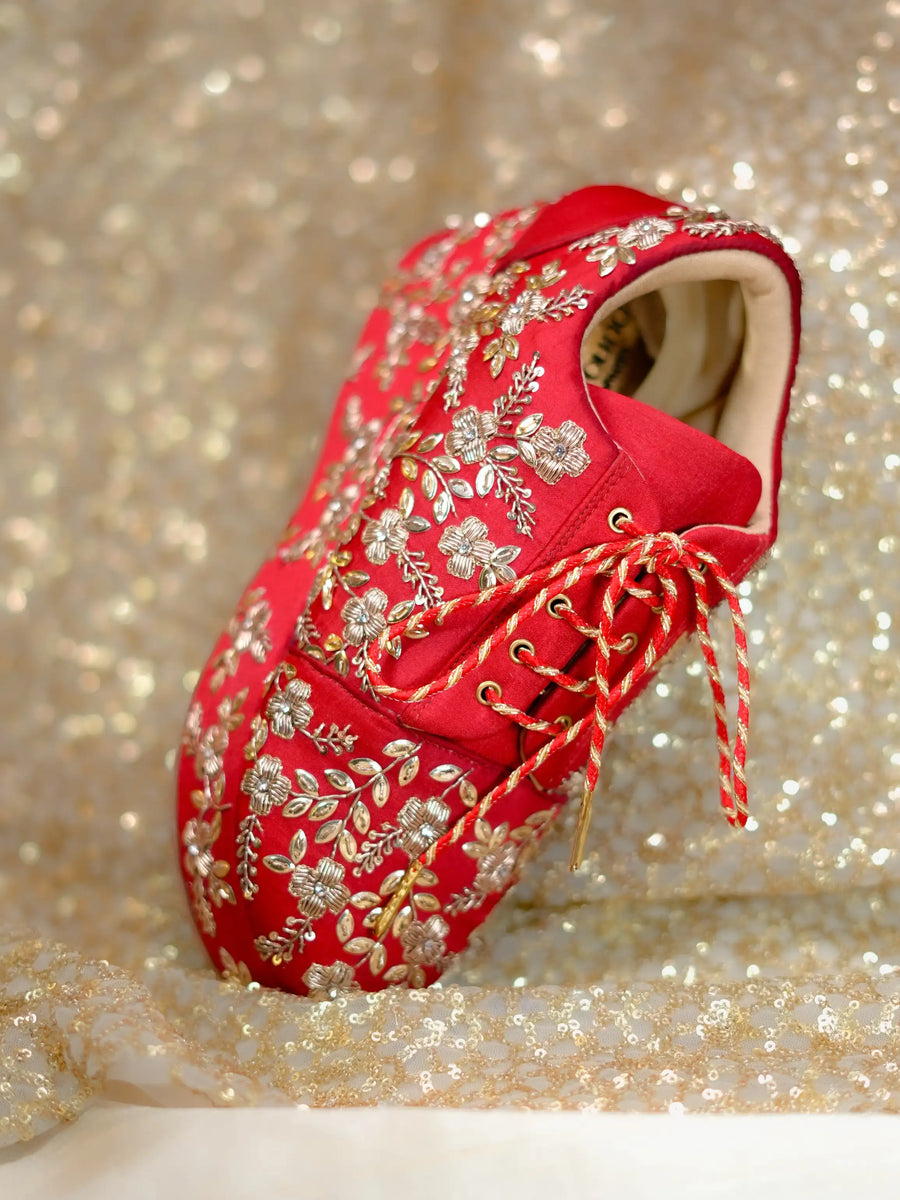
Bridal sneakers: Secure the laces and inspect eyelets and raised motifs. Closed shoes can still catch the net.

Run the Five Movement Test
Wear the complete look on a clean floor. Ask someone to watch the hem from the front, side and back.
-
Walk normally. Take ten steps without lifting the skirt higher than planned.
-
Turn both ways. Check whether the outer layer wraps around the toe.
-
Sit and stand. Watch how the fabric settles around the shoe.
-
Use one step. Lift the lehenga from a safe, unembellished area.
-
Test a dance move. Repeat the turns or side steps expected at the event.
Protect the Hem When You Change Shoes
Keep your backup pair close to the main shoe's overall height. A much lower flat brings the skirt closer to the floor and can cause pooling.
Discuss a lower backup with the tailor. A discreet lifting loop may help when the construction allows it. Avoid last-minute pins through a heavy border because they can strain or catch the fabric.
Choose Your Shoes Before the Final Lehenga Fitting
At Around Always, we recommend finalising the shoe shape and sole height before the last alteration. Your tailor gains a fixed reference and you gain time to repair raised details.
If you need a smoother upper, secure strap or different heel, share your outfit details through our footwear customisation service at Around Always. Confirm changes early and repeat the movement test with the finished pair.
Expert tip: Film from ankle height while you walk and turn. This angle reveals a toe or motif catching the hem faster than a mirror.
Frequently Asked Questions
How do I stop my lehenga from getting caught in heels
Wear the exact heels during the final fitting, correct the hem and inspect raised stones, buckles or loose embroidery. Then test the full outfit.
Should a lehenga hem touch the floor
It may graze the floor, but the front needs clearance for your natural stride. Approve the length while moving, not while standing still.
Do flats prevent a lehenga from catching
No. Toe loops, beads, open backs and rough edges can still catch net or loose threads. Inspect the complete shoe.
Can I change from bridal heels to flats during the wedding
Yes, but a lower pair can make the hem pool. Match the overall height or ask your tailor to plan a safe lift.
Which lehenga fabrics need the closest snag check
Fine net, open lace, loose threads and embellished borders need careful testing around raised details. Use a spare swatch, never the finished hem.