
Men's Wedding Shoes Guide 2026: Sherwani, Jodhpuri, Mojaris & Indo-Western Looks
The right wedding shoes for men depend on the outfit for that specific function. A sherwani calls for an embroidered mojari, nagra or jutti. A Jodhpuri suit, or bandhgala, looks sharper with a cleaner leather loafer or a lightly worked mojari. An Indo-Western outfit works best with a plain loafer or a white sneaker. Most grooms carry two or three pairs across a multi-day wedding, since haldi, the wedding ceremony and the reception each call for a different level of formality. This guide covers which shoe suits which outfit, the real difference between a mojari and a jutti, and what to check for comfort before wedding week begins.
Best Shoes to Pair With a Sherwani

Embroidered mojaris, nagras or juttis remain the classic pairing with a sherwani, and they still work best for a traditional look today. For a more minimal, modern sherwani, a closed leather loafer is a solid alternative.
If you are still deciding on the right sherwani for your wedding, this guide to picking the perfect wedding sherwani can help you choose the outfit before finalising your footwear.
Where the Sherwani Comes From
The sherwani took its current shape in 19th-century British India, evolving from the Mughal-era angarkha and achkan and picking up the tailored, buttoned-front line of the British frock coat; the style is generally traced to Lucknow in the 1820s (source: Wikipedia). Since the outfit already carries embroidery and a structured silhouette, the footwear traditionally matches that register instead of competing with it.
What to Look For
● Traditional sherwani: embroidered mojaris or juttis - the classic, safest pairing
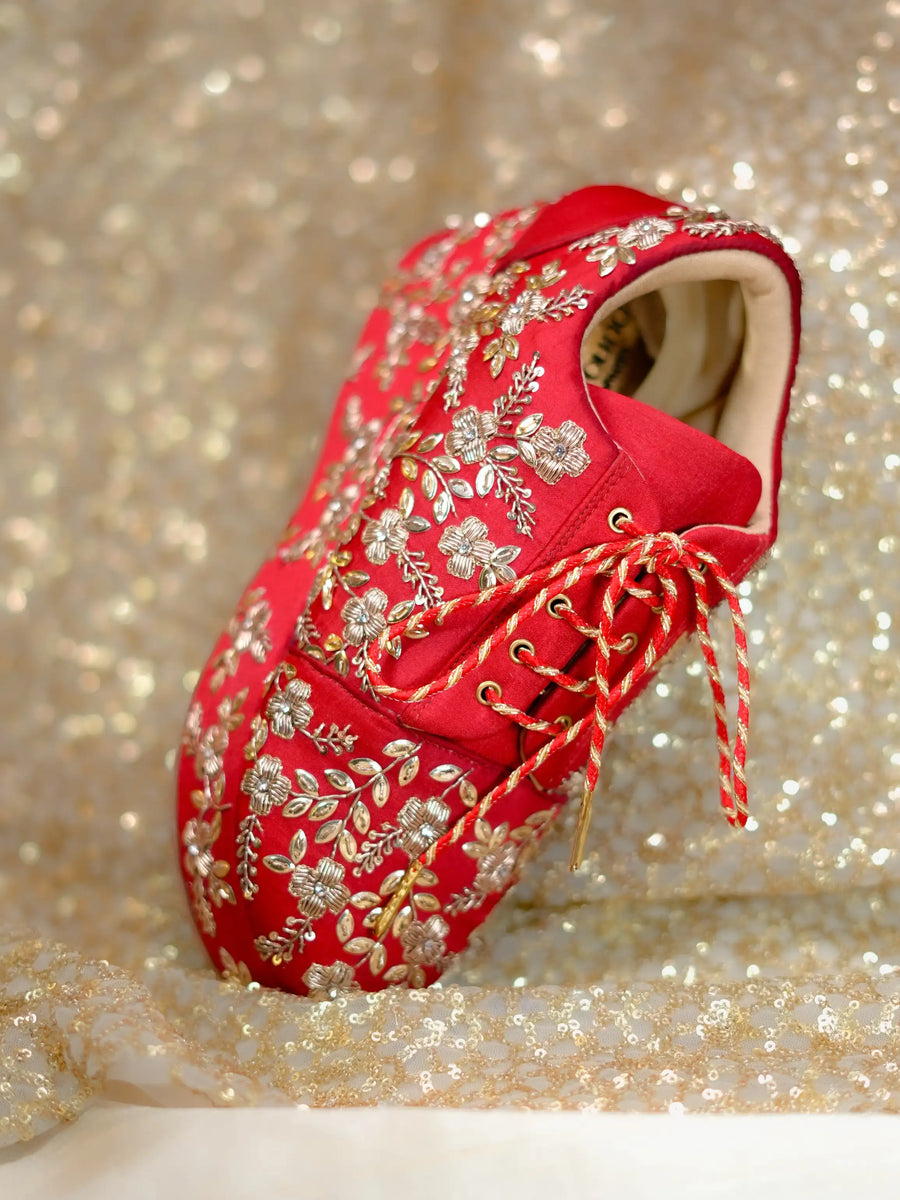
● Colour match: zardozi or thread-work shoes in gold, maroon, or the sherwani's own base colour
● Modern, minimal sherwani: a closed leather loafer instead of heavy embroidery
● Comfort check: look for a cushioned insole under the embroidery; a flexible, low-heel sole helps. Avoid a stiff, no-give sole.
Footwear for a Jodhpuri Suit or Bandhgala
A Jodhpuri suit pairs better with sleeker, more structured footwear - think polished loafers or a lightly worked mojari, not the heavily embroidered pair that suits a sherwani.
Where the Bandhgala Comes From
The Jodhpuri suit, also called a bandhgala (literally “closed neck”), originated in the princely state of Jodhpur in Rajasthan and gained popularity from the mid-19th to the mid-20th century, blending Indian royal dress with Western tailoring (source: Wikipedia). That blend is exactly why the shoes should lean cleaner.
What to Look For
● Western-cut Jodhpuri suit in a solid fabric: a black or tan leather loafer
● Suit with visible handwork, closer to ethnic wear: a lightly embroidered mojari
● Navy or bottle-green Jodhpuri suits, common at daytime functions: tan or oxblood footwear instead of stark black
Mojari or Jutti: What's the Real Difference?

Mojaris come from Rajasthan and have a curled, upturned toe. Juttis come from Punjab, with a flatter front and a closed back. Both are handcrafted, and both work at weddings - the choice usually comes down to the outfit and the function.
Mojari vs Jutti at a Glance
● Mojari: Rajasthani origin, curled upturned toe; suits a strong Rajasthani look, turban included, and brighter colours
● Jutti: Punjab origin, flatter front with a closed back; suits Punjabi-style functions, sangeet nights and mehendi
● Craft: both are made from leather, hand-stitched and embroidered rather than machine-made, which is why fit matters more here than with factory shoes
● Sizing: go half a size up - handcrafted leather softens with wear, and a snug fit on day one gets uncomfortable well before the wedding day ends
How Footwear Changes Across Wedding Functions
Most grooms buy one strong pair and improvise for the rest. Haldi and mehendi call for something light and easy to clean, the wedding ceremony calls for the most formal pair, and sangeet or reception nights leave room for Indo-Western footwear.
For haldi, a simple kolhapuri or an open mojari works better than an expensive embroidered pair, since turmeric doesn't wash out of silk thread easily. The wedding ceremony is where the sherwani shoes or the most detailed mojari should come out, since this is the outfit guests and photographers focus on the most.
Reception and sangeet nights are more forgiving. A groom can switch to a simpler formal shoe, or move into loafers and sneakers if the outfit turns Indo-Western for the night. Carrying two or three pairs across a three-day wedding is normal, not excessive.
Best Wedding Shoes for Men in an Indo-Western Look
For an Indo-Western look, the safer bet is a clean white sneaker, a minimal loafer, or a slip-on, paired with a bandhgala jacket and trousers, or a kurta with tailored pants instead of a dhoti.
Indo-Western has become a real category at Indian weddings, not just a sangeet trend - grooms now wear it for cocktail nights and sometimes the reception too. The rule stays simple: keep the shoe understated. A heavily embroidered mojari fights with a modern silhouette, while a plain leather loafer or a well-made sneaker lets the outfit lead.
Choosing the Right Wedding Shoes: A Practical Checklist
Comfort first, colour second, customisation if the budget allows. A groom is usually on his feet for eight to ten hours across functions, so the shoe has to survive standing, the baraat and the dance floor.
Colour
Ivory, beige, gold, tan and burgundy remain the most reliable choices for groom wedding shoes. Tan in particular works under almost any sherwani or suit colour, as long as the rest of the outfit carries the boldness.
Comfort
Check the insole, not just the upper. A beautifully embroidered shoe with a flat, hard base starts hurting by the third function, usually right when the photos matter most. Wearing the shoe around the house for an hour or two before the wedding, the way you'd break in a pair of formal work shoes, beats opening the box for the first time on the day itself.
Customisation and Sizing
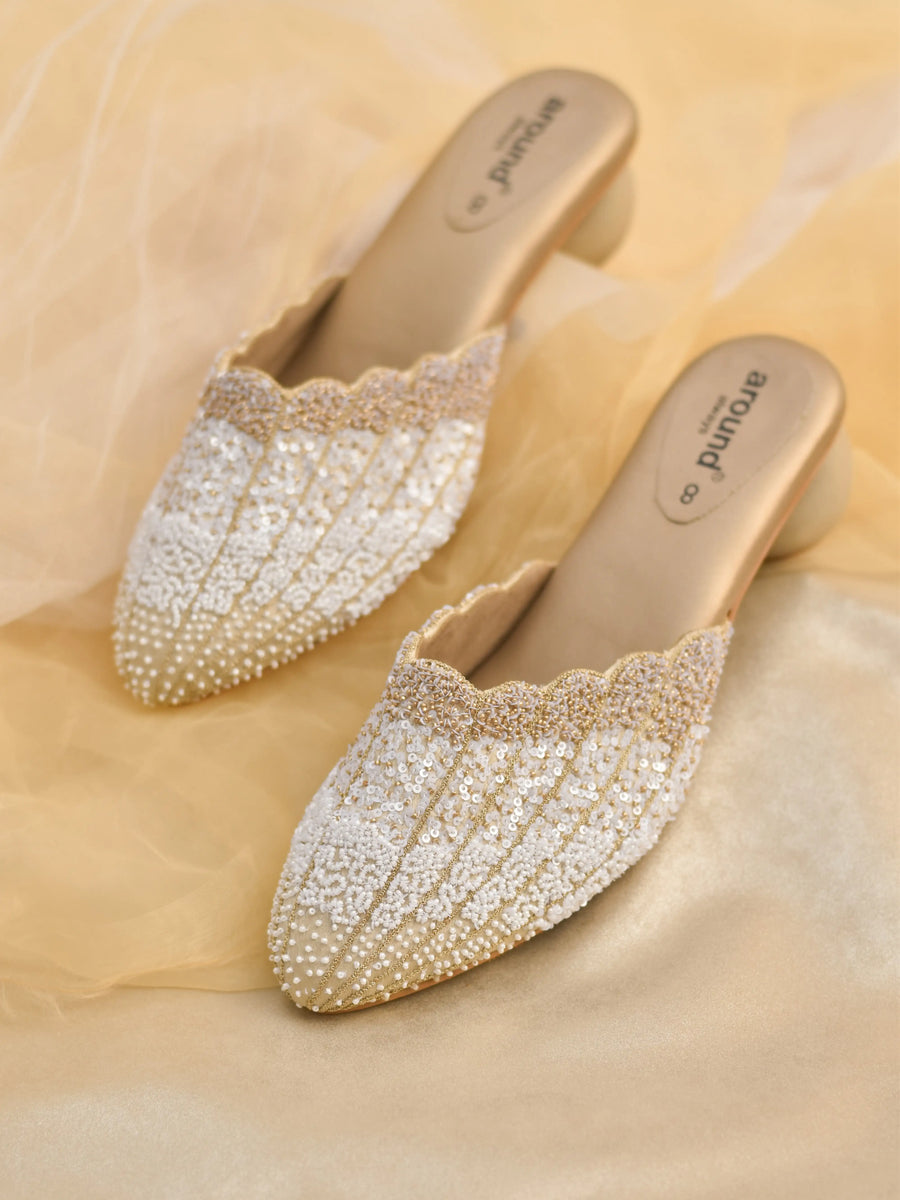
At Around Always, we make custom groom shoes, matching heel comfort, embroidery and colour to the outfit instead of the other way around. That's worth considering when a wedding has multiple functions and outfits, since one custom-made pair can be adjusted for colour rather than buying three separate pairs for three separate days. We've shipped 10,000+ pairs this way, and sizing feedback from real wedding days feeds back into fit, not just design.
Size matters more with hand-stitched footwear than with regular formal shoes, since embroidery and suede lining add bulk that machine-made shoes don't carry. Trying the exact pair on, or checking a detailed size chart before ordering online, saves a last-minute exchange during wedding week. A custom fit also accommodates a wider foot, which is common among Indian men.
Conclusion
There's no single best wedding shoe for men, only the right shoe for that day's outfit. A heavily embroidered mojari belongs with the sherwani, a cleaner loafer suits the Jodhpuri, and a jutti or loafer carries the sangeet or mehendi better than either. Indo-Western nights call for something quieter still: a sneaker or slip-on that lets the outfit lead.
Comfort matters more than any of that, since a groom is on his feet far longer than he expects. Browse the full Men's Wedding Shoes collection at Around Always, or explore more wedding style guides on the blog.
Frequently Asked Questions
What is the difference between sherwani shoes and Jodhpuri shoes?
Sherwani shoes usually carry heavier embroidery and suit maroon, gold or ivory sherwanis. Jodhpuri suits look sharper with cleaner, structured loafers or lightly worked mojaris.
Can a groom wear sneakers with a sherwani?
Not for a traditional sherwani look. Sneakers work better with Indo-Western outfits or a bandhgala paired with trousers.
What colour shoes work best with an ivory or beige sherwani?
Gold, maroon and tan mojaris pair well with ivory or beige. Black often looks too stark against lighter fabrics.
Are mojaris comfortable for a full wedding day?
A well-made mojari with a cushioned insole can handle a full day. Cheaper, hard-soled versions usually can't, so check the inside before buying, not just the embroidery on top.
What is the difference between a mojari and a jutti?
Mojaris come from Rajasthan and have a curled toe. Juttis come from Punjab and have a flatter front with a closed back.