
Around Always vs Indian Footwear Brands: Who Wins in Style and Comfort?
The real differences between bridal footwear brands usually come down to three things: whether sizing accounts for foot width and arch and not just length, whether the embroidery is hand-done (zardozi, dabka) or machine-printed, and whether colour, heel height, and embellishment can be changed per order. Around Always has built its process around all three, shipping 10,000+ orders to brides in 33+ countries over seven years, with a 4.8-star customer rating. This guide sets out what to actually check when comparing bridal footwear brands, using that process as a working example.
What to Check When Comparing Bridal Footwear Brands
|
Feature |
What to Check |
Around Always's Approach |
|
Sizing |
Does it adjust for foot width and arch, not just length? |
Custom width/arch adjustments on request; separate sizing guidance for open-toe vs. closed-toe styles |
|
Embroidery |
Hand embroidery (zardozi, dabka) or machine-printed motifs? |
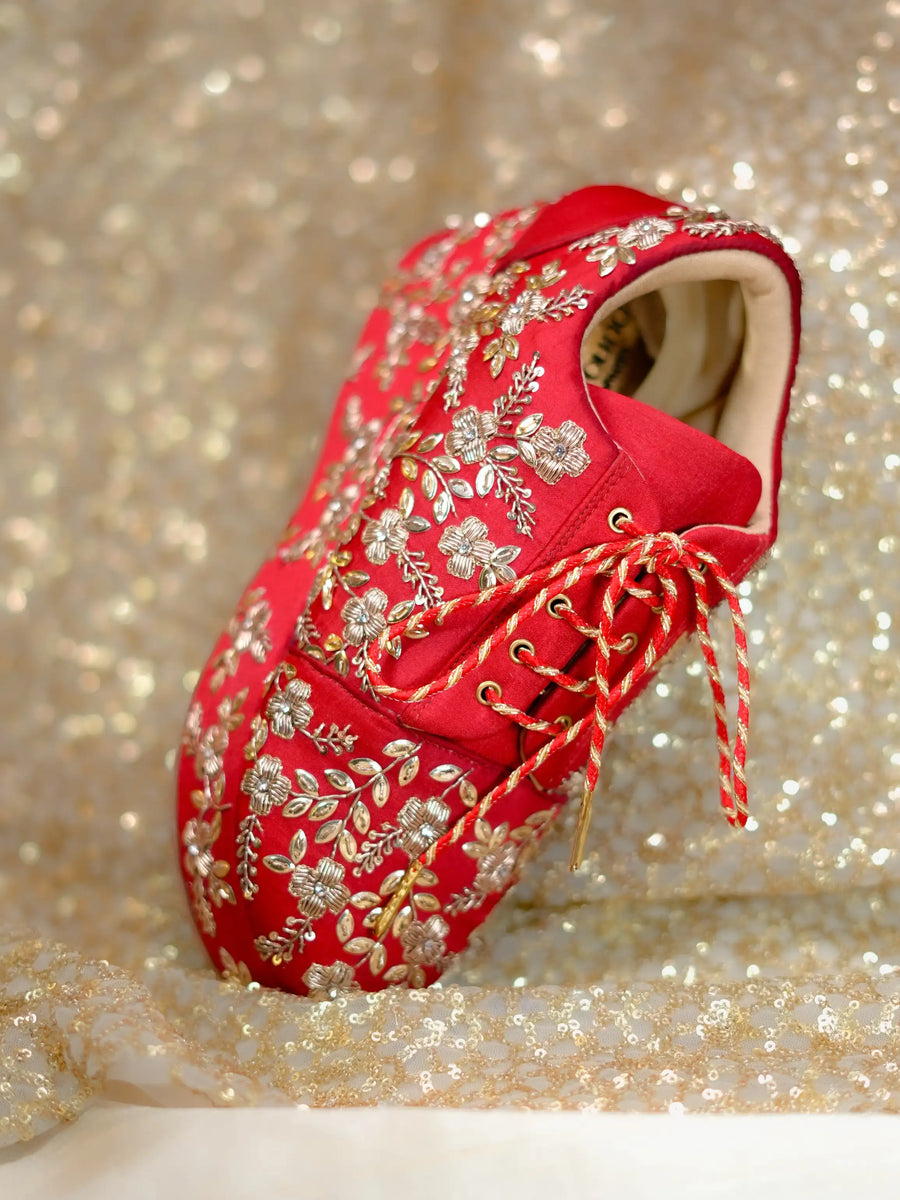
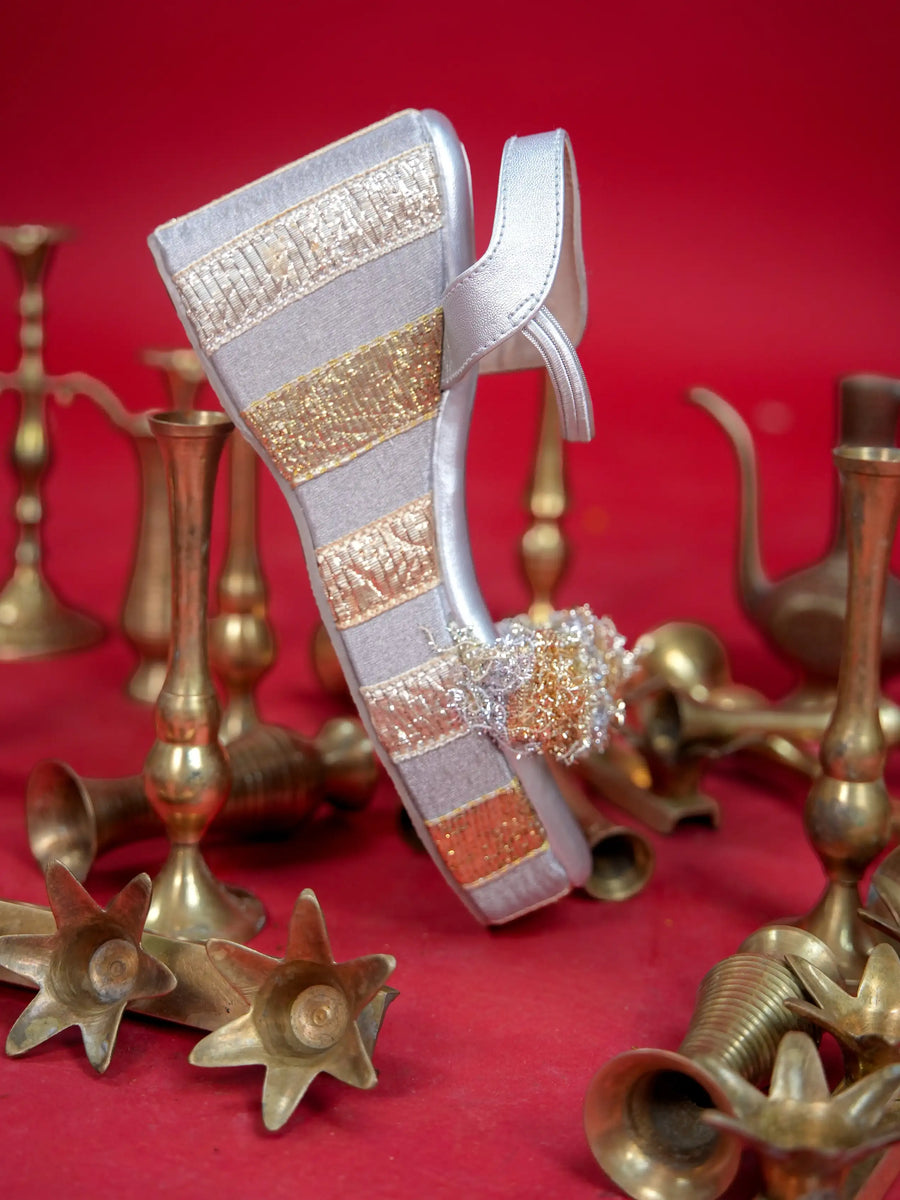
Hand-embroidered detailing (e.g., zardozi and dabka on the Nooree Wedges) matched to your outfit |
|
Customisation |
Can colour, heel height, and embellishment change per order? |
Made-to-order colour matching, heel height, and embroidery changes per pair |
|
Rewearability |
Does the design work beyond the wedding day? |
Several styles double as reception or party wear, such as the Madhuban Royal Sneakers |
|
After-sales |
What does the warranty or exchange policy actually cover? |
3-month warranty on stitching and pasting; size exchanges available (no refunds) |
Why Hand Embroidery Technique Matters

Check Product
Zardozi and dabka are two different hand embroidery techniques, and the difference is easy to check once you know what to look for. Zardozi uses metallic thread along with beads, sequins, and stones to build a raised, textured motif, historically associated with Mughal-era royal garments. Dabka uses fine coiled metallic wire stitched directly onto the fabric for a lighter, springier shine. Machine embroidery, by contrast, produces a flatter, more uniform pattern on the front and a clean, repetitive stitch line on the back; hand embroidery shows slight irregularities and visible thread anchor points. Our Nooree Wedges combine both zardozi and dabka work, and the Madhuban Royal Sneakers use a hand-embroidered peacock motif with a hidden wedge heel.
Comfort: What Actually Matters for a Full Wedding Day

Podiatrists who specialise in bridal footwear consistently point to the same handful of factors: a heel under two inches for anyone standing more than a few hours, a wide, rounded toe box rather than a pointed one, and a shoe that feels comfortable immediately rather than one that needs breaking in. A wedding day rarely allows for a break-in period, so fit has to be right from the first wear. Around Always builds its wedges and heels with cushioned insoles, a broad base to help distribute the weight of a heavy lehenga, and width and arch adjustments available on request for brides with broad, narrow, or flat feet.
Customisation and Sizing
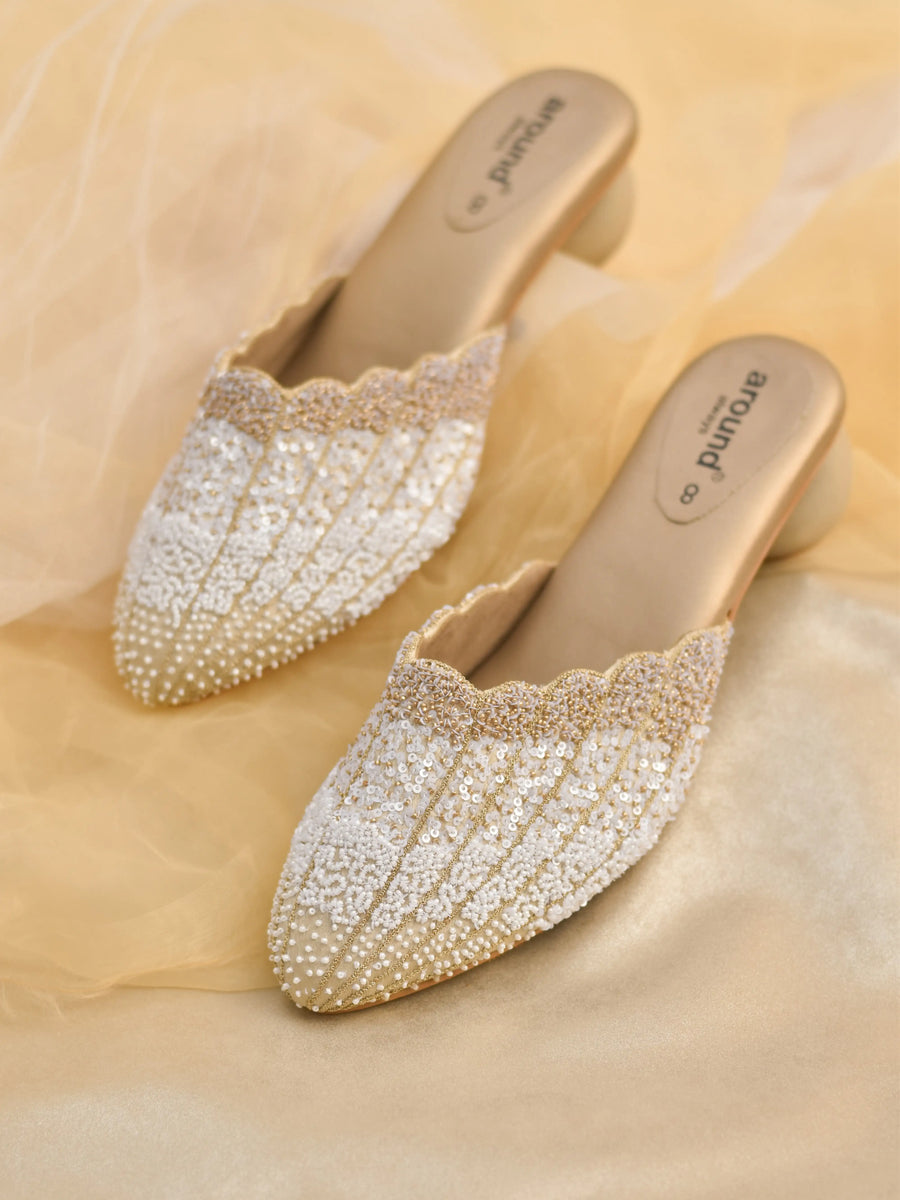
Made-to-order customisation means colour matching to your outfit, adjustable heel height, and embroidery changes, plus fit adjustments for width and arch beyond standard length-based sizing. As a general sizing rule for open-toe styles like sandals and wedges, narrower feet should size down and broader feet should size up, for closed-toe styles like mules and sneakers, sizing up by roughly half a size is usually more comfortable. Browse the full bridal footwear to compare styles by heel height and colour, or check our best-selling bridal shoes if you want to start with what other brides have chosen most often.
Styling Tips for Choosing Your Pair
Match the density of the footwear to the outfit: an ornate, heavily embroidered lehenga pairs better with a simpler shoe, while a minimalist gown or saree can carry a bolder heel. If you don't wear heels often, a block heel or wedge adds height without the instability of a stiletto. Pick at least one pair you can genuinely rewear, for a reception, an anniversary dinner, or another function, rather than buying something single-use. Before checkout, check the sole and stitching quality rather than relying on product photos alone.
Men's Wedding Footwear

The groom's shoes deserve the same attention as the bride's. Our men's wedding shoes collection covers hand-embroidered mojaris, brocade sherwani shoes, and cleaner formal silhouettes, and can be colour-matched to the bride's pair on request.
Frequently Asked Questions
What's the difference between zardozi and dabka embroidery?
Zardozi uses metallic thread with beads, sequins, and stones for a heavier, raised motif. Dabka uses coiled metallic wire for a lighter, springier shine. Many bridal pieces combine both, using zardozi for the main motif and dabka for borders and outlines.
How should bridal shoes fit with a lehenga or saree?
The shoe should account for the extra length a heavy lehenga can add to the hemline, and the base should be broad enough to distribute the outfit's weight comfortably. A cushioned wedge or block heel between one and three inches generally balances height with stability.
Can bridal footwear be customised for wide or narrow feet?
Yes, brands that offer true customisation will adjust for foot width and arch, not just overall length. Ask specifically about width and arch adjustments, since standard sizing charts only account for length.
Is handcrafted bridal footwear worth it compared to mass-produced options?
Hand-embroidered footwear typically costs more because of the time and skill involved, but it also allows for colour matching, custom motifs, and fit adjustments that machine-made, standard-size shoes usually can't offer.
Sources
1. Zardozi Embroidery: Traditional Embroidery From Lucknow — Utsavpedia
2. Avoid Wedding Day Foot Pain — Coastal Podiatry Associates (APMA guidance)
3. A Podiatrist Told Us How to Find Comfortable Wedding Guest Shoes — Who What Wear