
Comfortable Flats for Long Wedding Ceremonies
The best flats for a long wedding ceremony hold the foot securely, leave enough room for the toes and provide useful cushioning underfoot. A flat sole alone does not guarantee comfort. Choose the shape around how much you will stand, walk, sit on the floor and remove your shoes. Test the pair with the complete outfit before the wedding, because hem length and foot hold matter as much as embellishment.
Which Bridal Flat Suits Each Ceremony Moment?
|
Ceremony need |
Useful shape |
Why it can work |
Check before buying |
|
Frequent walking |
Broad-strap flat |
More upper contact can reduce sliding |
Strap edges and sole grip |
|
Easy shoe removal |
Mule or slip-on |
Quick to take off and put on |
Heel lift while walking |
|
Long standing |
Cushioned closed flat |
Covers the foot and can spread pressure |
Toe room and seams |
|
Visible footwear |
Embroidered peep toe |
Adds colour without extra height |
Toe opening and outfit hem |
Why Does a Flat Shoe Still Need a Fit Check?
A flat can still rub, slip or feel hard if its shape does not suit your foot. The American Podiatric Medical Association recommends good arch support and a padded sole when you expect to stay on your feet for a long time. That is useful guidance for wedding footwear too.
Do not judge a pair only by heel height. The placement of straps, the amount of toe room and the way the sole bends will decide whether the shoe feels steady through a long ceremony.

Four Checks Matter More Than Extra Sparkle
1. Secure foot hold
Your heel should not lift dramatically with every step, and your toes should not grip the shoe to keep it on. Broad uppers, closed shapes and well-placed straps usually give more hold than a very open slip-on.
2. Comfortable toe room
Stand in the pair and check your longest toe as well as the widest part of the foot. Embroidery should not press into the toes, especially when feet feel fuller later in the day.
3. Cushioning without instability
A padded footbed can soften pressure, but an overly loose or spongy base may feel uncertain. Walk, turn and sit down in the shoes. A wedding trial should look slightly silly and reveal useful truths.
4. A sole suited to the venue
Smooth indoor floors, carpets and outdoor lawns do not feel the same underfoot. Check the sole pattern and practise on a similar surface. For uneven ground, prioritise stability over a delicate, barely-there upper.
Four Around Always Flats to Compare
Olivia for a broad-strap open flat
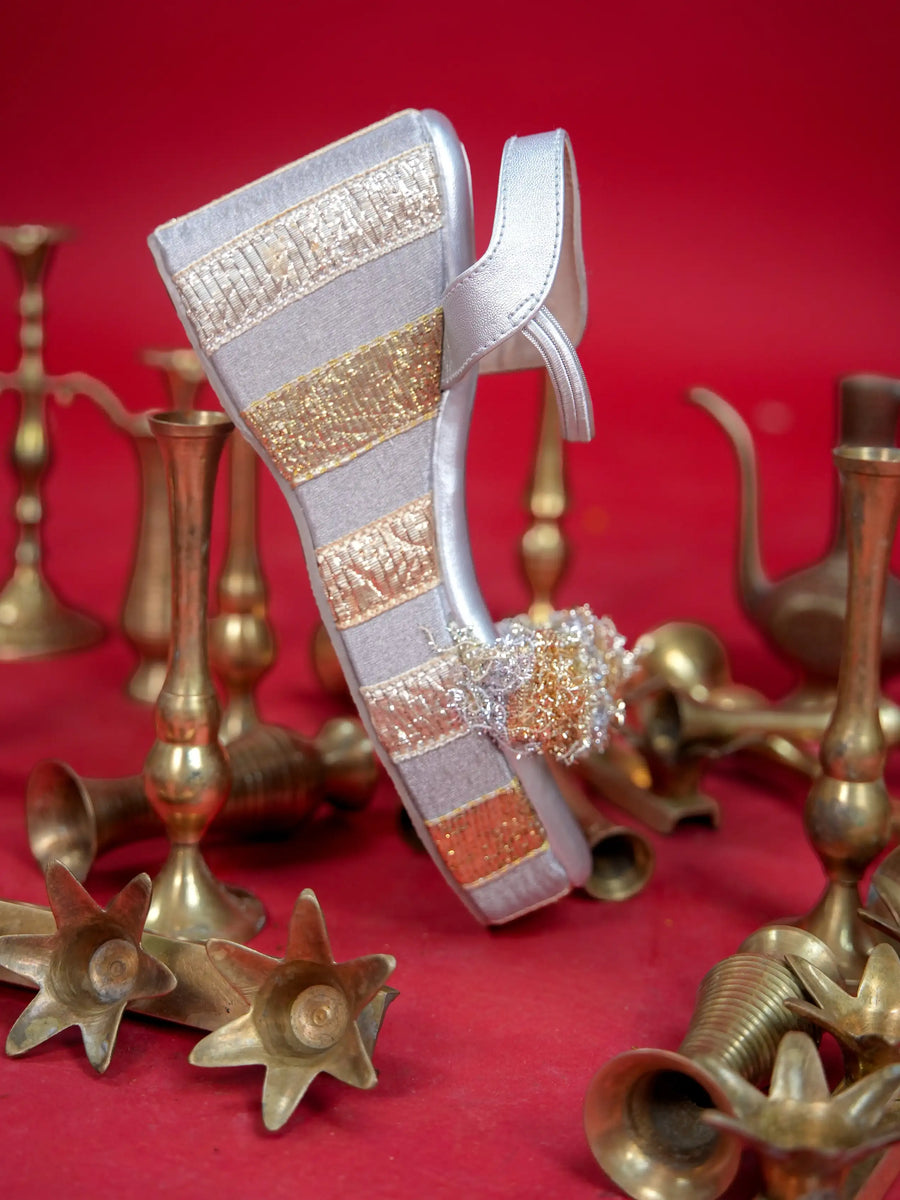
Olivia Flats combine a broad-edged strap, cushioned insole and photographed 0.5-inch heel. The gold zardozi and sequin work can sit naturally with gold borders. Check that the narrower centre of the strap holds your foot without pinching. The peep-toe style with embellishment can also prove useful when the footwear really shows.

Buy - Olivia Flats
Basant for red outfits and peacock details
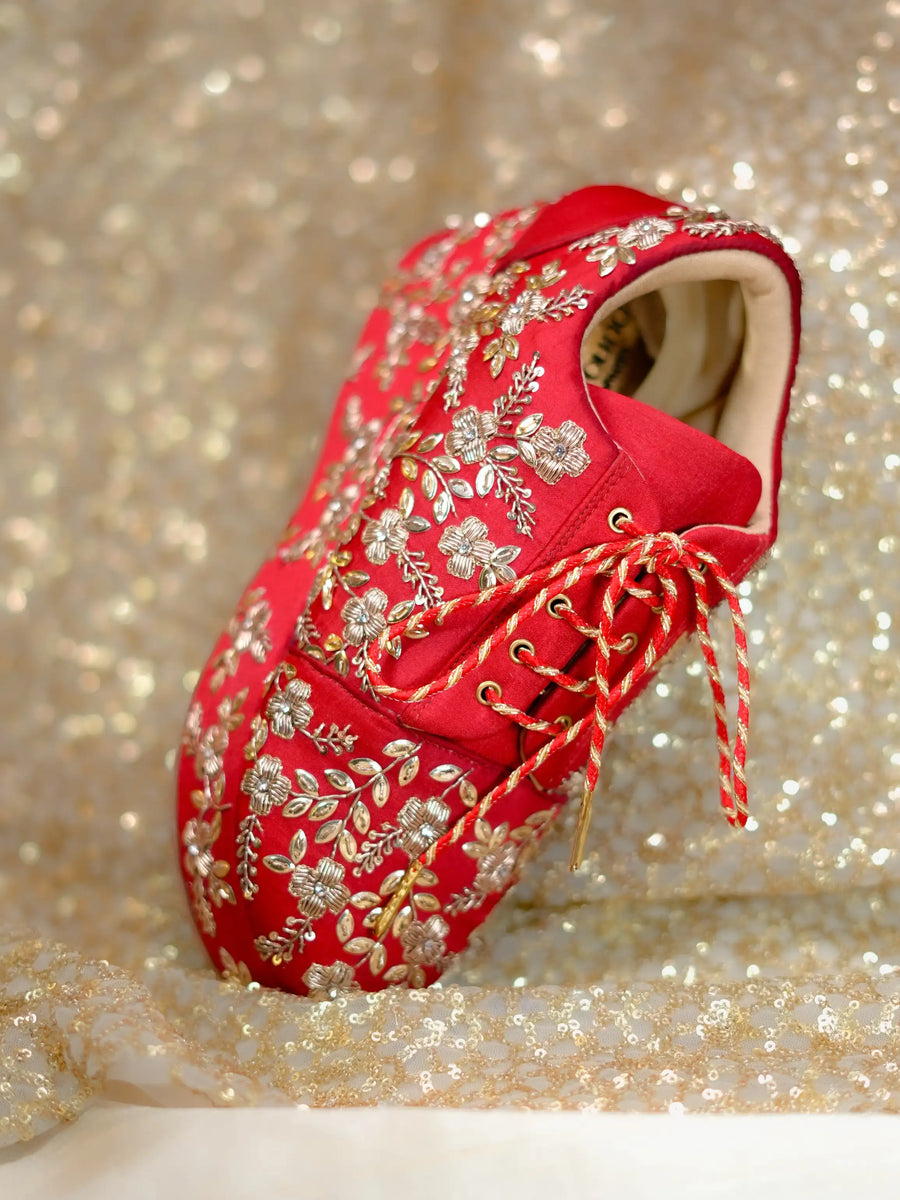
Basant Bridal Flats use a vivid red base, peacock motifs and a photographed 0.5-inch heel. They make sense when the lehenga already includes red, birds or nature-led embroidery. Check the peep-toe opening during a standing trial.

Buy - Basant Bridal Flats
Kashvi for muted ivory and pastel looks
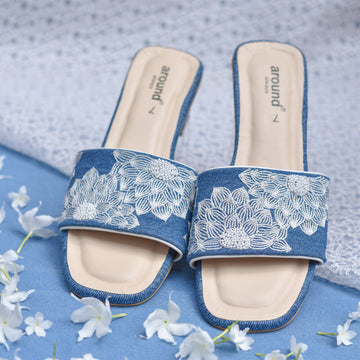
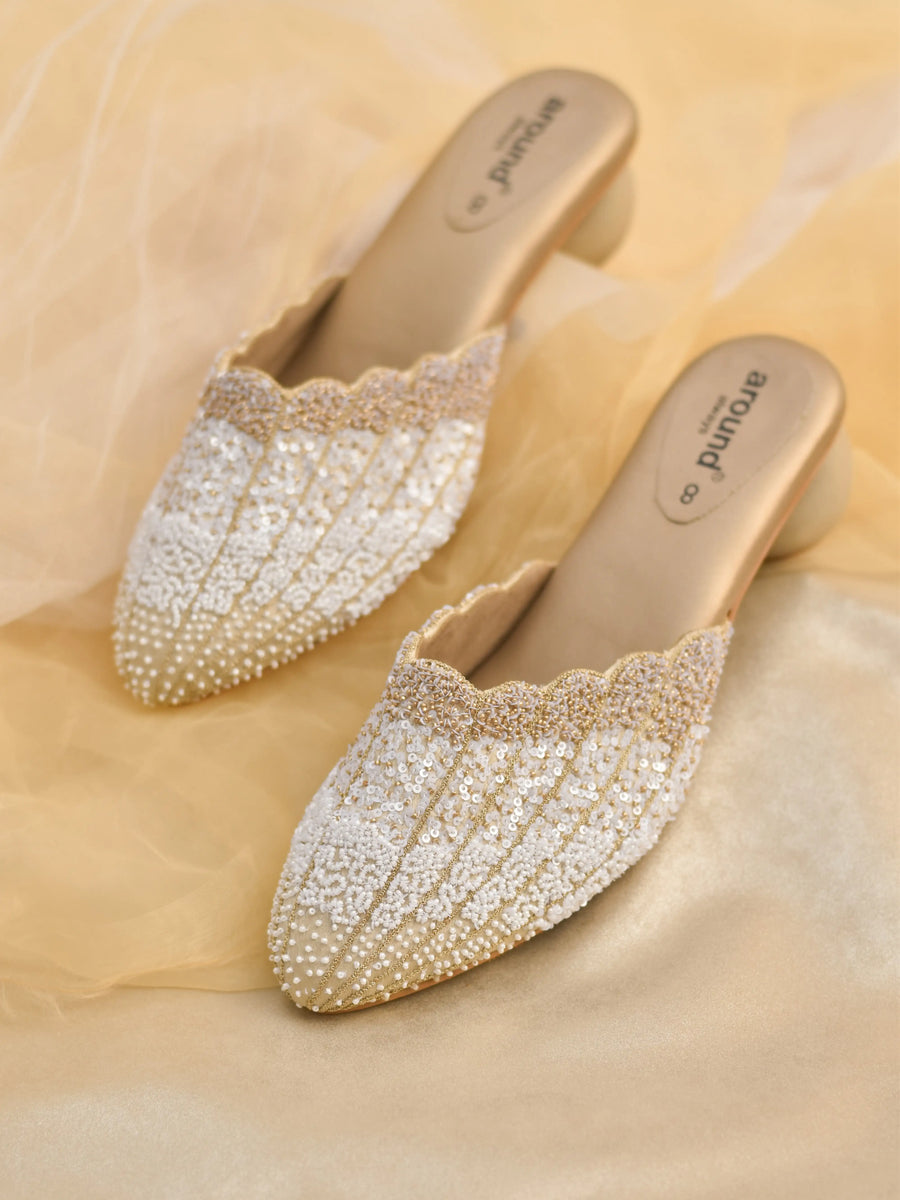
Kashvi Bridal Flats are floral, muted zardozi and zero-heel mules. Their softer direction suits ivory, beige and pastel wedding outfits. The backless form makes removal simple, though it offers less hold than a closed or strapped flat.

Buy - Kashvi Bridal Flats
Afreen for multicolour wedding outfits
Afreen Flats use layered multicolour threadwork, metallic details and a pointed mule shape. The cushioned footbed and lightweight sole are helpful features, but the pointed front still needs a careful toe-room check.

Buy - Afreen Flats
You can consult Around Always’ in-house stylists on call for the best fit for your outfit and feet type.
Do a Full Outfit Rehearsal
Wear the flats with the final lehenga, saree or suit for at least one home trial. Walk, use stairs, sit in the positions your ceremony may require and practise removing the shoes if needed. Confirm that the hem clears the sole and that no embellishment catches the fabric.
Try both shoes, since one foot may fit differently. If you plan to wear new insoles or hosiery, include them in the rehearsal rather than introducing them on the wedding day.
|
Expert tip: Choose the flat that stays quiet on your foot. If you keep curling your toes, adjusting the upper or thinking about the shoe during the trial, it is not the right ceremony pair. |
Frequently Asked Questions
Are flats suitable for a long wedding ceremony?
Yes, if the shape fits securely and the sole gives suitable support and cushioning. Flat height alone does not make a shoe comfortable.
Which bridal flats give better foot hold?
Closed flats and broad-strap sandals usually hold more securely than very open mules. Your individual fit still matters most.
Can I wear flats with a heavy lehenga?
Yes. Match the lehenga hem to the final shoe height and check that the fabric does not drag or catch while you walk.
Are slip-on flats practical for wedding rituals?
They can be useful when you need easy removal. Test for heel lift, since a loose slip-on may move during longer walks.
When should I finalise bridal flats?
Finalise them before the last outfit fitting so the tailor can set the hem against the exact sole height.
Choose for the Ceremony, Not Just the Photograph
Comfortable wedding flats should support the way your day actually moves. Compare construction, test the fit and let colour or embroidery make the final style connection. To see different shapes in one place, explore our bridal flats collection at Around Always and shortlist by hold, toe room and ceremony use.