
What Shoes to Wear with Nalli Silk Sarees for Weddings
The best shoes for Nalli silk sarees are secure block heels, low wedges, embellished flats and Kolhapuri-inspired sandals. Match the shoe to the saree's zari tone, border colour and wedding function. Choose the heel before the final drape so the hem clears the floor. For long ceremonies, prioritise a familiar height and secure hold over extra elevation.
Quick Nalli Saree and Shoe Pairing Guide
Use this quick comparison to shortlist the shoe shape, colour and heel height before your saree fitting.
|
Saree style |
Best footwear |
Colour direction |
Wedding use |
Heel guide |
|
Red gold Kanjivaram |
Block heel sandal |
Red and warm gold |
Main ceremony |
2 to 3 inches |
|
Multicolour Banarasi |
Brocade sandal |
One woven shade |
Sangeet or reception |
Low to mid |
|
Jewel tone Paithani |
Kolhapuri block heel |
Ivory or antique gold |
Ceremony |
1 to 2.5 inches |
|
Ivory organza |
Embellished flat |
Ivory or champagne |
Day wedding |
Flat to 2 inches |
|
Pastel silk |
Low heel mule |
Beige or soft gold |
Reception |
Flat to 2 inches |
Start with the Strongest Saree Detail

Image Credit - https://www.nalli.com/
Nalli's wedding saree collection includes Kanjivaram, Banarasi, Paithani, Patola, Tussar, organza, Uppada and Chanderi sarees.
-
Follow the zari tone. Use warm gold with yellow zari, and champagne or mixed metallics with pale or dual-tone work.
-
Repeat one border colour, motif or embroidery material instead of matching every saree shade.
-
A long ceremony needs a tested flat, low wedge or broad heel. A short reception can allow more height.
Five Nalli Wedding Saree Pairings
Red and Gold Kanjivaram with Scarlet Sandals
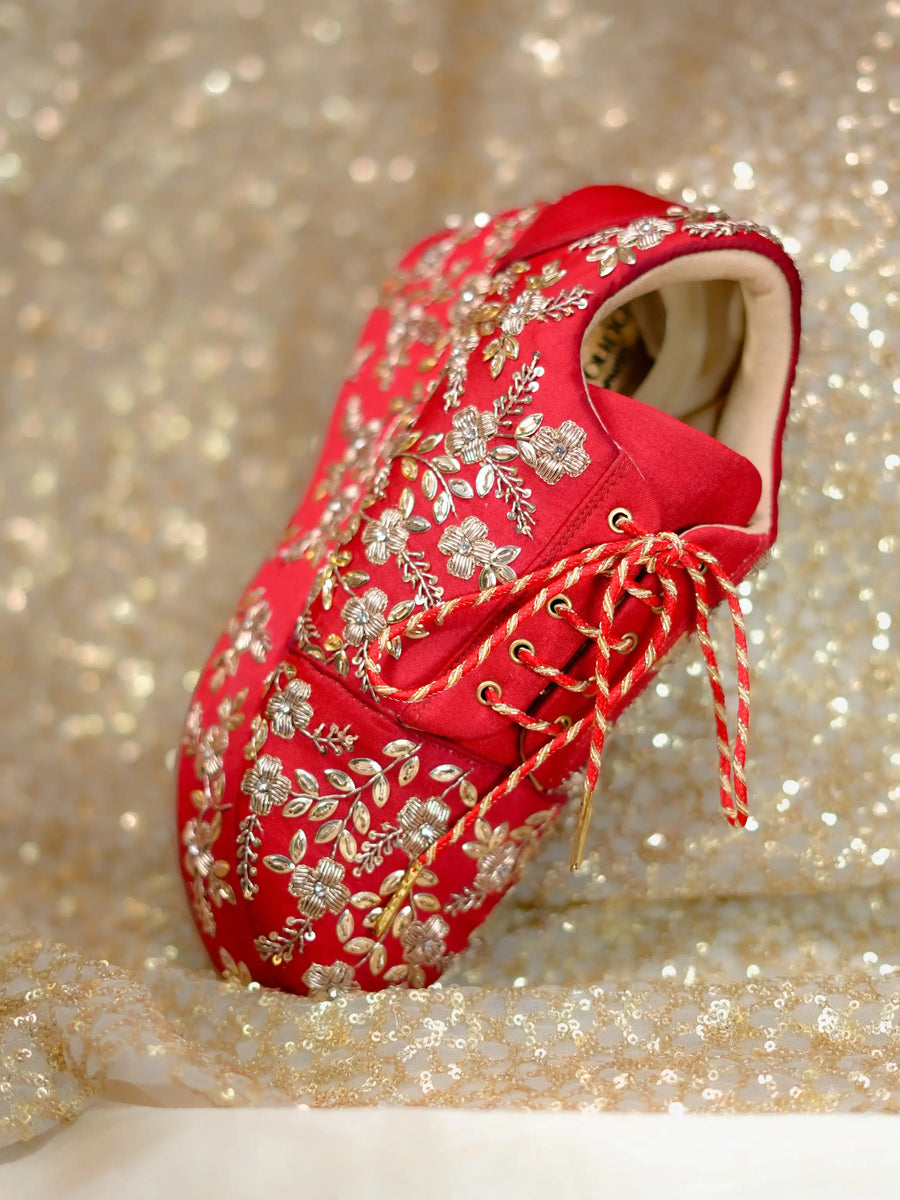
With a red Kanjivaram, red footwear keeps the line cohesive while gold detailing connects with the zari. Scarlet Bridal Sandals use a red base, glass beads and golden leaf details. The pictured heel is 3 inches, so test it before the final drape.
If you prefer a quieter finish, compare warm metallic options in our golden wedding heels collection. Keep the surface detail controlled when the saree border is already dense.

Multicolour Banarasi with Assi Brocade Heels
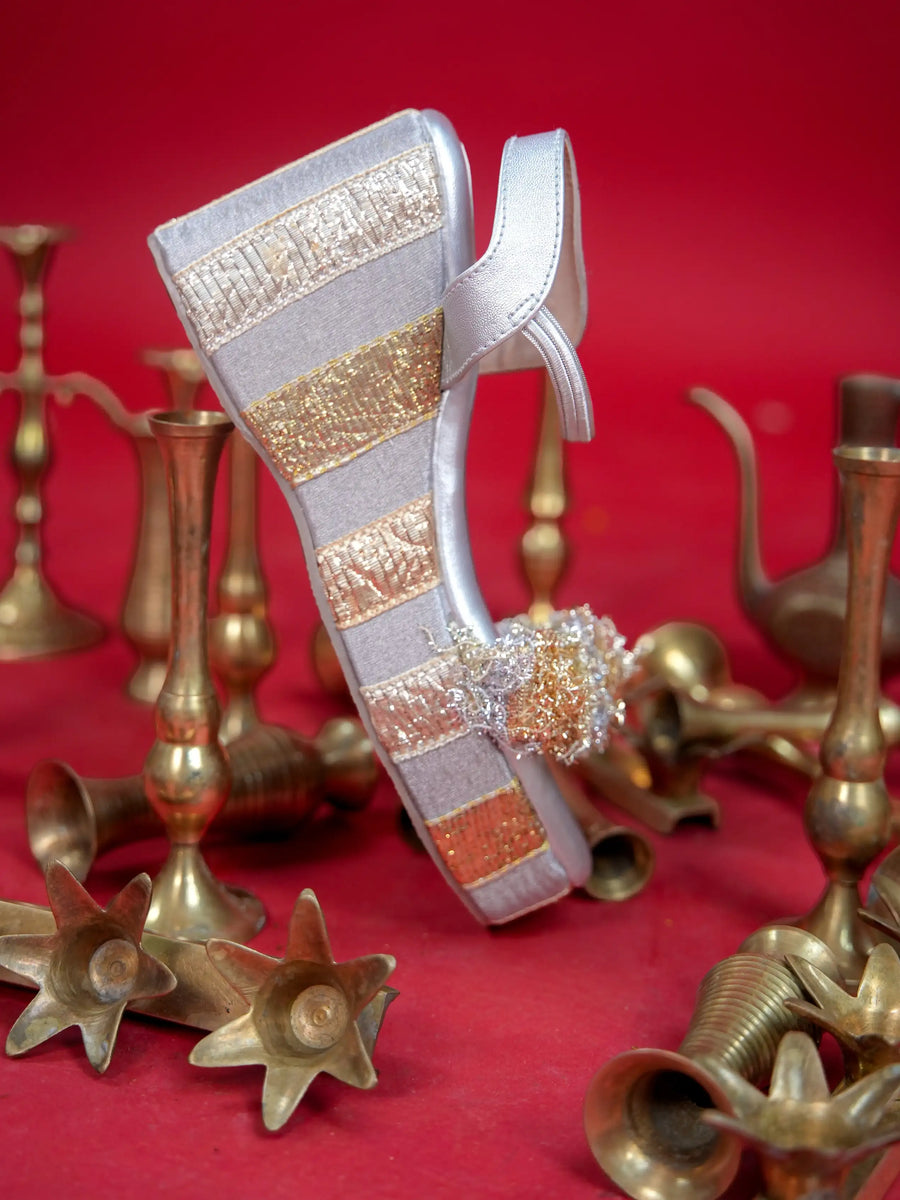
A multicolour Banarasi saree can carry a multicolour shoe when the shades connect. Assi Banaras Sandals combine maroon, mustard and blue brocade panels with gold detailing. Use them when one shade appears in the saree or blouse.
For more textile-led options, browse our Banaras brocade footwear. Choose a simpler brocade when the saree carries an all-over zari pattern, and a stronger shoe pattern when the body is relatively plain.

Green or Purple Paithani with Pragya Kolhapuri
Paithani sarees often combine jewel tones with a visible gold border. A neutral ivory and gold shoe can connect the look without introducing another saturated colour. Pragya Kolhapuri has an ivory base, golden accents and a brocade block heel photographed at 2.5 inches.
Compare lower and higher options in our Kolhapuri heels collection.

Ivory Organza with Urvi Chappals
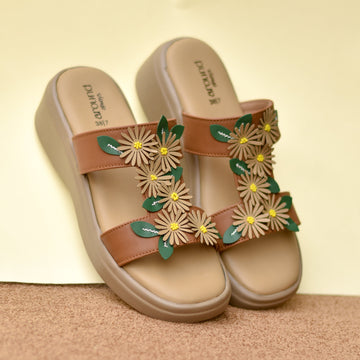
Ivory organza usually works best with a lighter shoe. Urvi Chappals use an ivory base with gold and antique zardozi leaves plus organza flowers. The palette keeps the look light and connected.
This direction suits a daytime wedding or engagement. Check that raised embroidery stays clear of the saree hem while walking.

Pastel Silk with Kashvi Bridal Flats
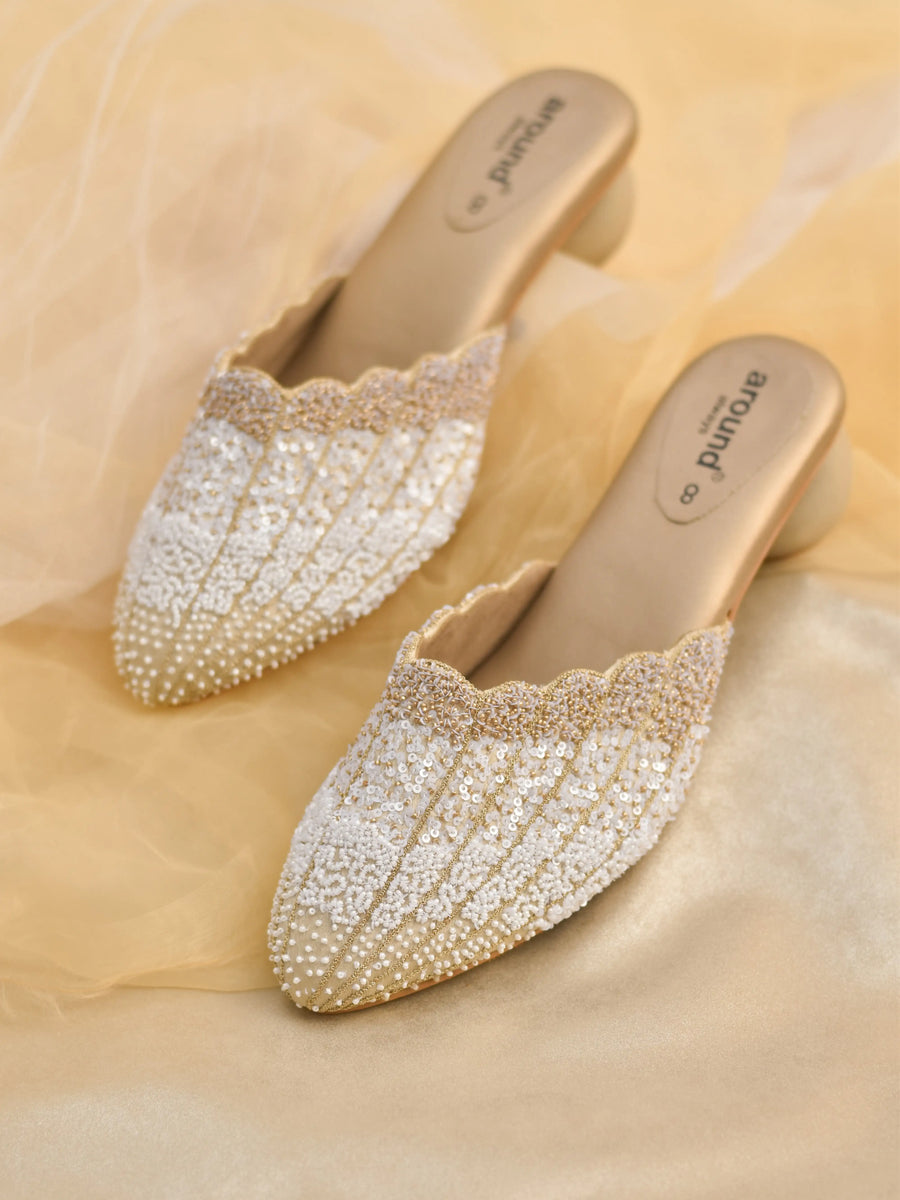
Pastel silk, tissue and rose-gold sarees often look better with muted embroidery than bright yellow gold. Kashvi Bridal Flats are low-heel mules with soft floral Indian embroidery. Their muted ivory and gold palette works with blush, peach, beige and pale green sarees.
A backless mule offers less hold than a strapped sandal. Test it on stairs before the wedding.

Set the Heel Height Before Draping
Heel height changes the saree length, walking clearance and posture. Wear the final pair while your saree is pinned or hemmed. Our Kanjeevaram heel height guide explains this in more detail.
-
Choose flats or a low heel for long rituals, repeated footwear removal or unfamiliar venues.
-
Choose a 2 to 3-inch broad heel or wedge when you need moderate lift and already wear that height comfortably.
-
Reserve higher heels for shorter events on level flooring. Practise walking, sitting and using stairs in the complete outfit.
Complete the Full Outfit Test
Try the complete outfit together. Walk, turn, sit and climb a few steps. Check whether the pleats brush the toe, the hem catches, or a strap rubs.
If the saree has an unusual colour or you need a specific width, Around Always can customise the shoe colour and heel before your final fitting. Order early enough to test the finished pair rather than wearing it for the first time at the wedding.
Find Your Wedding Saree Footwear
At Around Always, we suggest starting with the saree border and the time you will spend standing. Explore our bridal sandals for Indian weddings to compare secure straps, block heels, wedges and embellished finishes. Choose the pair that fits your Nalli saree and your actual wedding schedule.
Expert Tip: Photograph the saree and shoes in daylight before the event. Metallic tones can look warmer or cooler on camera than they do under store lighting.
Frequently Asked Questions
What shoes look best with a Nalli Kanjivaram saree
Gold block heels, low wedges and embellished sandals work well. Match the zari and set the saree length in the final shoe.
Should footwear match the zari or the blouse
Use the zari for a reliable metallic base. Match the blouse only when it carries a strong contrast colour that also appears in the border or pallu.
Can I wear flats with a Nalli wedding saree
Yes. Embellished flats, mules and low Kolhapuris suit long ceremonies. Check the foot hold because backless styles can shift.
What heel height works with a silk saree
Choose a height you already wear confidently. Flats to 3-inch broad heels cover most wedding needs, while higher options suit shorter events on level floors.
Are brocade shoes suitable for Banarasi sarees
Yes, when the colours or woven details connect. If the saree has dense all-over brocade, choose a quieter shoe pattern to avoid visual competition.