
Shoes for Taneira Wedding Sarees A Regional Weave Guide
The best shoes for Taneira wedding sarees should follow the regional weave, visible zari and wedding schedule. Gold wedges suit dense Kanjivaram silk, brocade sandals suit Banarasi sarees, and refined flats work better with lighter Chanderi, Maheshwari or Jamdani drapes. Use a motif-led pair only when the same idea already appears in the border or pallu. Fix the heel height before the final drape so the front edge clears the floor.
Quick Regional Weave and Footwear Guide
Use this table to shortlist the shoe shape first, then refine the colour through the saree border and blouse.
|
Regional weave |
Best shoe type |
Colour cue |
Heel guide |
Best use |
|
Tamil Nadu Kanjivaram |
Gold wedge |
Warm gold or border shade |
2 to 3 inches |
Main ceremony |
|
Uttar Pradesh Banarasi |
Brocade block heel |
One woven saree tone |
2 to 3 inches |
Wedding or reception |
|
Maharashtra Paithani |
Embellished low flat |
Jewel tone with gold |
Flat to 1 inch |
Long rituals |
|
MP Chanderi or Maheshwari |
Light embroidered flat |
Pastel or soft metallic |
Flat to 1 inch |
Day wedding |
|
Bengal Jamdani or Tussar |
Nude festive flat |
Ivory red or antique gold |
Flat or low |
Ceremony or lunch |
|
Telangana Pochampally |
Controlled multicolour flat |
Repeat two ikat shades |
Flat to 1 inch |
Mehendi or day event |
Why Regional Weaves Need Different Shoes

Image Credit: https://www.taneira.com/
Taneira currently groups Kanchipuram, Banarasi, Paithani and Patola among its heirloom pieces, with separate regional edits for Bengal, Chanderi, Maheshwari and Pochampalli in its saree collection. That range makes one universal gold-shoe rule too basic. Read the border density, metallic tone and drape before choosing the footwear.
Six Taneira Wedding Saree and Shoe Pairings
Tamil Nadu Kanjivaram With Gulshan Wedges
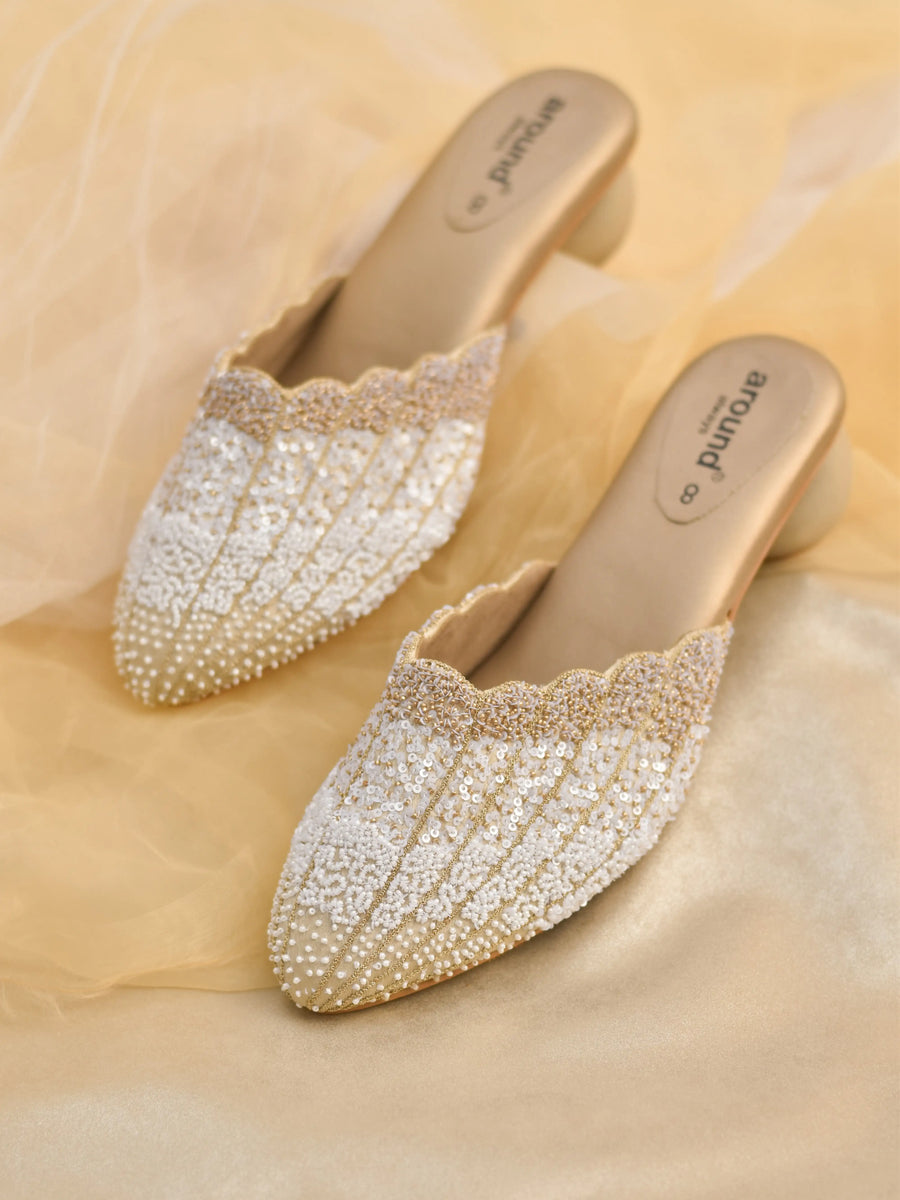
Gulshan golden wedges use a gold base, pearl and zardozi embroidery, plus colour highlights. The pictured pair has a 3-inch wedge. Choose it for a Kanjivaram with warm zari and one matching accent, then keep the shoe quieter when the lower border carries dense motifs.
For a more textile-led gold finish, compare the real gota and zari work in our Kiran footwear collection.

Uttar Pradesh Banarasi With Pallavi Sandals
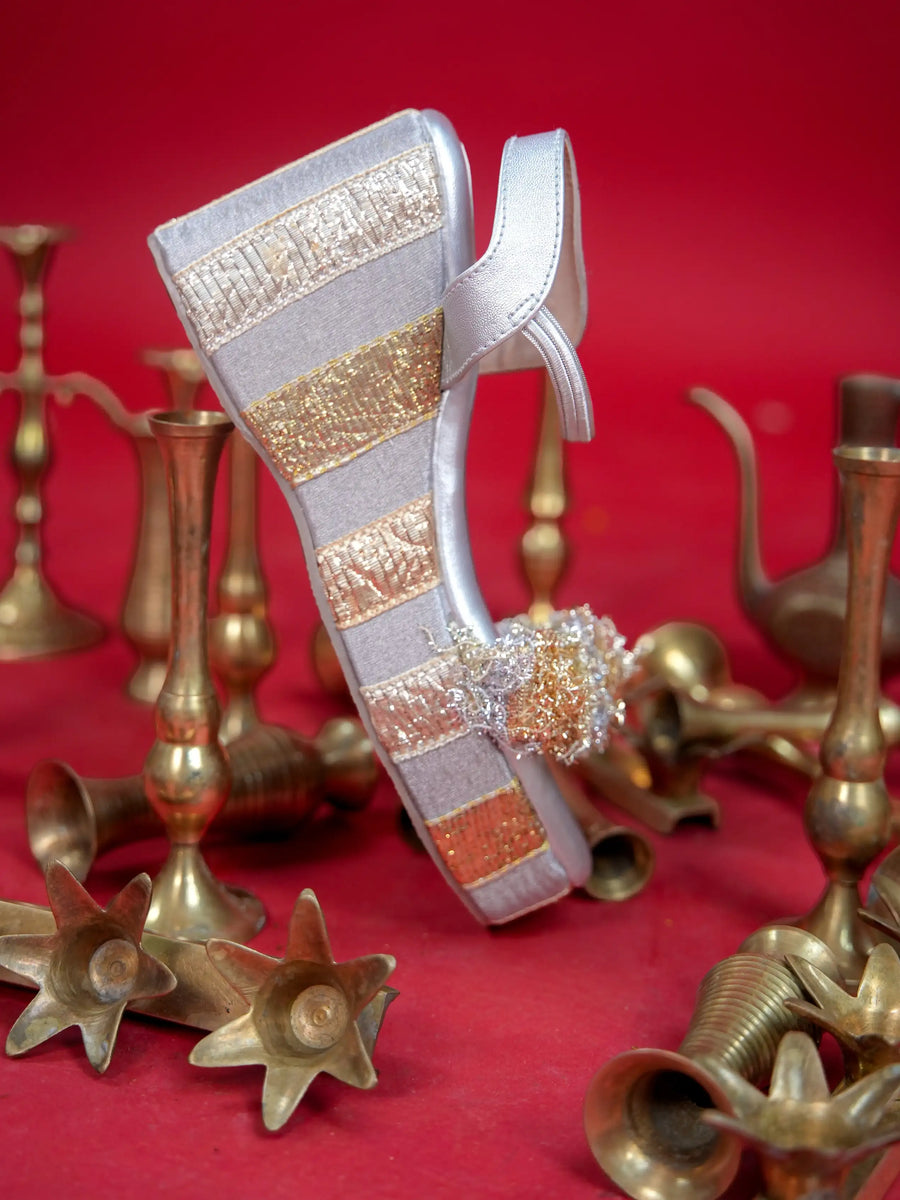
Pallavi Banarasi sandals combine green brocade, gold woven motifs, sequins and an ankle strap. The photographed block heel measures 3 inches. Pair them with a green Banarasi, a contrast green blouse or a border that repeats the same tone. Skip this match when the saree has no green at all.

Maharashtra Paithani With Basant Flats
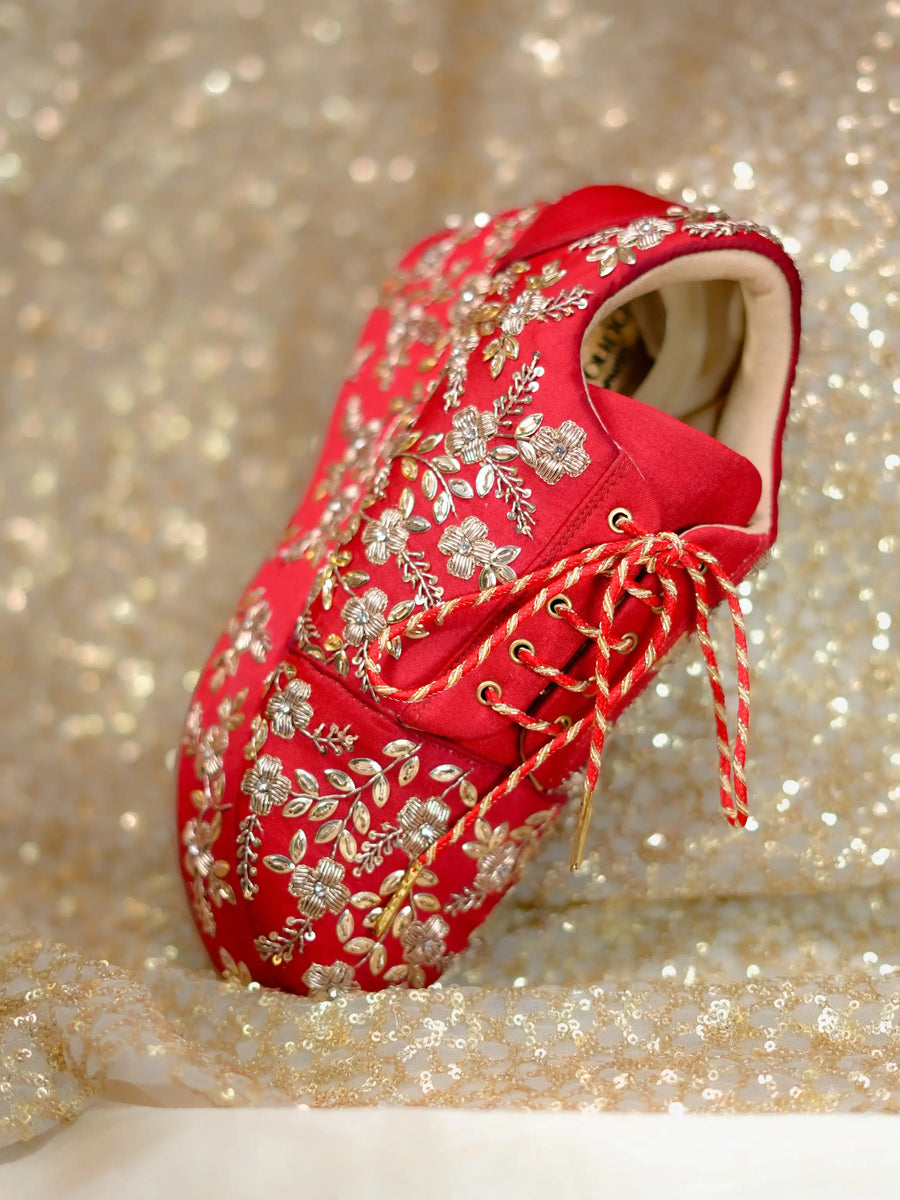
Basant bridal flats have a vivid red base, peacock detailing and a pictured 0.5-inch heel. They make sense when the Paithani repeats red or carries a peacock motif. The low profile suits longer rituals, but test the peep-toe shape and foot hold before the wedding.

Madhya Pradesh Chanderi or Maheshwari With Glance Flats
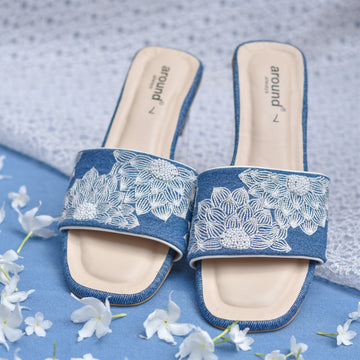
Glance powder blue flats use white geometric threadwork, bead borders and a pictured 0.5-inch heel. Pair them with powder blue, ivory or silver-toned Chanderi and Maheshwari sarees. Their light colour and low shape support a daytime wedding without crowding a fine border.

Bengal Jamdani or Tussar With Shalimar Flats
Shalimar nude flats have crossover straps with golden threadwork, sequins and small red details. Use them with an off-white Jamdani, natural Tussar or red-border Bengal saree. The restrained base connects with the weave while the red detail can echo the border or blouse.

Telangana Pochampally With Ahana Flats
Ahana multicolour flats use rich colour tones, ornate arches and small golden bead details on a pictured 0.5-inch heel. Choose them only when at least two shoe colours already appear in the Pochampally ikat. If the saree pattern is very busy, use one dominant colour instead.

You can compare more controlled colour combinations in our multicolour festive shoe edit.
Test the Shoe With the Complete Saree
Wear the blouse, petticoat, saree and final shoes together. Walk, turn, sit and use a few stairs. Check whether the front pleats touch the toe, the border catches on raised embroidery, or a backless style shifts while walking.
If you are comparing heights, use our wedding saree heel guide. Before placing an online order, also review the common bridal shoe buying mistakes so sizing, delivery time and the final outfit trial are planned together.
Build the Pair Around Your Saree
At Around Always, we can work from the visible border, blouse shade and preferred heel height. Use our wedding footwear customisation service when a Taneira saree needs a specific colour or embroidery direction. If you want to compare ready designs first, explore the latest Around Always wedding shoes.
Expert Tip: When the blouse and border use different colours, match the shoe to the border near your feet and let the blouse guide the jewellery.
Frequently Asked Questions
What shoes look best with a Taneira wedding saree
Secure block heels, wedges and embellished flats work well. Choose the exact shape through the regional weave, zari tone, event length and footwear removal needs.
Should shoes match the saree border or blouse
Start with the border because it sits closest to the shoe. Use the blouse as the cue only when its colour also appears in the border or pallu.
Can I wear flats with a Taneira Kanjivaram saree
Yes. An embellished flat or low sandal suits long ceremonies. Set the final saree length while wearing the flat so the pleats do not drag.
What heel height suits a Banarasi wedding saree
A familiar 2 to 3-inch block heel gives moderate lift and a broad base. Choose a lower pair for long rituals, uneven floors or repeated shoe removal.
Can multicolour shoes work with a Pochampally saree
Yes, when the footwear repeats two shades from the ikat. Avoid a second unrelated pattern because the saree already carries strong geometry and colour movement.