
How to Match Shoes with a Sherwani
Match your shoe colour to your sherwani's base or accent colour first, then match the shoe's formality to how heavily it's embroidered. Heavily embellished sherwani? Keep the shoe simpler. Fairly plain outfit? You've got room for something bolder. Traditional sherwanis pair best with a mojari or jutti, while fusion or bandhgala looks suit a cleaner loafer. That's the whole decision, broken down by colour, fabric, and occasion, so nothing's left to guesswork.
Quick answer: Match shoe colour to the sherwani's dominant shade, keep the shoe simpler than the outfit when the embroidery is heavy, and choose a mojari for traditional looks or a loafer for fusion ones.
Sherwani Colour to Shoe Colour: Quick Match Table

Here is a quick reference for pairing common sherwani colours with the right shade of sherwani shoes.
|
Sherwani Colour |
Recommended Shoe Colour |
Best Shoe Style |
|
Cream or ivory |
Gold, tan, or ivory |
Mojari or embroidered brocade shoe |
|
Navy or black |
Black or deep brown/burgundy |
Jutti or a clean brocade loafer |
|
Maroon or wine |
Gold or a matching deep tone |
Mojari with zari or gold thread work |
|
Pastel (blush, mint, sky blue) |
Off-white or beige |
Jutti or a minimally embroidered shoe |
|
Heavy zardozi or gold embroidery |
Simple, tonal, or neutral |
Plain mojari, kept deliberately understated |
|
Indo-western or bandhgala |
Black or tan, low-profile |
Loafer or a brocade slip-on |
Why Does Embroidery Level Matter More Than Colour Alone?
A shoe that matches in colour can still look wrong if its embellishment fights with the outfit. Heavy zardozi, mirror work, or dense thread embroidery on a sherwani already carries the visual weight of the look.
Adding an equally embellished shoe competes for attention instead of completing the outfit. Footwear guides make a similar point about balance: a heavily worked outfit reads better against a restrained shoe, since the two together shouldn't visually compete for the same attention. The reverse also holds: a plainer sherwani gives you more room to choose a bolder, more decorated shoe.
Mojari, Jutti, or Loafer: Which Suits Your Sherwani Style?

Mojaris suit heavy, traditional sherwanis. Juttis suit lighter or more versatile outfits. Loafers and brocade slip-ons suit fusion and Indo-western looks.
-
A mojari for groom has a curled, upturned toe rooted in Rajasthani tradition and historically worn by Mughal royalty, making it the most ceremonially formal choice for a heavy sherwani or Jodhpuri suit.
-
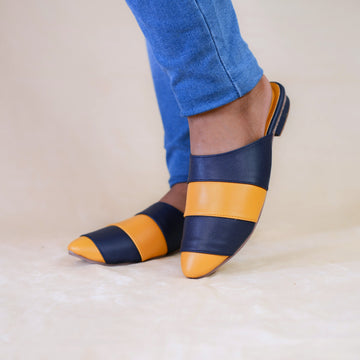
A jutti has a flat, closed toe with Punjabi roots. It works well with kurta pyjamas, lighter sherwanis, and Pathani suits.
-
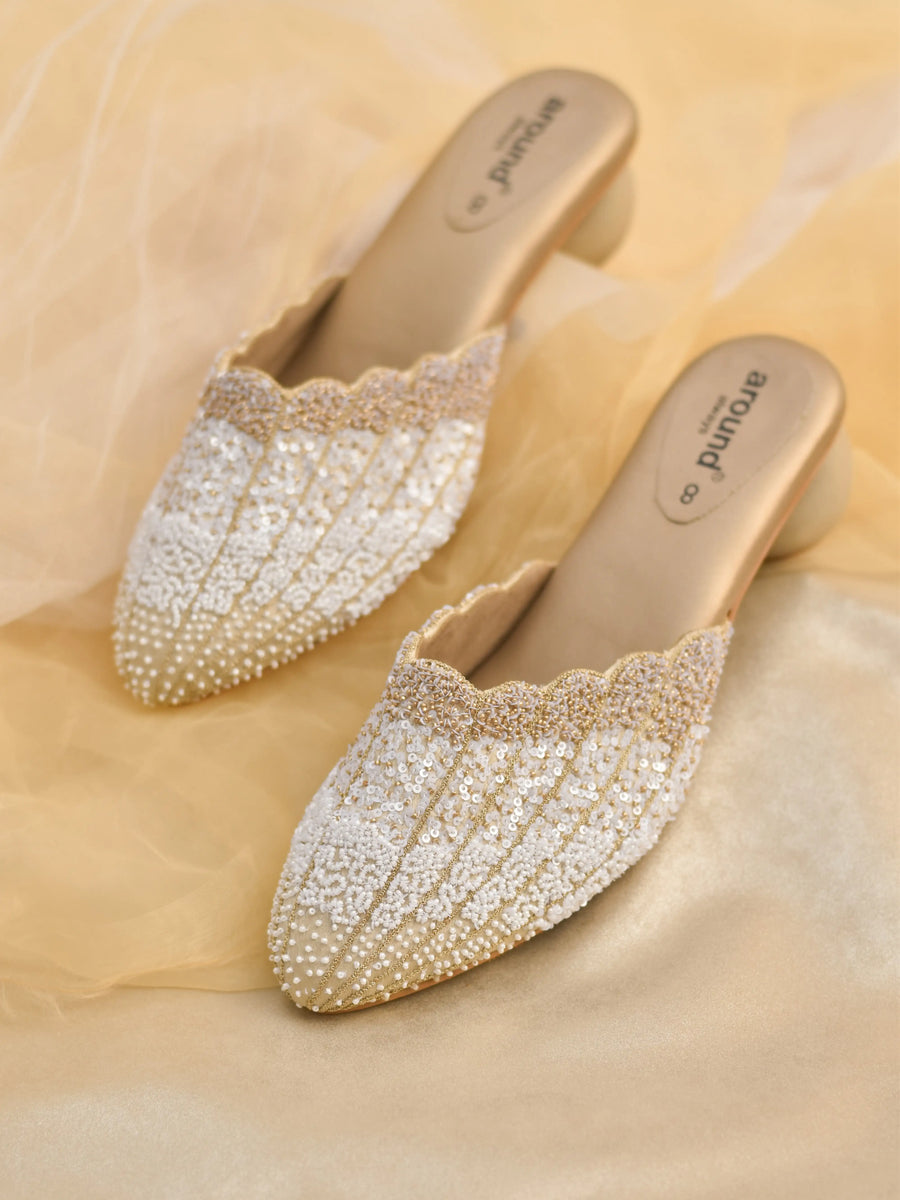
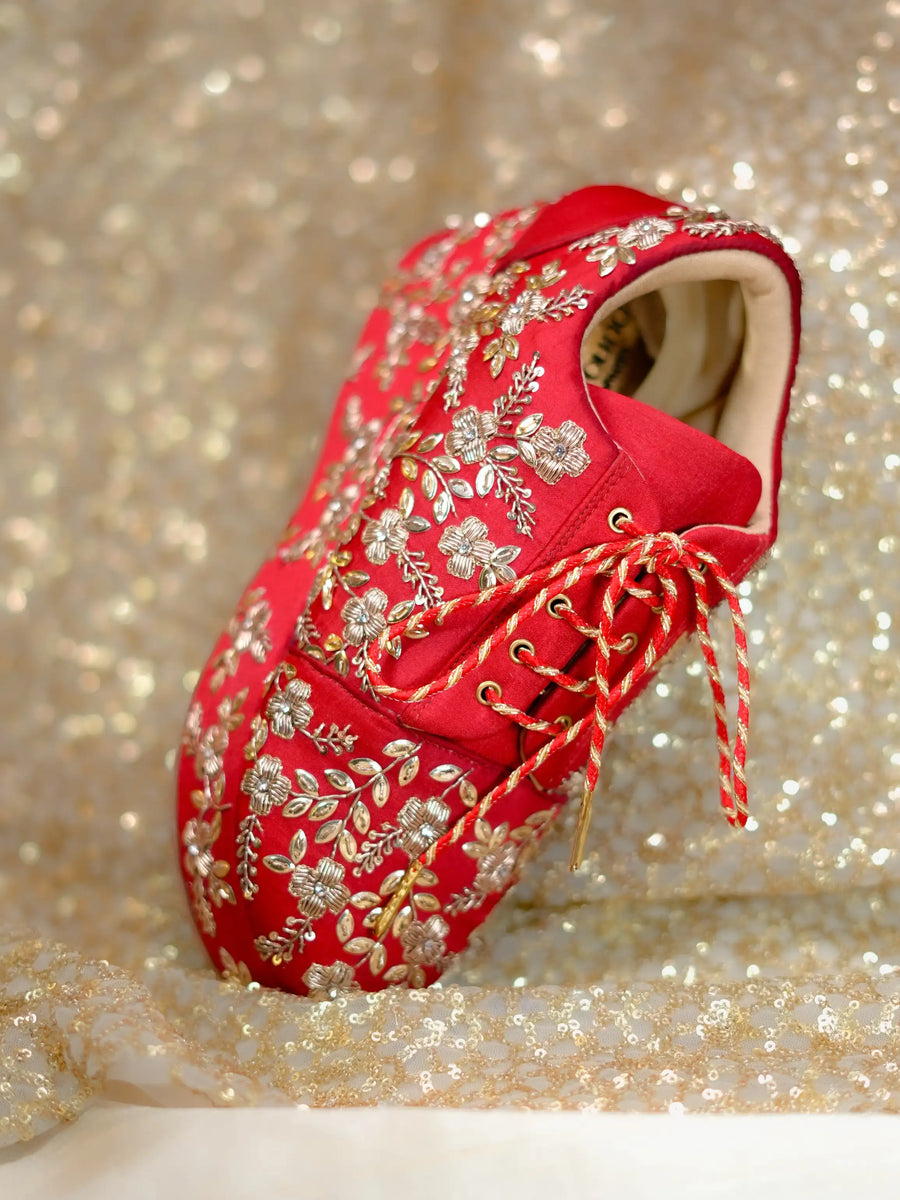
An embroidered brocade shoe combines a flat formal sole with zardozi detailing, suited to grooms who want embellishment without a curled toe.
-
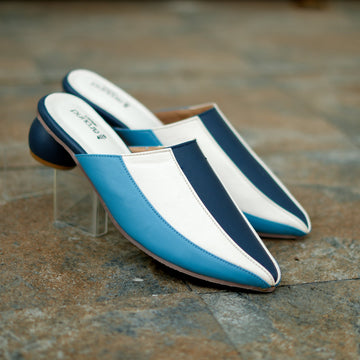
A clean black or tan loafer with subtle thread work suits an Indo-western or bandhgala look. One practical styling tip for loafers specifically: matching the shoe's colour to a smaller detail like the sherwani's buttons, rather than the whole outfit, can pull a fusion look together without overmatching it.
What If Your Sherwani Doesn't Fit These Rules?

Buy - Safi Ivory Mojri
Not every sherwani fits neatly into a standard colour category, especially with custom dyes, dual-tone fabrics, or regional styles.
In these cases, colour-matching your shoe directly to a fabric swatch or photograph works better than relying on general rules. This is also why services like custom heel and colour matching for groom shoes exist, since a made-to-order pair can be matched to your exact sherwani shade rather than the closest off-the-shelf option.
When the exact shade is unclear, matching against the sherwani's base colour rather than a trim, lining, or accent detail tends to give the more reliable result.
Common Mismatches to Avoid
- Pairing a heavily embroidered sherwani with an equally heavy, high-shine shoe, which makes the outfit look busy rather than regal.
- Wearing a sneaker or overly casual shoe with a traditional, heavily draped sherwani, which breaks the formality of the look.
- Choosing a shoe colour that matches the lining or a minor accent instead of the sherwani's dominant shade.
- Ignoring comfort. A groom is often on his feet for many hours across the baraat, ceremony, and reception, so fit matters as much as colour.
Conclusion
Matching shoes to a sherwani really comes down to two decisions: pick the colour family first, then match the shoe's formality to how heavily the outfit is embroidered. Get those two right and the shoe stops being an afterthought.
If you haven't settled on a shoe style yet, it helps to step back further before picking colours. Our Men's Wedding Shoes Guide walks through mojaris, juttis, Jodhpuri-suited loafers, and Indo-Western options function by function, which pairs well with the colour and embroidery rules covered here.
Frequently Asked Questions
What type of shoe is best to wear with a sherwani?
A mojari is the most traditional and ceremonially appropriate choice for a heavy sherwani. For a lighter sherwani or bandhgala, a brocade slip-on or embroidered flat shoe works equally well.
Should sherwani shoes match the outfit exactly or just complement it?
Complementing works better than an exact match. Matching the dominant colour family, such as gold with cream or black with navy, looks more intentional than trying to match the fabric shade precisely.
Can I wear a loafer with a traditional sherwani?
Yes, if the sherwani is on the lighter or more contemporary side. A heavily draped, traditional sherwani generally suits a mojari or jutti better than a Western-style loafer.
What is the difference between a mojari and a jutti?
A mojari has a curled, upturned toe and Rajasthani origins, historically worn by royalty. A jutti has a flat closed toe with Punjabi roots. Mojaris suit heavier, more formal sherwanis, while juttis suit lighter outfits.
Do sherwani shoes need to match the bride's footwear too?
It isn't required, but coordinated bride and groom footwear has become a popular styling choice for Indian weddings, often matching colour palette or embroidery style rather than an exact design. Browsing the bridal footwear alongside a groom's pair makes it easier to see which palettes and embellishment styles pair well together.
Matching shoes to a sherwani comes down to two decisions: the colour family and the embroidery level. Get both right, and the shoe stops being an afterthought and starts completing the look.
If you would like to see how these pairings look in practice, browsing the groom's footwear collection at Around Always can help you compare mojaris, juttis, and brocade shoes side by side before you decide.