
What Are Mojari Shoes?
A mojari is a traditional Indian shoe from Rajasthan, easily recognised by its curled, upturned toe and a slip-on fit with no separate left or right foot. It started out as royal footwear during Mughal rule and is still handcrafted today from leather, suede, or embroidered fabric. You'll mostly see mojari shoes at weddings, festivals, and other ethnic occasions, though plenty of people now wear them casually too. Here's the meaning behind the name, the history of how mojari for men came to be, what actually makes a mojari a mojari, and how they compare to the jutti, since the two get mixed up constantly.
Quick answer: A mojari is a curled-toe, slip-on leather shoe that originated in Rajasthan during the Mughal era, traditionally handcrafted and now worn mainly at Indian weddings and festive occasions.
Where Do Mojaris Come From?

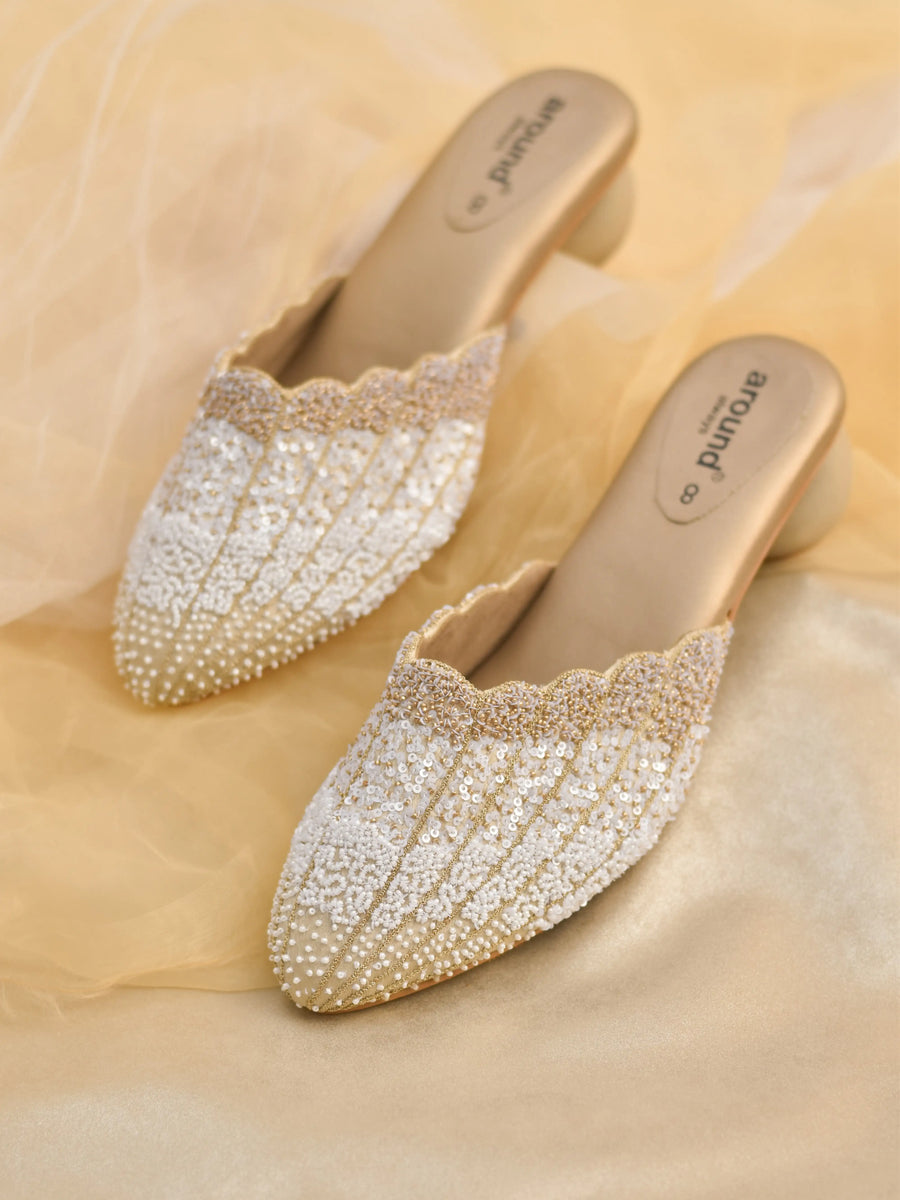
Buy - Safi Ivory Mojri
Mojaris trace back to the Mughal courts of Rajasthan, where they were originally footwear reserved for royalty and nobility.
The shape wasn't just decorative, it grew out of necessity. Rajasthan's desert climate meant footwear needed ventilation in the heat and enough toughness to handle rocky, uneven ground, while still being simple to remove before stepping into a home or temple. Some surviving pairs are genuine museum pieces today. One gold-embellished mojari, set with rubies, diamonds, and emeralds, is said to have been worn by the Nizam of Hyderabad in the early 19th century, and is counted among the ten costliest shoes ever made.
What Actually Makes a Mojari a Mojari?
Three things define a mojari: the curled toe (called the nok), a slip-on fit that's often open at the back, and the fact that there's no left or right shoe, either one fits either foot.
-
The curled, upturned toe is the single most recognisable feature and the easiest way to tell a mojari apart from other Indian ethnic footwear.
-
Traditional mojaris slip on rather than lace or buckle up, and typically leave much of the back and sides of the foot exposed, a clear contrast to a jutti's fully enclosed back.
-
There's no left-right distinction, a design detail that has stayed consistent since the Mughal era.
Genuine handcrafted mojaris are traditionally made from tanned leather, often from cow, camel, or buffalo hide depending on the region, with the sole cut from a tougher hide than the upper.
Mojari vs Jutti: Quick Comparison

The two are often used interchangeably, but they're genuinely different shoes with different origins.
|
Feature |
Mojari |
Jutti |
|
Origin |
Rajasthan, tied to Mughal-era royal courts |
Punjab, worn across social classes historically |
|
Toe shape |
Curled, upturned toe known as the nok |
Flat, closed front |
|
Back of the shoe |
Often open or slip-on style |
Fully closed at the back |
|
Left/right fit |
No distinction, either foot fits either shoe |
No distinction, same as mojari |
|
Common materials |
Leather, suede, embroidered fabric |
Leather, silk, embroidered cotton |
What Are Mojaris Made From?

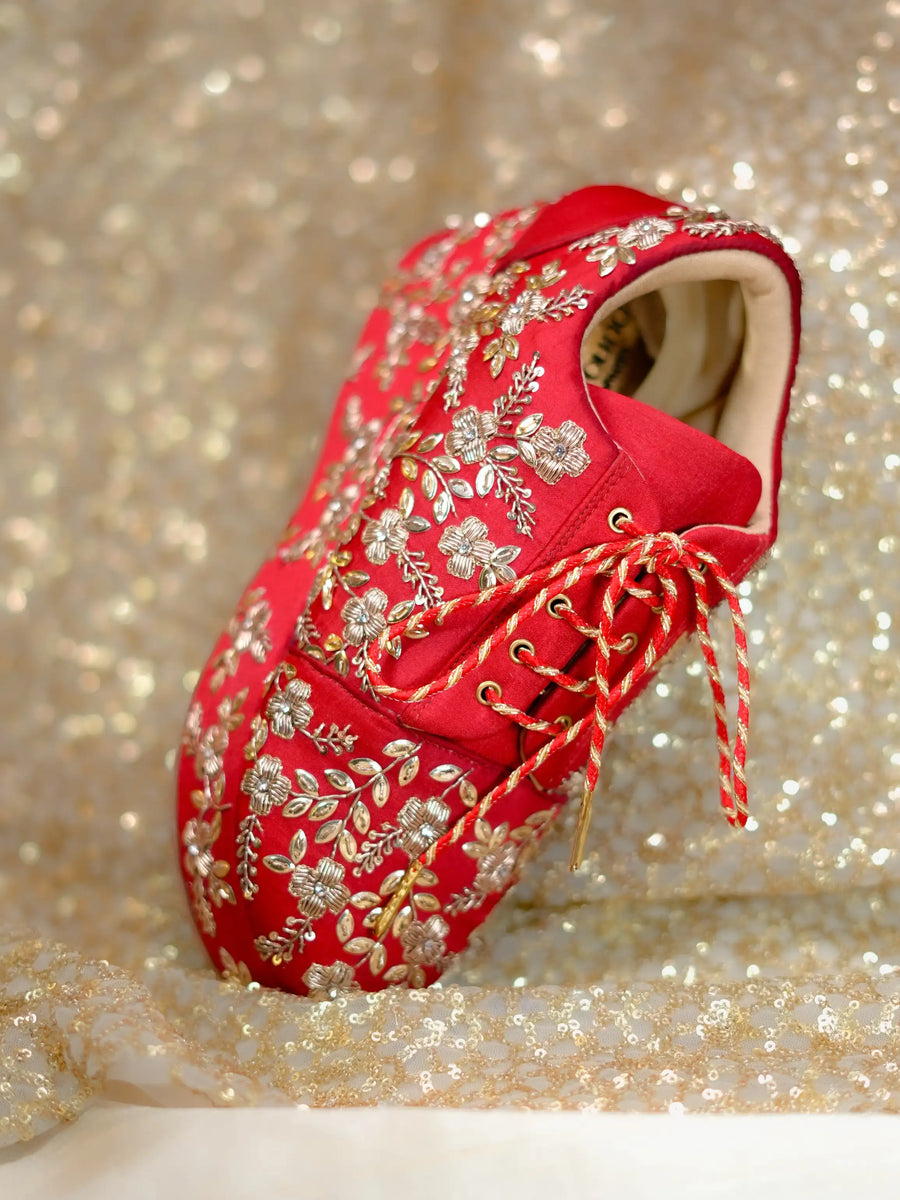
Buy - Veer Mojri
Leather is the traditional base material, but modern mojaris also come in suede, velvet, and heavily embroidered fabric for a dressier finish.
-
Leather mojaris are the most traditional and durable option, often chosen for groom's wedding shoes paired with a sherwani or Jodhpuri suit.
-
Embroidered fabric mojaris, finished with zari or thread work, suit lighter, festive outfits.
-
Velvet mojaris add a plush, formal texture that works well for evening functions.
How Are Mojaris Worn Today?
Mojaris have moved well beyond royal courts. They're a common choice for grooms at Indian weddings, paired with a sherwani, kurta pajama, or Jodhpuri suit, and just as often worn by women with festive ethnic wear.
Colour and embellishment tend to follow the occasion. Gold, ivory, or deep jewel-toned mojaris suit heavier, more formal outfits, while simpler leather or tan mojaris work for daytime functions or casual ethnic wear. Modern versions have also adapted for comfort, with softer leather and cushioned soles replacing the stiffer traditional builds that once needed a proper break-in period.
If you're deciding what to pair yours with, our guide on how to match shoes with a sherwani covers colour and embroidery pairing in detail, and the Men's Wedding Shoes Guide walks through mojaris alongside jodhpuri shoes and Indo-Western options function by function. If you're comparing mojaris against other traditional Indian footwear.
How Should You Care for a Mojari?
Since most mojaris are handcrafted from leather or embroidered fabric, they need a bit more care than a mass-produced shoe. A soft, dry cloth for regular dusting and a barely damp cloth for stains is usually enough.
-
Avoid soaking leather or embroidered mojaris in water, since it can stiffen leather and loosen embroidery threads.
-
Store them in a breathable bag rather than sealed plastic, especially between festive occasions.
-
Let a new pair break in gradually, since traditional leather can feel stiff for the first few wears.
Conclusion
A mojari isn't just a shoe style, it's a piece of design history that's survived largely unchanged since the Mughal era. The curled toe, the slip-on fit, and the handcrafted leatherwork are all details worth knowing before you buy a pair, whether it's for a wedding, a festival, or everyday ethnic wear.
If you're shopping for a wedding or festive occasion, explore our full groom's footwear collection at Around Always to see handcrafted mojaris alongside juttis and brocade styles.
Frequently Asked Questions
What is a mojari shoe used for?
Mojaris are traditionally worn at Indian weddings, festivals, and other ethnic occasions, though many people now wear simpler designs casually as well.
Are mojaris only for men?
No. Mojaris are worn by both men and women, though the styling, embellishment, and colour choices typically differ between the two.
What is the curled toe on a mojari called?
It's called the nok. It's the most distinctive design feature of a traditional Rajasthani mojari.
Do mojaris have a left and right shoe?
No. Traditional mojaris are made with no left-right distinction, so either shoe fits either foot, a design that has stayed the same for centuries.
What is the difference between a mojari and a jutti?
A mojari has a curled toe and an open, slip-on back, and comes from Rajasthan. A jutti has a flat front and a fully closed back, and comes from Punjab.